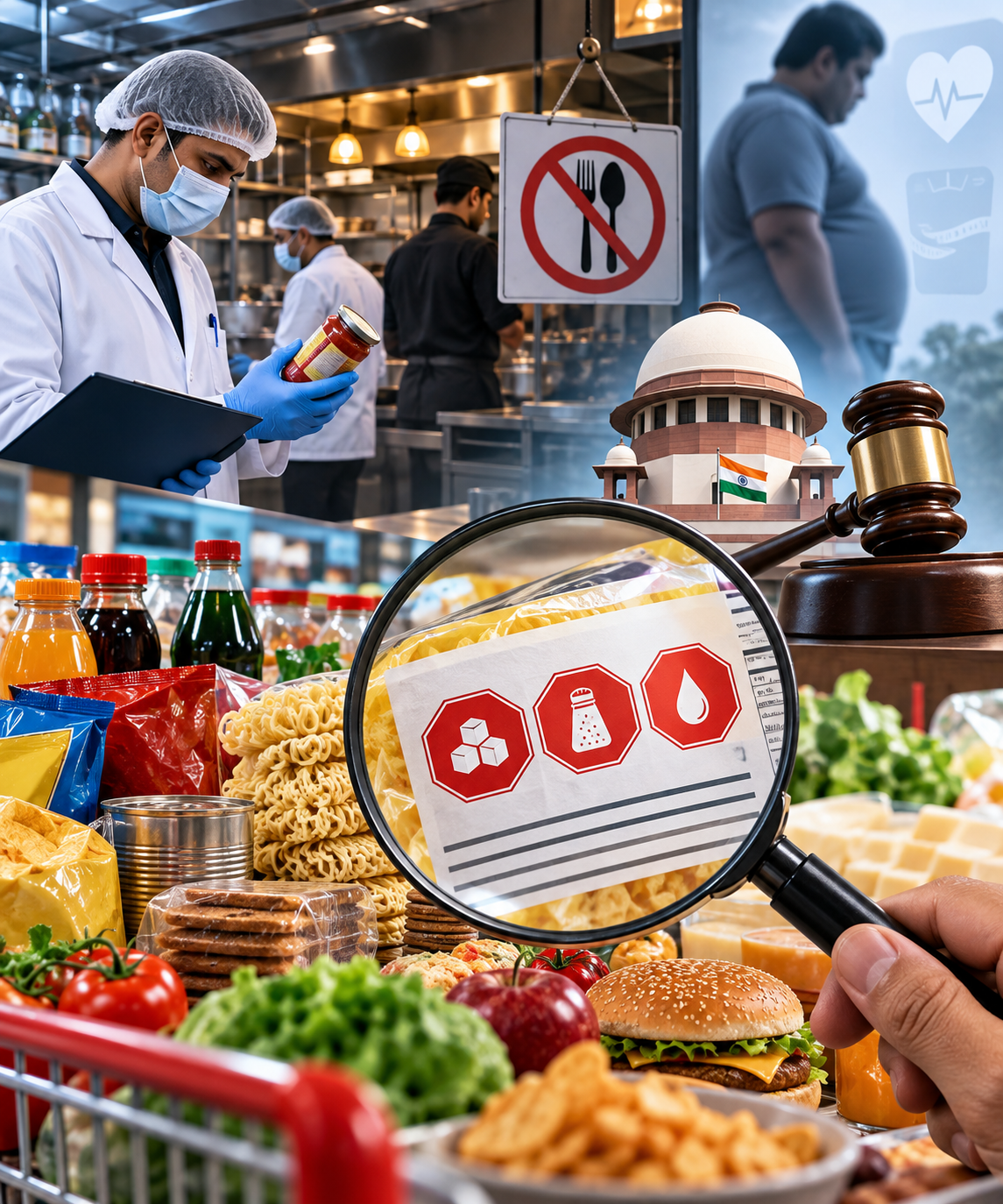
Tougher inspections, licence cancellations and proposed front-of-pack warnings are placing restaurants and the country’s more than $100-billion packaged food industry under unprecedented regulatory scrutiny
India is witnessing a significant escalation in food safety enforcement, with central and state regulators intensifying inspections, suspending licences and taking action against restaurants, food manufacturers and distributors accused of violating hygiene, quality and labelling standards.
The crackdown comes amid growing public concern over food adulteration, unsafe preparation practices and misleading product information. Complaints involving restaurants, cafés and street-food vendors frequently gain attention on social media, increasing pressure on authorities to demonstrate stronger enforcement.
Government data cited in recent reports shows that food inspectors have tested more than 100,000 samples annually since 2020. Around one in five samples has reportedly been classified as unsafe, substandard or incorrectly labelled. Nearly 8,000 food business licences have also been cancelled over the past three years.
High-Profile Raids Put Food Safety in the Spotlight
The Food Safety and Standards Authority of India (FSSAI), along with state-level agencies, has begun publishing photographs and videos of raids and inspections. These public updates have helped bring food safety violations into sharper focus among consumers.
In one recent operation, officials seized approximately 1,300 kg of allegedly adulterated paneer from an unhygienic facility in Uttar Pradesh. Paneer is widely consumed across India, particularly among vegetarian households, making such cases especially sensitive from a public health perspective.
Maharashtra Food Commissioner Tukaram Mundhe has emerged as one of the most visible officials in the enforcement drive. His surprise inspections have covered branded restaurant chains, upscale clubs, cafés and food outlets in and around Mumbai, including establishments operated by Domino’s, Pizza Hut and McDonald’s.
Another major investigation in Maharashtra uncovered a warehouse where expiry dates and nutritional information were allegedly being altered on food products manufactured by companies such as PepsiCo, Nestlé, Coca-Cola and Unilever for export markets. Officials reportedly seized products, chemicals, printing equipment and replacement labels. Canadian authorities are assessing whether any affected products entered the country.
Packaged Food Industry Faces New Compliance Pressure
India’s packaged food and beverage industry, valued at more than $100 billion, is closely watching the government’s proposed front-of-pack warning label system.
The FSSAI has proposed a red hexagonal warning symbol for products that exceed prescribed limits in at least two of three nutrients—added sugar, salt or saturated fat. The objective is to help consumers identify products with potentially unhealthy nutritional profiles without having to study detailed information on the back of the package.
The proposal follows years of debate over food labelling. Similar warning systems have been introduced in countries such as Chile and Mexico, where policymakers have sought to reduce the consumption of products containing excessive sugar, salt and fat.
The Indian proposal has gained momentum after public health advocates and the Supreme Court pushed for stronger disclosure requirements. Reports that the government had previously responded to industry lobbying have also intensified public anger and scrutiny.
Industry and Health Activists Both Raise Objections
The proposed warning-label framework has faced criticism from both sides of the debate.
Food industry executives argue that the proposed limits are too strict and could result in warning symbols appearing on a large portion of packaged products. Manufacturers fear that prominent red labels may damage brand perception, reduce demand and increase reformulation and compliance costs.
Industry representatives also argue that sugar, salt and fat are common ingredients in several traditional Indian foods and that a broad warning system could fail to distinguish between occasional consumption and regular dietary habits.
Public health activists, however, believe the proposal is not strict enough. They argue that a product containing excessive levels of only one nutrient could escape a warning because the proposed system requires at least two nutrients to cross the prescribed limits.
Activists have described this condition as an “industry-friendly loophole” and are seeking warnings for products that exceed the limit for even one concerning ingredient. A formal objection has been filed before the Supreme Court, which is scheduled to review the issue.
Wider Impact on Restaurants and Food Businesses
The enforcement campaign is expected to affect businesses across the food value chain. Restaurants and cafés may need to strengthen kitchen hygiene, employee training, storage practices, pest control and documentation.
Food manufacturers could face higher expenses related to laboratory testing, packaging changes, traceability systems and quality assurance. Exporters may also come under greater scrutiny as international buyers demand stronger proof of compliance and product authenticity.
Smaller food businesses are likely to face the greatest immediate pressure because many operate with limited compliance teams and informal supply chains. At the same time, stronger enforcement could create opportunities for organised companies that already maintain robust quality-control systems.
Market Outlook
The food safety drive may increase short-term compliance costs for restaurants, packaged food manufacturers, distributors and exporters. Companies could also face temporary disruptions if products are recalled, licences are suspended or packaging needs to be redesigned.
Over the longer term, stricter regulation could benefit organised businesses with transparent sourcing, modern manufacturing facilities and strong quality-control systems. Companies able to reformulate products and clearly communicate nutritional information may gain consumer trust.
Investors should monitor the final warning-label rules, implementation timelines, product reformulation expenses, potential litigation and the impact on sales volumes. The regulatory environment is becoming more demanding, and food companies with weak compliance systems may face higher operational and reputational risks.