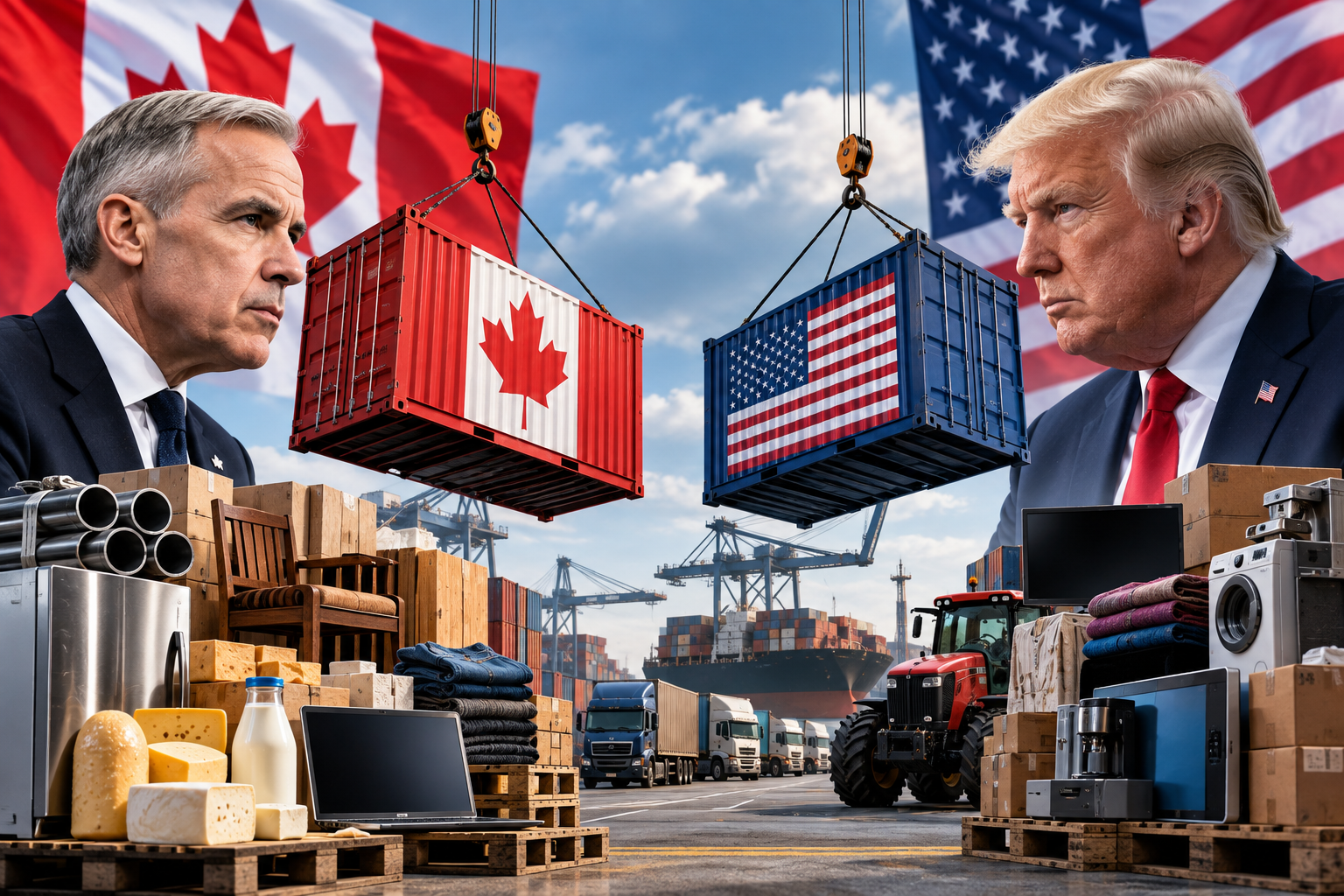
Counter-tariffs on American imports mark a fresh escalation in the trade dispute, raising concerns over supply chains, business costs and the future of the USMCA agreement
Canada’s retaliatory tariffs on US goods have taken effect, intensifying the trade conflict between the two neighbouring countries after negotiations failed to produce an agreement. The countermeasures impose duties of 15%, 25% and 50% on a broad range of American products, including steel, furniture, clothing, appliances, electronics and agricultural equipment.
The move represents Ottawa’s dollar-for-dollar response to tariffs imposed by Washington and increases pressure on Prime Minister Mark Carney’s government to protect Canadian industries. Canadian authorities have said the measures are designed to match the impact of US duties and provide domestic producers with a more competitive position in the Canadian market.
Trade Negotiations Break Down
The latest tariffs follow the collapse of trade discussions that had appeared close to a possible agreement. Canadian and US officials have blamed each other for the failure, with disagreements reportedly continuing over tariff levels, market access and long-term guarantees.
The escalation has created fresh uncertainty around the United States-Mexico-Canada Agreement, or USMCA, which governs a large portion of trade across North America. The agreement is approaching its review period, leaving businesses uncertain about whether current trade protections will remain in place.
Michael Harvey, executive director of the Canadian Agri-Food Trade Alliance and a member of Carney’s advisory committee on bilateral US economic relations, warned that the dispute could develop into an “escalatory spiral”. At the same time, he acknowledged that Ottawa needed to retain leverage in negotiations.
US Tariffs Affect Canadian Exports
The US tariffs introduced earlier affected Canadian products such as wine, furniture, dairy goods, cement, clothing, fishing equipment and hockey products. The measures cover a significant portion of Canadian exports to the US and have placed additional pressure on manufacturers, farmers and retailers.
Canada sends nearly 68% of its exports to the United States. A large share of those shipments had previously moved duty-free under the USMCA, helping Canadian businesses maintain access to their biggest market. However, the latest US duties imposed under separate trade provisions do not allow Canada to rely fully on those exemptions.
Businesses Face Higher Costs
The new tariffs are expected to increase costs for importers, manufacturers and consumers on both sides of the border. Companies dependent on cross-border supply chains may face higher input prices, longer delivery times and pressure to identify alternative suppliers.
The automotive sector remains particularly vulnerable. US President Donald Trump has threatened to raise tariffs on Canadian cars, trucks and automotive parts to 50% from January. Such a move could disrupt manufacturing networks that operate across Canada, the US and Mexico.
Canadian businesses may also face difficulties in maintaining export volumes if American buyers shift to alternative suppliers. Smaller firms with limited financial resources are likely to be more exposed to the impact of higher duties and weaker demand.
Ottawa Announces Support Measures
To reduce the economic impact, the Canadian government has announced a support package worth approximately $7.5 billion for affected workers and businesses. The measures include liquidity assistance for small and medium-sized enterprises, funding for tariff-affected industries and support for employee retention, retraining and diversification.
The government has also introduced initiatives aimed at helping companies expand into new markets and reduce their dependence on the US economy. However, replacing the American market will be difficult because of its size, geographic proximity and importance to Canadian trade.
Limited Signs of an Immediate Resolution
Although Carney has said Canada remains prepared to negotiate a mutually beneficial agreement, officials from both countries are currently not engaged in active ministerial or government-level talks.
The dispute has strengthened domestic support for Ottawa’s tougher position, but that support could weaken if tariffs begin to affect employment, household prices and economic growth. Businesses and consumers are likely to remain cautious until there is greater clarity on the duration of the measures and the possibility of a negotiated settlement.
Market Outlook
The tariff escalation could weigh on North American manufacturing, trade volumes and business confidence. Industries with deeply integrated supply chains—including automobiles, metals, machinery, agriculture and consumer goods—may face higher costs and margin pressure.
For Canada, the dispute could accelerate efforts to diversify exports, strengthen domestic manufacturing and expand trade ties with Europe and Asia. However, these changes will require significant investment and time.
Global investors will closely monitor any fresh tariff announcements, developments in USMCA negotiations and signs of economic damage. A prolonged trade conflict could increase inflationary pressure, weaken investment and create volatility across currency, commodity and equity markets.