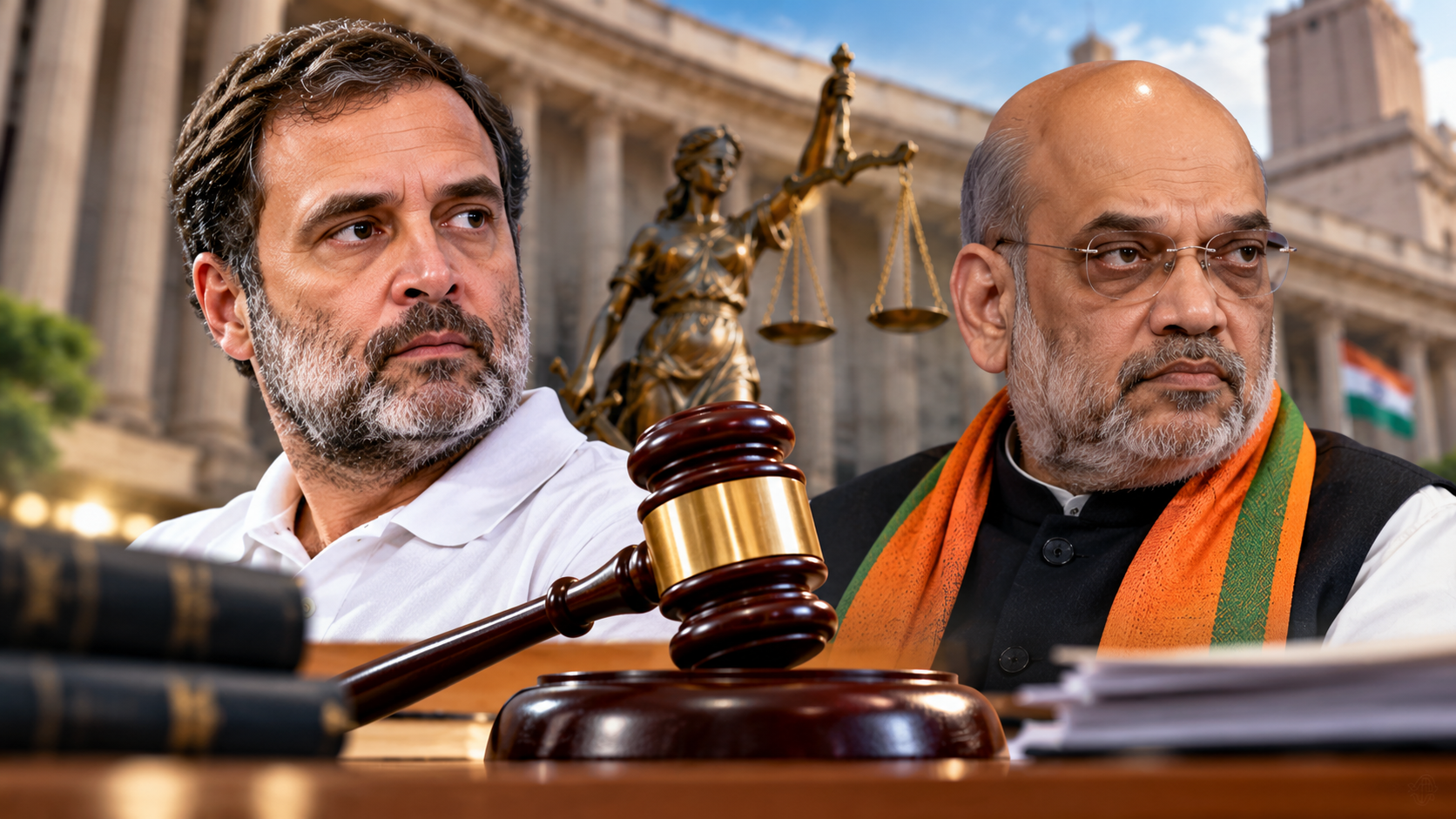
Uttar Pradesh’s Sultanpur MP/MLA court rules that the Congress leader’s 2018 remarks were not defamatory, bringing a fresh development in a case linked to comments made during the Karnataka Assembly election campaign.
Sultanpur Court Clears Rahul Gandhi in Defamation Case
Congress MP and Leader of the Opposition in the Lok Sabha, Rahul Gandhi, was acquitted on Monday by a special MP/MLA court in Sultanpur, Uttar Pradesh, in a criminal defamation case relating to remarks he allegedly made about Union Home Minister Amit Shah in 2018.
Additional Civil Judge Shubham Verma pronounced the verdict in Gandhi’s presence, according to reports by LiveLaw. The court concluded that the remarks at the centre of the complaint did not constitute defamation.
The case dates back more than eight years and arose from comments allegedly made by Gandhi during a press conference in Bengaluru amid the Karnataka Assembly election campaign. The verdict marks a significant legal development for the Congress leader, who has faced several legal and political controversies over statements made during public speeches and election campaigns.
How the Case Originated in 2018
The criminal defamation complaint was filed on August 4, 2018, by Vijay Mishra, a local Bharatiya Janata Party (BJP) leader.
According to the complaint, Gandhi had questioned the BJP’s claim of promoting clean politics while referring to Amit Shah, who was then the BJP’s national president, as an accused in a murder case.
The remarks were reportedly linked to the Sohrabuddin Sheikh encounter case, which had become a politically sensitive issue because of its legal proceedings and the involvement of prominent political figures.
A special Central Bureau of Investigation (CBI) court discharged Shah in the case in 2014. The subsequent defamation complaint alleged that Gandhi’s comments harmed Shah’s reputation.
Mishra initiated criminal proceedings under Sections 499 and 500 of the Indian Penal Code (IPC), which address the offence of criminal defamation and the associated punishment.
Legal Proceedings Continued for Several Years
The case moved through multiple stages before the Sultanpur court delivered its verdict.
The trial court summoned Gandhi on November 27, 2023, requiring him to appear in connection with the complaint. He appeared before the court on February 20, 2024, and was granted bail.
The proceedings subsequently focused on the evidence and the admissibility of material that could establish whether Gandhi had made the disputed remarks.
During the trial, the complainant sought permission to have Gandhi’s voice sample matched with a recording of the speech in question. The trial court rejected the application in May 2026.
Challenges to that decision were subsequently dismissed by the sessions court and the Allahabad High Court, according to the reported account of the proceedings.
After hearings concluded in October 2026, the Sultanpur court reserved its verdict. It pronounced the decision on Monday, October 26, holding that the remarks were not defamatory and acquitting Gandhi.
Understanding Criminal Defamation Under Indian Law
Criminal defamation concerns statements alleged to have harmed the reputation of an individual or entity. Under the provisions cited in this case, the legal question involves whether the allegedly defamatory statement meets the requirements of the applicable law, including the relevant exceptions and defences.
Section 499 of the IPC defined criminal defamation, while Section 500 prescribed the punishment for the offence. These provisions were part of the legal framework applicable to the complaint arising from the 2018 remarks.
India's criminal-law framework was subsequently revised, with the Bharatiya Nyaya Sanhita replacing the IPC from July 1, 2024, subject to applicable transitional provisions. The precise legal treatment of an older case depends on the relevant facts, procedural history and applicable law.
The acquittal in Gandhi’s case reflects the court’s decision on the complaint before it. It should not be interpreted as a blanket ruling on every public statement made by politicians or on the broader legal standards governing defamation.
Political Significance of the Verdict
The ruling carries political significance because Rahul Gandhi is one of the principal opposition leaders in Parliament, while Amit Shah remains a senior figure in the BJP-led political establishment.
Legal disputes involving senior political leaders frequently attract national attention because they intersect with electoral campaigning, public accountability, freedom of expression and the protection of individual reputation.
For the Congress, the acquittal removes the immediate threat of conviction in this particular criminal defamation case. For the BJP, the underlying political dispute remains part of the wider contest between the ruling party and the opposition over political messaging and public conduct.
However, the legal outcome should be distinguished from the political interpretations that different parties may place on it. The court's reported finding concerns the specific complaint and evidence considered in the proceedings.
What Happens Next?
The immediate outcome is Gandhi’s acquittal by the Sultanpur court. Any further legal developments would depend on whether the complainant pursues an available challenge and how the relevant court responds.
The reported verdict does not, by itself, settle every legal dispute involving Gandhi or establish a general precedent that all similar political remarks are protected from defamation proceedings. Each case depends on its own facts, evidence and applicable law.
The decision also highlights how criminal complaints arising from political speeches can continue for years, requiring repeated court appearances and procedural hearings before a final determination is reached at the trial-court level.
Broader Implications for Political Speech
The case highlights the continuing tension between robust political criticism and the legal protection of reputation. Election campaigns often feature sharp exchanges, allegations and challenges to the credibility of political opponents. Such statements may become the subject of litigation when an individual believes their reputation has been harmed.
At the same time, courts must assess complaints according to the evidence, statutory requirements and applicable legal principles rather than the political prominence of the people involved.
The Sultanpur court’s decision brings the proceedings to an important stage, while any subsequent legal challenge, if filed, would determine whether the matter receives further judicial consideration.
For the moment, Gandhi has been acquitted in this particular case concerning his 2018 remarks about Amit Shah.