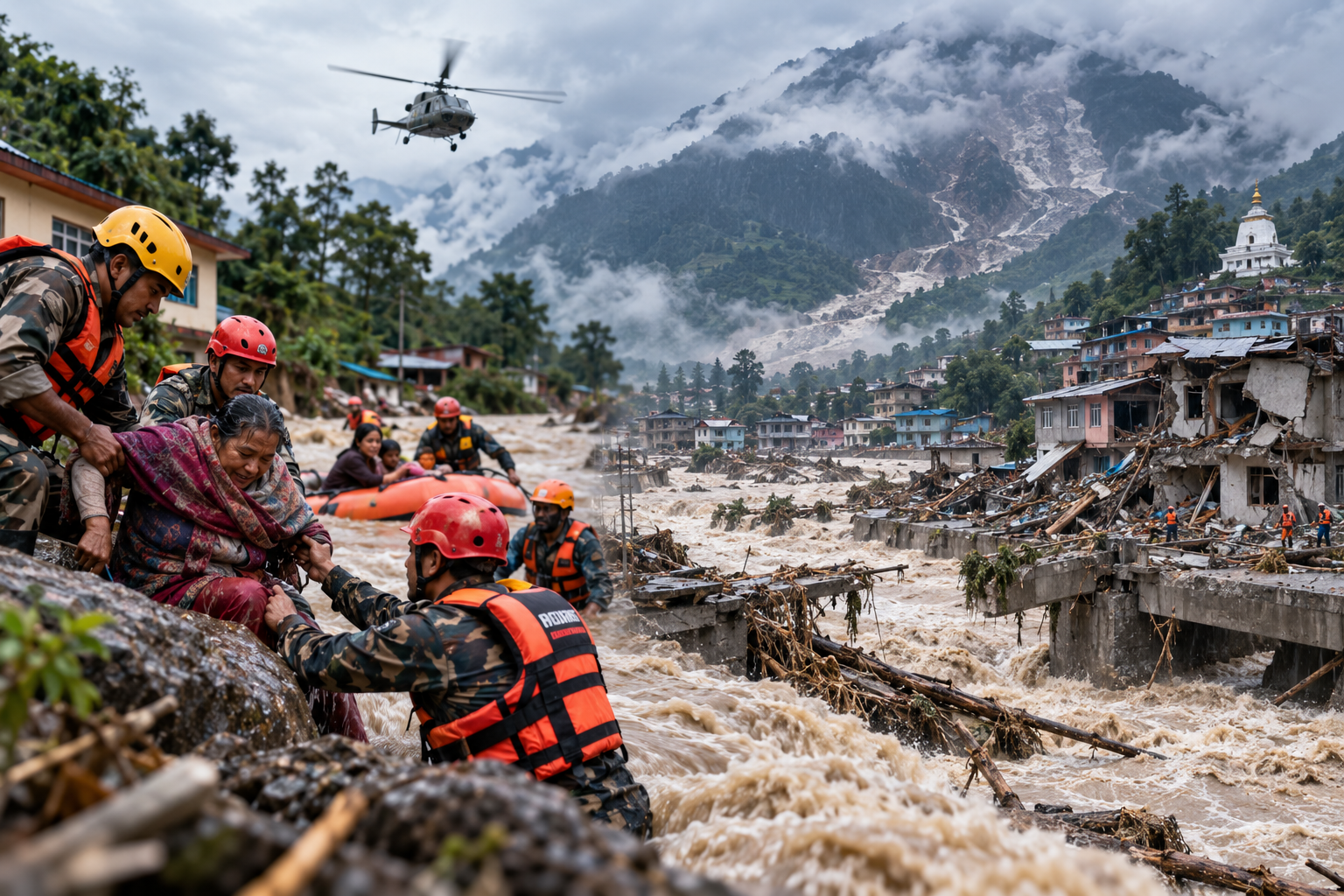
Flash floods triggered by an ice-rock avalanche have devastated parts of Nepal, with more than 13,600 people rescued as authorities continue a large-scale search and recovery operation across affected districts
Death Toll Climbs as Rescue Operations Continue
The death toll from devastating flash floods in Nepal rose to 1,377 on Thursday, after rescue teams recovered more bodies from several affected districts, authorities said.
A joint command involving security personnel continues to conduct search and rescue operations for people still missing. Authorities estimate that 5,130 people remain unaccounted for, making the recovery effort one of the country's largest disaster-response operations in recent years.
So far, 13,656 people have been rescued from flood-affected areas as emergency teams work to reach isolated communities and recover victims.
Chitwan Records Highest Number of Recoveries
According to the National Disaster Risk Reduction and Management Authority (NDRRMA), hundreds of bodies have been recovered from several districts.
The reported recovery figures include:
-
Chitwan: 364 bodies
-
Nawalparasi East: 228
-
Nawalparasi West: 222
-
Nuwakot: 198
-
Rasuwa: 178
-
Gorkha: 77
-
Dhading: 70
-
Tanahu: 38
-
Kathmandu: 2 deaths during treatment
The geographic spread of fatalities highlights the extensive impact of the floods, which swept through communities across northern and central parts of the country.
Thousands Still Missing
The search for an estimated 5,130 missing people remains the biggest challenge for authorities.
Security personnel and rescue teams are continuing operations in affected areas, examining debris, riverbanks and damaged settlements in an effort to locate survivors and recover victims.
The large number of missing people also means the final death toll could change as search operations progress and authorities reconcile information from different affected communities.
Ice-Rock Avalanche Triggered Catastrophic Flooding
The disaster was triggered by an ice-rock avalanche near the Nepal-Tibet border on August 26, which generated powerful flash floods downstream.
The Bhotekoshi River, flowing south from the Himalayan border region, carried huge volumes of water and debris into downstream settlements.
The sudden surge swept away homes, vehicles, roads and bridges and caused extensive damage to infrastructure.
The scale and speed of the flooding left communities with limited time to respond, particularly in areas located close to river channels and vulnerable valleys.
Roads and Bridges Suffer Extensive Damage
Transport infrastructure has been among the most severely affected parts of the disaster.
Floodwaters damaged or destroyed roads and bridges, cutting off access to several communities and complicating rescue operations.
For emergency teams, restoring road connectivity is critical because it allows heavy machinery, medical supplies, food and other essential materials to reach isolated populations.
Nepal has also begun efforts to rebuild damaged infrastructure, with support from neighbouring countries including India and China.
Hydropower Infrastructure Also Hit
The flooding has caused damage to hydropower projects in affected areas, adding another layer of economic pressure to the disaster.
Nepal relies heavily on hydropower for electricity generation and has been expanding its capacity as part of its economic development strategy.
Damage to hydropower facilities can disrupt electricity production while also creating significant repair and reconstruction costs.
The extent of the damage to individual projects will become clearer as authorities gain access to affected sites.
Major Humanitarian Challenge
Beyond the immediate loss of life, the disaster has displaced communities and disrupted access to essential services.
Survivors require food, clean drinking water, medical assistance, temporary shelter and sanitation facilities. The destruction of homes and local infrastructure could leave thousands dependent on emergency assistance during the recovery period.
The large number of displaced and affected residents also increases the risk of secondary public-health problems if clean water and sanitation systems remain disrupted.
China Also Reports Heavy Losses
The disaster has also had serious consequences on the Chinese side of the border.
At least 43 people were reported killed in China, while more than 500 people remained missing in Tibet, according to Chinese media reports.
The cross-border nature of the disaster reflects the vulnerability of Himalayan communities to sudden geological and weather-related events.
Rivers originating in high-altitude areas can rapidly carry large volumes of water and debris downstream, creating significant risks for settlements and infrastructure located along their paths.
Rebuilding Could Take Years
The immediate priority remains saving lives and locating missing people. However, the scale of infrastructure damage means reconstruction could become a long-term challenge for Nepal.
Rebuilding roads and bridges, restoring electricity and communications, repairing hydropower infrastructure and replacing destroyed homes will require substantial financial resources.
The disaster could also affect local trade, tourism, agriculture and transportation in affected regions, potentially creating economic consequences well beyond the immediate flood zone.
Regional Support Becomes Important
With infrastructure severely damaged, international and regional assistance could play an important role in Nepal's recovery.
Support for emergency logistics, medical services, bridge reconstruction, road connectivity and hydropower restoration could help accelerate the return of essential services.
India and China have already been involved in support and reconstruction efforts, highlighting the importance of regional cooperation following major Himalayan disasters.
Focus Shifts From Rescue to Recovery
As search operations continue, authorities are gradually preparing for the next phase of the response: rehabilitation and reconstruction.
The recovery process will require accurate identification of affected families, restoration of basic infrastructure and financial assistance for households and businesses that have lost property and livelihoods.
Authorities will also need to assess the causes and vulnerability of affected locations to reduce the risk of similar disasters in the future.
Himalayan Disaster Risks Under Spotlight
The Nepal floods have once again highlighted the complex disaster risks facing Himalayan communities.
The combination of steep terrain, glacial and geological activity, rapidly changing weather conditions and settlements located along river corridors can create highly destructive flood events.
Strengthening early-warning systems, improving river monitoring, mapping vulnerable settlements and developing faster evacuation mechanisms could become important components of Nepal's long-term disaster preparedness.
Recovery Efforts Remain Critical
With the death toll at 1,377 and more than 5,000 people still missing, Nepal's immediate challenge remains the search for survivors and recovery of victims.
The rescue of more than 13,600 people demonstrates the scale of the ongoing emergency response, but the extensive destruction of homes, roads, bridges and energy infrastructure means the country's challenges will continue long after floodwaters recede.
The coming weeks will be critical as Nepal moves from emergency rescue operations towards a difficult and potentially costly reconstruction phase.