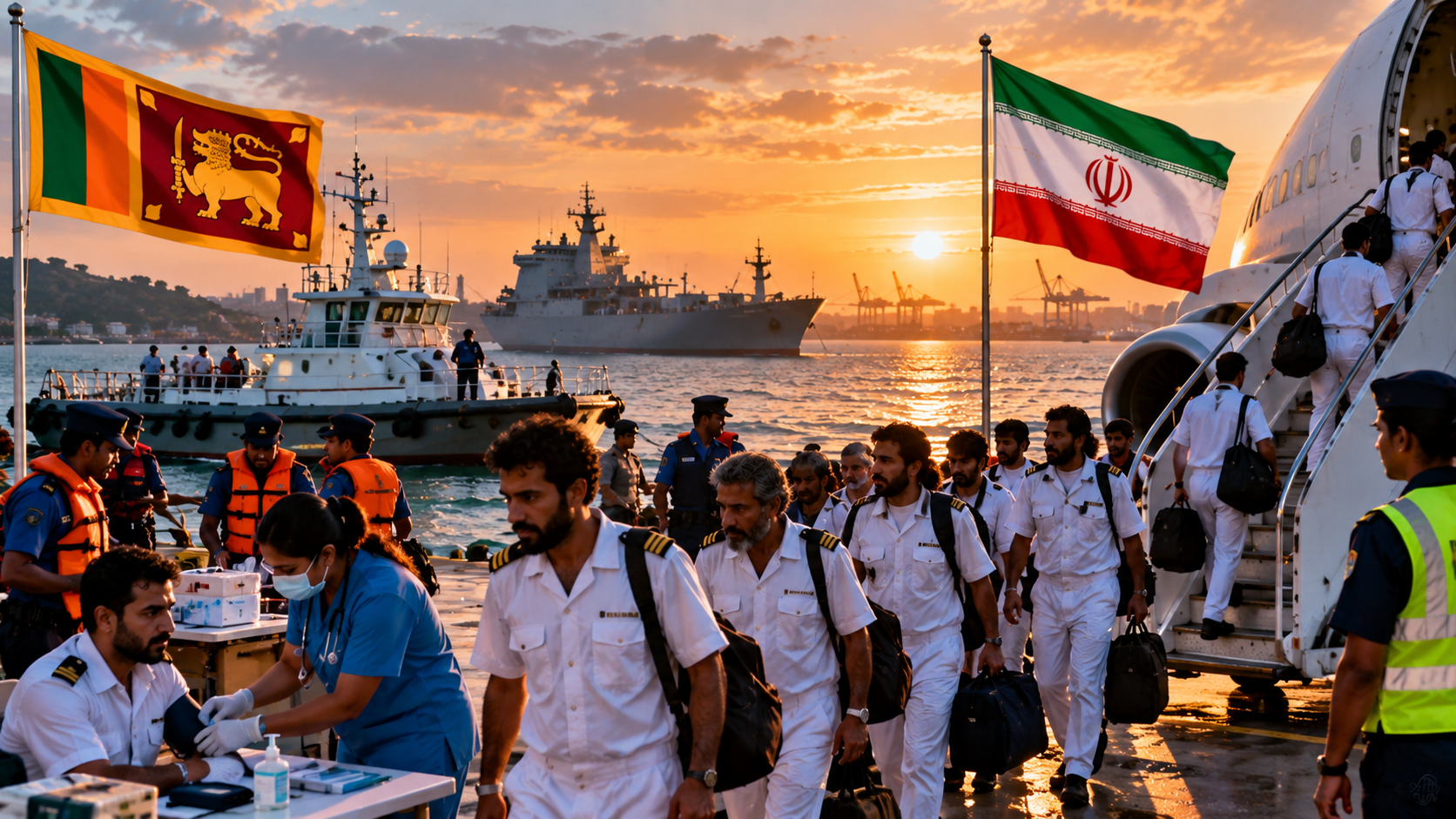
The sailors were rescued from a distressed vessel off Sri Lanka’s southern coast and received medical assistance before returning to Iran; the development comes amid heightened maritime scrutiny and concerns over US sanctions.
Sri Lanka has repatriated 40 Iranian sailors after rescuing them from a vessel in distress off the island nation’s southern coast and providing them with medical treatment. The sailors departed for Iran by air early on Saturday, according to a Sri Lankan Foreign Ministry spokesperson who confirmed the development on Sunday.
The Iranian Embassy in Colombo financed the logistical arrangements for their departure. Sri Lankan authorities said all 40 sailors received medical attention before returning to their home country.
The operation highlights Sri Lanka’s continuing role in responding to maritime emergencies in the strategically important waters surrounding the island. It also comes at a sensitive time, as tensions involving Iran and the United States have intensified and international attention has focused on Iranian vessels operating in the region.
Rescue Operation Near Galle
Sri Lankan authorities initiated a humanitarian response after receiving information that a vessel was in distress approximately 24 nautical miles off Galle, a port city on the country’s southern coastline.
The authorities arranged assistance for the sailors, ensuring that those rescued received medical care before arrangements were made for their return to Iran. The operation underscored the importance of maritime safety and emergency coordination, particularly in waters used by commercial shipping and vessels travelling across the Indian Ocean.
The latest repatriation also demonstrates how countries situated along major maritime routes may be required to balance humanitarian responsibilities with diplomatic and security considerations.
While the sailors have now returned to Iran, the wider circumstances surrounding Iranian maritime activity remain significant because of the region’s geopolitical sensitivities and the potential consequences of sanctions-related restrictions.
Previous Incidents Involving Iranian Naval Vessels
The latest operation follows earlier incidents involving Iranian naval vessels near Sri Lankan waters.
In March 2026, the Iranian naval vessel IRIS Dena was sunk by a US submarine outside Sri Lankan waters, killing at least 84 Iranian sailors, according to the report. The incident drew attention to the security risks facing Iranian naval personnel operating in waters affected by regional tensions.
Sri Lanka subsequently assisted another Iranian vessel, IRIS Bushehr, which had encountered difficulties in the vicinity of the incident. The ship carried 208 personnel, who were repatriated after Sri Lankan authorities arranged for the vessel to be towed to Trincomalee, a port on the island’s eastern coast.
These incidents have placed Sri Lanka in a sensitive position, requiring its authorities to respond to emergencies while navigating the diplomatic implications of the wider confrontation involving Iran and the United States.
Iranian Vessels and Sri Lanka’s Maritime Responsibilities
Sri Lanka has also reported the presence of numerous foreign vessels operating around its maritime region. In September, Foreign Minister Vijitha Herath said Iranian vessels were among 47 ships operating around Sri Lankan waters while remaining outside the country’s maritime limits.
The distinction between a country’s territorial waters and the wider maritime area is important when assessing the responsibilities and legal authority of coastal states. A vessel operating outside territorial waters does not necessarily fall under the same jurisdiction as one entering a country’s territorial sea or port.
For Sri Lanka, responding to vessels in distress can involve complex operational and diplomatic questions, particularly when the ships or entities associated with them may be subject to international restrictions.
The latest repatriation illustrates the challenge of ensuring that humanitarian assistance is provided without overlooking the potential legal and diplomatic consequences of dealings with sanctioned vessels.
US Secondary Sanctions Add to the Complexity
The issue has attracted additional attention because of US secondary sanctions announced on August 24, 2026. These measures form part of Washington’s broader efforts to restrict activities involving entities and vessels subject to American sanctions.
Under the framework described in the report, individuals and organisations providing services to sanctioned vessels could risk losing access to the US financial system. The potential consequences may extend beyond the direct parties involved, creating compliance concerns for businesses and institutions that have financial exposure to the United States.
Such restrictions can create uncertainty for shipping companies, port operators, maritime service providers, insurers and financial institutions. Organisations may need to assess whether a vessel, its owner, its operator or a related entity is covered by applicable sanctions before providing certain services.
However, the applicability of any particular restriction depends on the relevant legal provisions, the parties involved and the nature of the services provided. Humanitarian assistance and the repatriation of personnel should not automatically be equated with providing prohibited commercial services to a sanctioned vessel.
Colombo Says Measures Are Not Directed Specifically at Sri Lanka
Earlier in October, Sri Lanka’s Foreign Ministry clarified that the US secondary sanctions formed part of Washington’s broader international policy and were not specifically directed at Sri Lanka.
The clarification followed media speculation that the United States had cautioned Colombo against servicing Iranian tankers operating outside Sri Lankan waters.
The issue presents a diplomatic challenge for Sri Lanka, which must maintain international relationships while protecting its maritime interests and meeting its obligations in emergency situations.
For countries with important ports and shipping infrastructure, sanctions compliance has become an increasingly significant consideration. Decisions involving vessel assistance, refuelling, repairs, insurance, financial transactions and port services may require careful examination of the applicable restrictions.
At the same time, a blanket approach to maritime emergencies could raise humanitarian concerns. Authorities therefore need to distinguish between emergency assistance to people in danger and commercial transactions that may fall within sanctions restrictions.
Implications for Regional Shipping and Diplomacy
The repatriation of the 40 Iranian sailors is primarily a humanitarian development, but its wider context reflects the growing intersection of maritime security, international sanctions and regional diplomacy.
The Indian Ocean is a major corridor for international trade, energy shipments and commercial shipping. Developments involving Iranian vessels can therefore attract attention beyond the countries directly involved, particularly when they intersect with US-Iran tensions.
For maritime operators, the situation reinforces the importance of sanctions screening, documentation and legal compliance when dealing with vessels or counterparties potentially linked to restricted entities.
For Sri Lanka, the challenge will be to continue responding to maritime emergencies while managing the diplomatic and financial risks associated with international sanctions. Its handling of future incidents may depend on the circumstances of each case, the applicable international and domestic legal frameworks, and coordination with relevant authorities.
The latest repatriation does not, by itself, establish any change in US policy towards Sri Lanka. However, it highlights the practical difficulties that smaller maritime states may face when humanitarian obligations intersect with geopolitical rivalries.
What Happens Next?
The immediate operation has concluded with the return of the 40 sailors to Iran. The broader questions surrounding Iranian vessels, sanctions compliance and maritime cooperation remain unresolved.
Future developments will depend on regional security conditions, the movement of vessels through nearby waters and how governments implement their respective maritime and sanctions policies.
Sri Lanka is likely to remain attentive to vessels requiring emergency assistance, while shipping and port-service providers will need to remain mindful of applicable sanctions rules. Any further incidents involving Iranian vessels could renew scrutiny of Colombo’s approach and its diplomatic engagement with Washington and Tehran.
For now, the repatriation demonstrates that humanitarian assistance can remain an important consideration even amid heightened geopolitical tensions. It also underscores the delicate balance between safeguarding human life, protecting maritime interests and complying with international restrictions.