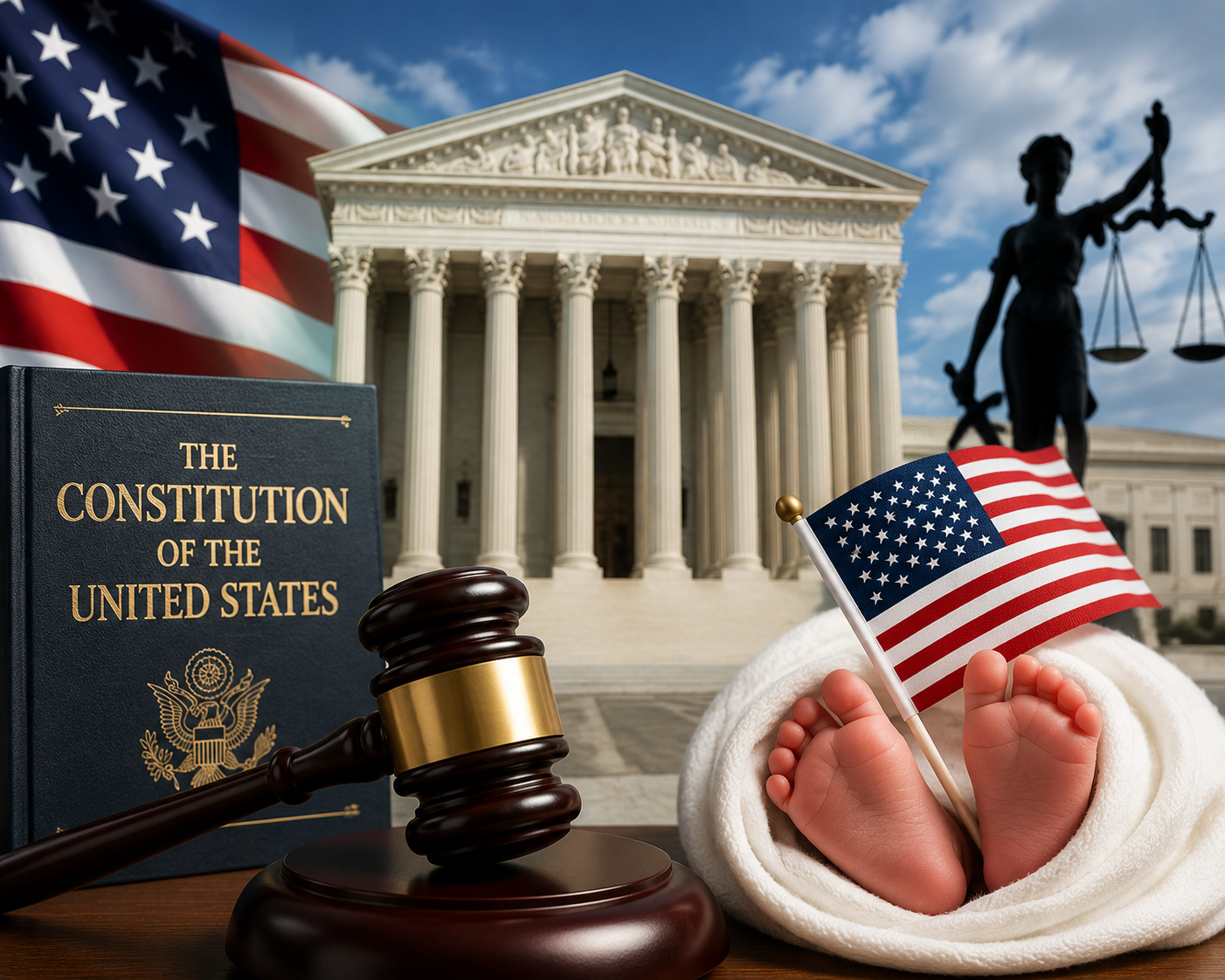
Landmark Verdict Upholds 14th Amendment, Declares Executive Order Cannot Override Citizenship Guaranteed by the US Constitution
In a landmark constitutional ruling, the US Supreme Court has struck down former President Donald Trump's executive order that sought to restrict birthright citizenship in the United States. The decision reinforces the long-standing interpretation of the 14th Amendment, affirming that nearly every child born on American soil is entitled to US citizenship, irrespective of the immigration status of their parents.
The ruling marks a significant victory for constitutional protections and is expected to shape future immigration policies and legal debates in the United States. It also reasserts the judiciary's role in safeguarding constitutional rights against executive actions that conflict with established law.
Supreme Court Reaffirms the 14th Amendment
The Supreme Court ruled that the Citizenship Clause of the 14th Amendment continues to provide automatic citizenship to children born in the United States, including those whose parents are undocumented immigrants or are residing in the country on temporary visas.
The 14th Amendment, adopted in 1868, states that all persons born or naturalised in the United States and subject to its jurisdiction are citizens of the United States. For more than a century, this provision has served as the legal foundation for birthright citizenship.
By reaffirming this constitutional principle, the Court made it clear that executive orders cannot alter rights explicitly protected by the Constitution.
Background: Trump's Executive Order
Soon after beginning his second presidential term in January, Donald Trump signed an executive order seeking to limit automatic citizenship for children born in the United States.
The order proposed that birthright citizenship should only apply if at least one parent was either a US citizen or was legally present in the country at the time of the child's birth.
The administration argued that the measure was intended to discourage illegal immigration and prevent what it described as misuse of the existing citizenship framework.
However, the executive order immediately faced multiple legal challenges from civil rights organisations, immigration advocacy groups, and several state governments, all of which argued that the policy violated the Constitution.
Court Says Constitutional Rights Cannot Be Changed by Executive Action
In its judgment, the Supreme Court concluded that the executive order was inconsistent with the Constitution and exceeded presidential authority.
The Court emphasised that constitutional guarantees cannot be altered through executive action alone. Any attempt to redefine birthright citizenship would require changes through constitutional processes, including legislative action and, if necessary, constitutional amendment procedures.
The ruling reinforces the principle of separation of powers by confirming that the executive branch cannot unilaterally reinterpret constitutional provisions.
Major Implications for US Immigration Policy
The judgment carries significant implications for immigration policy and future legal disputes surrounding citizenship rights.
Following the ruling:
- Children born on US soil will continue to receive automatic citizenship under the existing constitutional framework.
- The long-standing interpretation of the 14th Amendment remains intact.
- Future efforts to modify birthright citizenship are likely to require legislative action and would still be subject to constitutional review by the courts.
Legal experts believe the decision provides greater certainty regarding one of the most debated aspects of US immigration law.
Political Debate Likely to Continue
Birthright citizenship has remained one of the most contentious issues in American politics for decades.
Supporters of restricting automatic citizenship argue that the existing system encourages illegal immigration and creates incentives for foreign nationals to give birth in the United States.
Opponents maintain that birthright citizenship is a fundamental constitutional guarantee that promotes equality, prevents discrimination, and protects children from becoming stateless.
Although the Supreme Court has settled the constitutional question in this case, immigration reform is expected to remain a major issue in future political campaigns and legislative discussions.
Broader Constitutional Significance
Beyond immigration, the ruling reinforces the strength of the US constitutional system and the role of the judiciary as an independent check on executive authority.
Legal scholars note that the decision underscores the importance of constitutional stability and demonstrates that major changes to fundamental rights cannot be implemented solely through presidential directives.
The judgment is expected to serve as an important legal precedent in future cases involving executive powers and constitutional interpretation.
Global Attention on the Verdict
The Supreme Court's decision has drawn international attention because the United States is among a relatively small number of countries that broadly follow the principle of jus soli, or citizenship based on place of birth.
The verdict is likely to be closely watched by governments, legal experts, immigration policymakers, and international human rights organisations, as debates over migration and citizenship continue across many parts of the world.
For multinational businesses and global employers, the ruling also provides greater legal clarity regarding citizenship rights for future generations born in the United States.
Impact on Markets and Investor Sentiment
While the ruling is primarily constitutional and legal in nature, it reinforces confidence in the stability of US institutions and the rule of law. Strong and predictable legal frameworks are considered an important factor for international investors evaluating long-term investment destinations.
The decision is unlikely to have any immediate impact on financial markets, but it highlights the role of an independent judiciary in maintaining institutional stability, which remains a key pillar of investor confidence in the world's largest economy.
Outlook
The Supreme Court's ruling preserves one of the most established constitutional principles in the United States and limits the scope of executive authority in matters involving fundamental rights. Although the broader political debate over immigration is expected to continue, the judgment provides legal certainty on birthright citizenship and reaffirms that constitutional protections cannot be altered through executive action alone.
Going forward, policymakers are expected to focus on broader immigration reforms rather than attempting to modify birthright citizenship through executive measures. The decision is likely to remain a defining legal precedent in future constitutional and immigration-related cases.