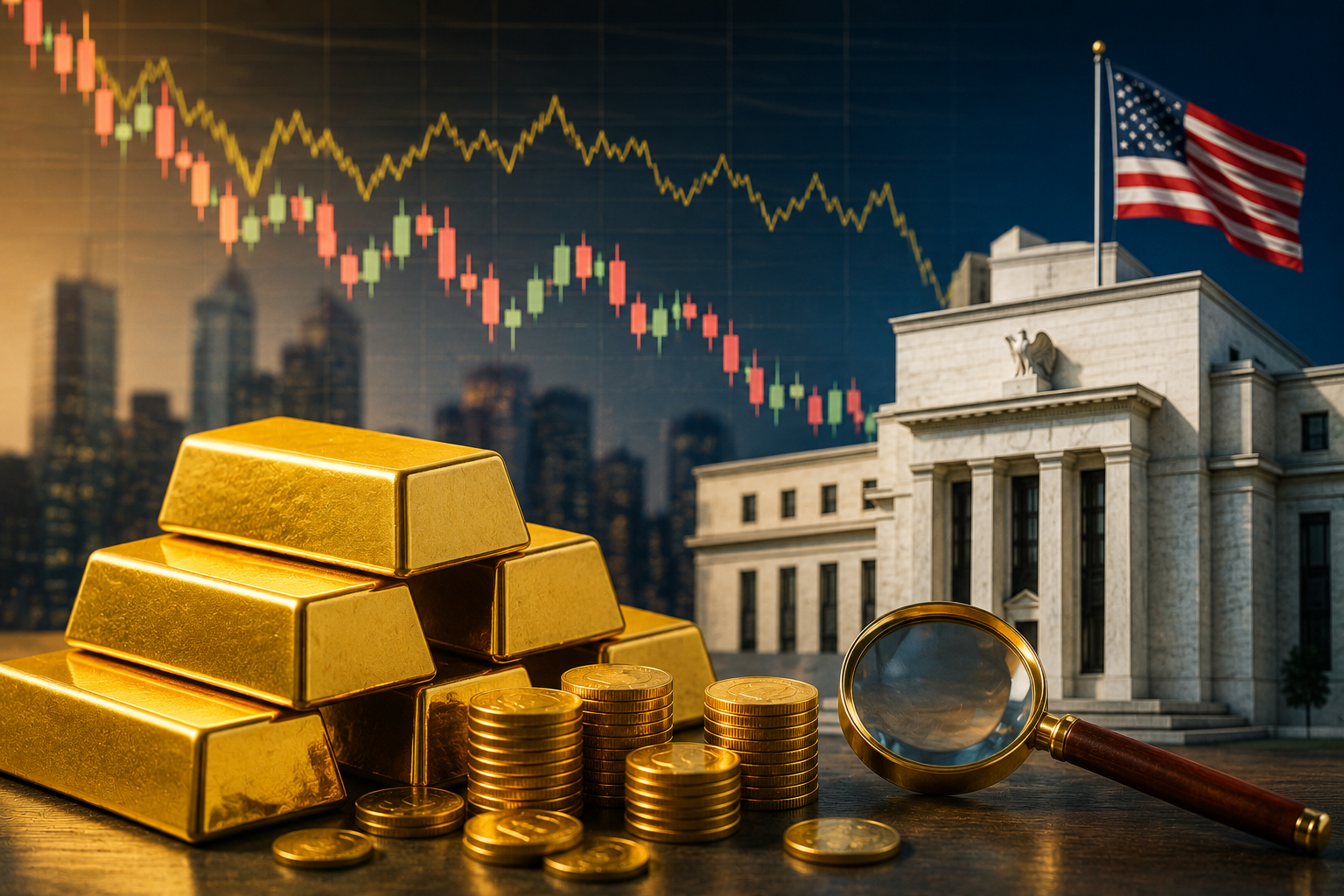
Hawkish Federal Reserve signals, resilient US economic data and a stronger dollar continue to weigh on bullion, while central bank buying and geopolitical uncertainties provide long-term support.
Gold prices entered the third quarter of 2026 on a cautious note as investors shifted their attention to two crucial global events—the upcoming US Non-Farm Payrolls (NFP) report and fresh guidance from the US Federal Reserve. Market participants believe these events will play a decisive role in determining the near-term direction of the precious metal.
Following a volatile second quarter marked by geopolitical tensions in the Middle East, elevated inflation, fluctuating crude oil prices and changing interest rate expectations, international gold prices have corrected sharply from their record highs. Analysts caution that if US economic data remains robust and the Federal Reserve maintains its hawkish stance, gold could extend its decline toward the $3,800 per ounce level.
Despite weakness in international markets, Indian gold prices have shown greater resilience due to the depreciation of the rupee and domestic pricing factors, helping cushion the impact of global declines.
Gold Records One of Its Weakest Quarters in Over a Decade
The June quarter proved challenging for gold investors as the precious metal witnessed persistent selling pressure across global markets.
After beginning the quarter near record highs, international gold prices steadily declined as stronger US economic indicators and higher interest rate expectations reduced demand for non-yielding assets.
The correction marked one of gold's sharpest quarterly declines in more than a decade, reflecting a significant shift in investor sentiment.
Key reasons behind the decline included:
-
Stronger US dollar.
-
Rising US Treasury yields.
-
Hawkish Federal Reserve guidance.
-
Reduced expectations of interest rate cuts.
-
Easing geopolitical risk premiums.
These factors collectively increased the opportunity cost of holding gold, encouraging investors to shift capital toward interest-bearing assets.
Federal Reserve Remains the Biggest Driver
The Federal Reserve continues to be the single most influential factor shaping gold prices.
Recent policy commentary has indicated that policymakers remain focused on controlling inflation despite signs of moderation in energy prices.
The central bank has maintained a cautious stance by:
-
Keeping interest rates elevated.
-
Signalling the possibility of additional tightening if required.
-
Revising inflation expectations upward.
-
Stressing the importance of data-dependent decisions.
Higher interest rates generally reduce the appeal of gold because the metal does not generate interest or dividend income.
Why US Payroll Data Matters
The upcoming US Non-Farm Payrolls report is expected to be the next major catalyst for bullion prices.
The employment report provides critical insights into the strength of the US labour market and influences expectations regarding future Federal Reserve policy.
If Payroll Data Is Strong
A stronger-than-expected employment report could:
-
Reinforce expectations of higher interest rates.
-
Support the US dollar.
-
Push bond yields higher.
-
Increase pressure on gold prices.
Under this scenario, analysts believe gold could decline toward the $3,800 level.
If Payroll Data Weakens
Conversely, weaker employment numbers could:
-
Ease concerns over additional monetary tightening.
-
Reduce Treasury yields.
-
Weaken the US dollar.
-
Trigger a recovery in gold prices.
This could allow bullion to stabilize above key support levels.
Dollar Strength Continues to Pressure Gold
The appreciation of the US dollar has been another major headwind for precious metals.
A stronger dollar makes gold more expensive for international buyers, reducing global demand.
Recent Federal Reserve guidance has pushed the dollar higher as investors increasingly expect US interest rates to remain elevated for longer.
Historically, gold and the US dollar have shared an inverse relationship, with dollar strength often leading to weakness in bullion prices.
Geopolitical Risks Still Influence Market Sentiment
Although geopolitical tensions have eased compared to earlier in the year, global developments continue to influence investor sentiment.
The market remains sensitive to:
-
Middle East developments.
-
Energy supply disruptions.
-
Global trade tensions.
-
Shipping routes.
-
Oil market volatility.
Any renewed geopolitical uncertainty could revive safe-haven demand for gold.
However, sustained de-escalation would likely reduce inflation concerns and alter expectations for future monetary policy.
Domestic Gold Prices Show Greater Resilience
While international gold prices corrected sharply, domestic MCX Gold Futures have outperformed global benchmarks.
Several factors have helped support Indian gold prices:
-
Depreciation of the Indian rupee.
-
Import duties.
-
Stable domestic demand.
-
Jewellery purchases.
-
Investment demand.
These factors have limited the extent of price declines in India's bullion market.
Central Bank Buying Offers Long-Term Support
Despite near-term weakness, structural demand for gold remains healthy.
Central banks around the world continue increasing their gold reserves as part of long-term diversification strategies.
China's central bank has continued its gold accumulation programme, reflecting confidence in the metal as a strategic reserve asset.
Additionally, institutional demand remains robust, supported by:
-
Reserve diversification.
-
Inflation hedging.
-
Currency risk management.
-
Portfolio diversification.
These long-term buyers provide an important support base for the global gold market.
Technical Outlook Remains Bearish
From a technical perspective, gold continues trading within a broader downtrend.
Market analysts observe:
-
Lower highs.
-
Lower lows.
-
Prices below key moving averages.
-
Weak momentum indicators.
Although technical indicators suggest oversold conditions, any recovery is currently viewed as a corrective bounce rather than the beginning of a sustained bullish trend.
Key Technical Levels to Watch
Resistance Levels
-
₹144,800
-
₹147,000
These levels may attract fresh selling if prices attempt to recover.
Support Levels
-
₹137,550
-
₹134,450
A decisive break below these support levels could trigger further downside in domestic gold prices.
Factors That Could Influence Gold in Coming Weeks
Investors should closely monitor:
-
US Non-Farm Payrolls data.
-
Federal Reserve commentary.
-
US inflation readings.
-
Dollar index movement.
-
Treasury yields.
-
Crude oil prices.
-
Central bank gold purchases.
-
Geopolitical developments.
These variables are expected to determine whether gold stabilizes or extends its correction.
Investment Strategy for Gold Investors
Given the current environment, analysts recommend maintaining a balanced approach.
Short-term traders may focus on:
-
Key technical support and resistance levels.
-
Economic data releases.
-
Central bank commentary.
Long-term investors may continue viewing gold as:
-
A portfolio diversifier.
-
A hedge against inflation.
-
Protection during market volatility.
-
A strategic reserve asset.
While short-term fluctuations may continue, gold remains an important component of diversified investment portfolios.
Outlook
Gold's immediate direction will largely depend on upcoming US employment data and the Federal Reserve's policy outlook. A stronger-than-expected labour market could reinforce expectations of prolonged higher interest rates, pushing bullion toward the $3,800 mark. Conversely, softer economic data or a more balanced policy stance could help stabilize prices and encourage renewed buying interest. Although near-term sentiment remains cautious, continued central bank purchases, geopolitical uncertainties and long-term investment demand continue to provide structural support for the precious metal.