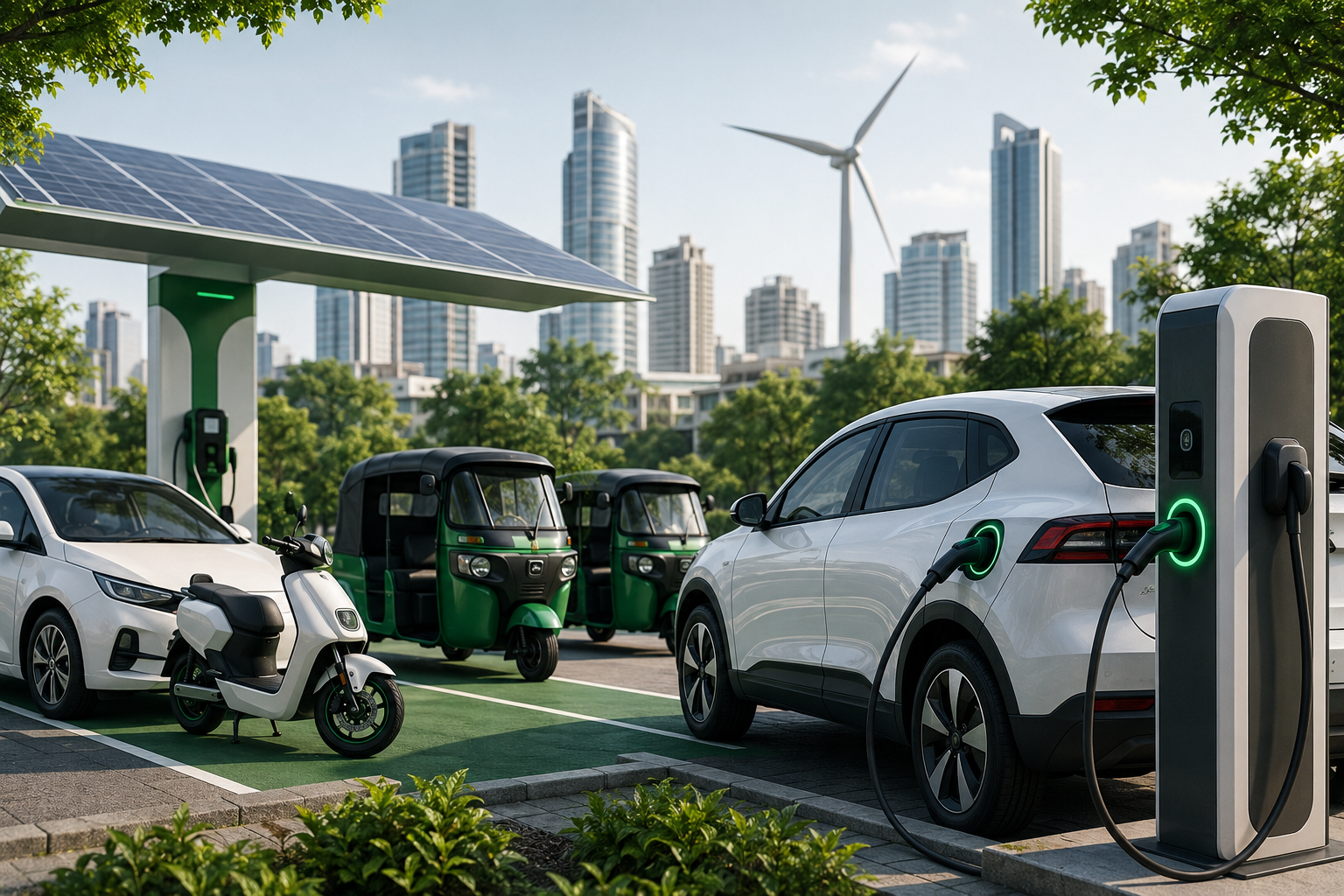
New policy offers subsidies, tax exemptions, scrappage incentives, and a roadmap for electric mobility while setting ambitious targets to reduce vehicular pollution by 2030.
Delhi Unveils Comprehensive EV Policy to Accelerate Green Mobility and Attract ₹15,000 Crore Investment
The Delhi government has officially implemented its new Electric Vehicle (EV) Policy from July 1, marking a significant step toward transforming the national capital into a cleaner and more sustainable transportation hub. The policy is designed to accelerate electric vehicle adoption, improve air quality, and attract nearly ₹15,000 crore in fresh investments over the next four years.
With Delhi continuing to battle high levels of vehicular pollution, the government believes the latest policy will play a crucial role in reducing emissions while encouraging consumers, fleet operators, and businesses to shift toward electric mobility.
Strong Financial Incentives for EV Buyers
The policy introduces a range of financial incentives aimed at making electric vehicles more affordable across multiple segments.
Electric cars priced up to ₹30 lakh (ex-showroom) and registered in Delhi will be exempt from road tax and registration charges during the policy period. However, premium electric vehicles priced above ₹30 lakh will not qualify for these benefits.
Buyers of electric two-wheelers will receive declining subsidies over three years. Incentives begin at ₹10,000 per kWh (up to ₹30,000) in the first year and gradually reduce in subsequent years. The benefits are available only for models priced up to ₹2.25 lakh.
Electric auto-rickshaw buyers will also receive phased incentives, while light commercial electric trucks can receive subsidies of up to ₹1 lakh in the first year, supporting commercial fleet electrification.
Scrappage Policy Encourages Cleaner Vehicles
To accelerate the replacement of older, more polluting vehicles, the policy offers a scrappage incentive of ₹1 lakh for owners of BS-IV and older cars who purchase an eligible electric car after scrapping their existing vehicle.
The new EV must be purchased within six months of receiving an official scrappage certificate, encouraging quicker fleet modernization.
Gradual Shift Towards an Electric Future
The Delhi government has also outlined a phased roadmap for reducing dependence on conventional fuel-powered vehicles.
Beginning January 1, 2027, only electric auto-rickshaws will be eligible for new registrations in Delhi. From April 1, 2028, registrations of new petrol and CNG-powered two-wheelers will be discontinued, allowing only electric two-wheelers to enter the market.
Government departments will gradually replace official vehicles with electric alternatives, while schools will be required to increase the share of electric buses in their fleets, targeting 30% electrification by March 2030.
Fleet operators, delivery companies, and commercial mobility providers will also face restrictions on adding new petrol and diesel vehicles in selected categories.
Charging Infrastructure Gets Major Push
Recognizing that charging infrastructure remains critical for EV adoption, the policy focuses heavily on expanding public charging and battery-swapping facilities across Delhi.
Delhi Transco Limited has been designated as the nodal agency to oversee planning and implementation of charging infrastructure. A single-window clearance system will simplify approvals for charging station operators, while automobile manufacturers will be expected to facilitate public charging facilities at their dealerships.
The government also plans to leverage both state and central schemes to accelerate infrastructure deployment.
Subsidy Comes with Lock-in Conditions
To prevent misuse of government incentives, the policy mandates that subsidized electric vehicles cannot be transferred or registered outside Delhi for three years after purchase.
This provision ensures that financial benefits are utilized by Delhi residents and discourages speculative purchases for resale in other states.
Key Exclusions from the Policy
Despite offering broad support for battery electric vehicles, the policy excludes hybrid vehicles from all financial incentives. Unlike earlier draft proposals, the final policy provides no road tax exemptions, registration fee relief, or purchase subsidies for strong hybrid vehicles.
Additionally, electric vehicles priced above ₹30 lakh will not receive tax exemptions, limiting benefits to mass-market EVs.
The policy also stops short of introducing regulations for the growing used EV market, with no provisions for battery health certification, resale guidelines, or support mechanisms for second-hand electric vehicles.
Industry Outlook
The new EV policy is expected to stimulate investment across vehicle manufacturing, charging infrastructure, battery technology, and clean mobility services. Industry experts believe the incentives, combined with a clear transition roadmap, could significantly boost EV penetration in one of India's largest urban markets.
However, the exclusion of hybrid vehicles and premium EVs has drawn mixed reactions from automobile manufacturers, who had sought broader technology-neutral incentives.