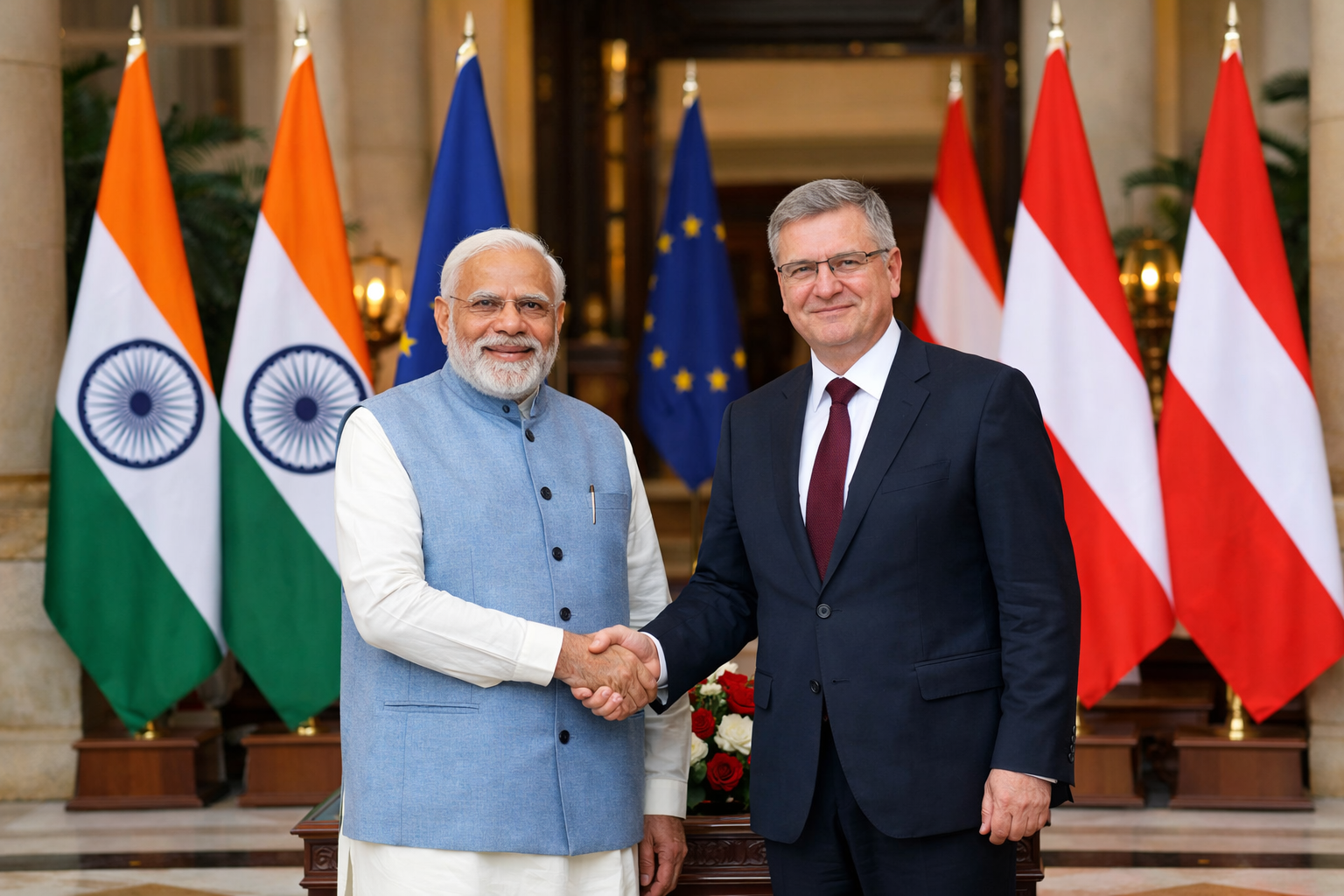
India Advocates Diplomacy in West Asia & Ukraine; Austria Visit Boosts Trade Momentum
New Delhi: Prime Minister Narendra Modi has underscored the urgent need for peaceful conflict resolution, stating that military confrontations cannot offer long-term solutions to crises in West Asia and Ukraine. His remarks came following bilateral discussions with Austria’s Federal Chancellor Christian Stocker during his official visit to India.
Rising Global Tensions Demand Diplomatic Solutions
Addressing the current geopolitical landscape, Modi highlighted that the world is navigating through a period of heightened uncertainty and instability. From Eastern Europe to West Asia, ongoing conflicts are not only affecting regional stability but also disrupting global economic and supply chain dynamics.
He stressed that both India and Austria are aligned in their belief that dialogue, cooperation, and multilateral engagement remain the only sustainable paths toward resolving such crises. According to Modi, escalation through military means only deepens uncertainties and prolongs suffering.
India’s Strong Push for Lasting Peace
Reaffirming India’s position on global peace, the Prime Minister stated that the country supports “stable, sustainable, and lasting peace” in both Ukraine and West Asia. India continues to maintain a balanced diplomatic approach, advocating negotiations while engaging with all stakeholders.
India’s stance reflects its broader foreign policy strategy of strategic autonomy, where it seeks to act as a bridge-builder in global conflicts rather than aligning with rigid blocs.
Call for Reform in Global Institutions
Modi also raised concerns about the effectiveness of current global governance frameworks. He emphasized that institutions must evolve to address modern-day challenges such as geopolitical conflicts, economic disruptions, and transnational threats.
He reiterated that eliminating terrorism must remain a unified global priority, calling for stronger international cooperation and accountability mechanisms.
Austria Visit to Strengthen Economic Ties
On the bilateral front, Modi expressed confidence that Chancellor Christian Stocker’s visit would open new avenues for trade, investment, and technological collaboration between India and Austria.
Key sectors expected to benefit include:
- Advanced manufacturing
- Green energy and sustainability
- Technology and innovation
- Infrastructure development
The visit is seen as a step toward diversifying India’s European partnerships beyond traditional allies.
India–EU Relations Enter a New Phase
Highlighting broader regional cooperation, Modi pointed to the growing engagement between India and the European Union. He noted that recent developments in trade discussions have laid the foundation for a “new golden chapter” in India-EU relations.
Strengthened ties with Europe are expected to boost exports, attract foreign investments, and enhance India's role in global supply chains.
Strategic Significance of the Visit
Chancellor Stocker’s four-day visit marks a significant milestone in India-Austria relations. As his first official trip to India, it signals renewed commitment from both sides to deepen diplomatic and economic engagement.
With global uncertainties rising, India’s emphasis on peace, cooperation, and economic partnerships positions it as a key stabilizing force in the evolving geopolitical order.