₹4,000 Crore Modernisation Plan Proposed as India Strengthens High-Altitude Border Security
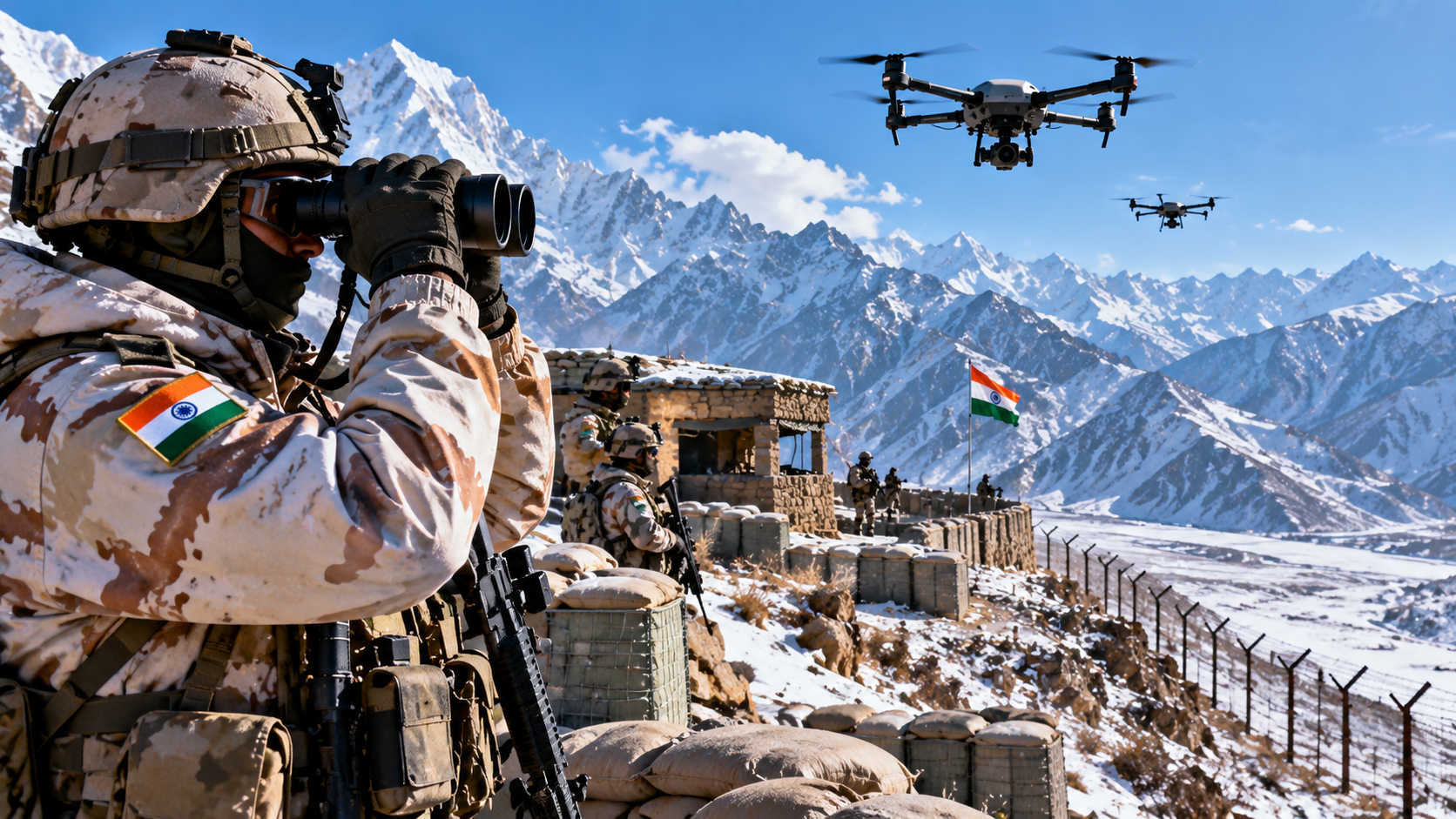
The Indo-Tibetan Border Police (ITBP) is accelerating its modernisation efforts along the India-China border, expanding drone warfare capabilities, developing specialised combat units and constructing underground shelters to strengthen operational readiness in challenging high-altitude conditions.
ITBP Director General Shatrujeet Singh Kapoor outlined the force's modernisation priorities while addressing personnel at an investiture ceremony in Alwar, Rajasthan, ahead of the organisation's 65th Raising Day on October 24, 2026. Kapoor, who is scheduled to retire on October 31, said conventional methods of warfare were no longer sufficient to address emerging security challenges and emphasised the growing importance of drones and counter-drone technology.
The force is also upgrading weapons, vehicles, border infrastructure and troop facilities as part of a broader strategy to improve its ability to respond to evolving threats along the Line of Actual Control (LAC).
The ITBP, established in 1962, guards approximately 3,488 kilometres of the India-China border. Its personnel operate in some of the country's most difficult mountainous terrain, where extreme cold, high altitude and limited connectivity create significant logistical and operational challenges.
Drone Platoons Established Across Border Battalions
One of the major developments highlighted by Kapoor is the establishment of drone platoons in every ITBP border-guarding battalion.
The initiative reflects the growing role of unmanned aerial systems in surveillance, reconnaissance and modern combat operations. Drones can help security forces monitor difficult terrain, observe potential threats and improve situational awareness in remote border areas.
Kapoor said the force is training drone pilots and developing its own drones as it works to strengthen its technological capabilities.
He also pointed to lessons from the Russia-Ukraine conflict and the confrontation involving Iran and the United States, arguing that drones and counter-drone systems have changed the dynamics of modern warfare.
According to the DG, smaller military forces can use unmanned systems to challenge technologically stronger opponents, making drone capabilities an important component of national defence preparedness.
For the ITBP, the focus extends beyond deploying drones. Counter-drone technology is also becoming increasingly important as security forces prepare to detect, disrupt and respond to hostile unmanned aerial systems.
₹400 Crore Allocated for Modernisation Efforts
Kapoor said the ITBP had received government funding of ₹400 crore, with approximately 70% earmarked for strengthening drone warfare capabilities.
He also announced that the Ministry of Home Affairs had granted in-principle approval for a larger modernisation scheme worth ₹4,000 crore.
Under the proposed plan, ₹1,000 crore would be allocated to drone and anti-drone systems, according to the DG.
The planned investments are expected to support the force's technological transformation, although the overall implementation will depend on the scheme's approval process, procurement decisions and deployment timelines.
Modernisation is particularly important for border forces operating in mountainous regions, where conventional surveillance can be difficult because of steep terrain, unpredictable weather and limited road access.
Improved aerial monitoring and counter-drone capabilities could help strengthen border observation and support faster responses to emerging security situations.
New 'Strike' Course to Prepare Personnel for Galwan-Like Situations
The ITBP has developed a specialised training programme called the 'Strike' course to improve personnel readiness for close-combat situations similar to the June 2020 Galwan Valley clash.
Kapoor said the entire force is expected to undergo the training by the end of 2027.
The Galwan confrontation in eastern Ladakh resulted in the deaths of 20 Indian soldiers. The incident highlighted the risks of close-quarter confrontations along the disputed border and intensified India's focus on border preparedness.
The new training programme is intended to strengthen the force's ability to respond to physically demanding and rapidly changing situations.
In addition to specialised training, the ITBP is developing new combat formations to improve tactical effectiveness and coordination during border deployments.
Shaurya Commandos to Strengthen Border Operations
The force has also raised a new specialised combat unit known as the Shaurya commandos.
Kapoor said the commandos had demonstrated their capabilities during ongoing face-offs with Chinese People's Liberation Army personnel at several locations in Arunachal Pradesh.
The ITBP plans to deploy these specialised personnel across its border battalions, giving the force additional tactical capabilities for challenging operational situations.
The development forms part of a wider strategy to create a specialised high-altitude mountain fighting force capable of operating effectively in difficult terrain.
The emphasis on specialised personnel, advanced equipment and targeted training reflects the changing requirements of border security, where readiness and rapid response can be critical.
Underground Bunkers Planned Along the LAC
Another significant element of the ITBP's modernisation programme is the construction of underground shelters at border locations.
Kapoor said the force was undertaking underground infrastructure development on a larger scale, drawing lessons from contemporary conflicts in which exposed buildings can become vulnerable during intense fighting.
The force is currently implementing a pilot project and plans to expand the facilities in the coming years.
The proposed shelters are expected to provide protection while offering living conditions comparable to those available in above-ground buildings.
Underground infrastructure could improve troop safety and operational continuity during emergencies, particularly in locations exposed to hostile fire or extreme weather.
However, the effectiveness of these facilities will depend on their engineering, ventilation, power supply, accessibility and suitability for the environmental conditions at each deployment location.
The initiative highlights the growing importance of resilient infrastructure alongside weapons and surveillance technology in modern border management.
Troop Welfare and Infrastructure Also Receive Attention
The ITBP's modernisation programme also includes measures to improve the living conditions of personnel stationed in extremely cold regions.
Kapoor said the force had insulated 342 of its 383 barracks located in areas experiencing sub-zero temperatures.
Insulation can help maintain more stable indoor temperatures, improve comfort and reduce the difficulties associated with prolonged deployment in freezing conditions.
The force has also procured 141 generator sets to improve electricity availability at remote locations and installed solar water heaters at a number of facilities.
These measures are intended to strengthen troop welfare and reduce dependence on limited infrastructure in isolated border areas.
Maintaining morale and physical well-being is particularly important for personnel working at high altitudes, where harsh weather, isolation and logistical constraints can affect both daily life and operational performance.
Cold-Start Technology to Improve Vehicle Reliability
Vehicle mobility is another area receiving attention.
Kapoor said the ITBP had introduced a 'cold start kit' for border units to help vehicles start more reliably in icy conditions.
In extremely cold environments, low temperatures can affect batteries, engine fluids and starting systems, creating difficulties for vehicles needed to transport personnel and supplies.
Improved cold-start capabilities could reduce delays and help ensure that vehicles remain available when required.
The force is also working to procure new all-terrain vehicles, ground vehicles and quick reaction vehicles to strengthen mobility across difficult terrain.
Reliable transport is essential for moving troops, equipment and supplies between remote posts, especially when weather conditions or road access complicate movement.
The ITBP is also modernising some of its weapons, with Kapoor noting that certain systems currently in service are approximately five decades old.
Focus on Health, Fitness and Personnel Security
Alongside equipment and infrastructure upgrades, the ITBP chief emphasised the importance of personnel health and discipline.
The force has introduced a revised diet plan intended to reduce excessive sugar and oil consumption, according to Kapoor.
He also expressed concern over the increase in cases of Alcohol Dependence Syndrome within the organisation since 2020, urging personnel to remain alert to the risks associated with alcohol dependence.
In addition, he warned troops against 'honey trap' attempts through social media, in which individuals may be manipulated into revealing confidential or sensitive information.
Such threats underline the importance of cybersecurity awareness and information security for personnel involved in sensitive border operations.
The ITBP's modernisation strategy therefore extends beyond hardware and weapons, incorporating training, health, discipline and protection against social engineering.
What the Modernisation Push Means for India's Border Security
The ITBP's initiatives reflect the growing complexity of securing the India-China border.
Modern border management increasingly requires a combination of trained personnel, advanced surveillance systems, reliable transport, resilient infrastructure and rapid-response capabilities.
Drone platoons could improve observation across remote terrain, while anti-drone systems may help address emerging aerial threats. Specialised combat units and updated training could strengthen readiness, while underground shelters and improved facilities may support personnel during prolonged deployments.
At the same time, successful implementation will require sustained funding, effective procurement, equipment maintenance and regular training.
Technology alone cannot eliminate the challenges associated with high-altitude operations. Weather, terrain, communication gaps and logistical constraints will continue to shape the force's operational requirements.
The planned investments therefore represent a broader effort to improve the ITBP's capabilities while adapting to the changing nature of military and border-security operations.
Market Outlook
The ITBP's modernisation plans could create business opportunities across India's defence and security ecosystem, particularly in drone manufacturing, anti-drone technology, surveillance equipment, military communications, specialised vehicles and high-altitude infrastructure.
Companies supplying unmanned aerial systems, electronic components, sensors, secure communication equipment and ruggedised mobility solutions could benefit if procurement programmes translate into firm orders.
The proposed ₹4,000 crore modernisation scheme, including the planned ₹1,000 crore allocation for drone and anti-drone systems, is a development worth monitoring for investors tracking India's defence manufacturing sector. However, the in-principle approval mentioned by the DG should not be treated as confirmation that every proposed expenditure has been awarded to suppliers.
Investors should monitor official tender announcements, contract awards, order execution, revenue visibility and payment timelines before assessing the potential impact on individual companies.
Defence-related businesses may offer long-term growth opportunities as India expands domestic manufacturing and strengthens strategic infrastructure. Nevertheless, procurement delays, execution risks, valuation concerns and changes in government spending priorities can affect company performance.