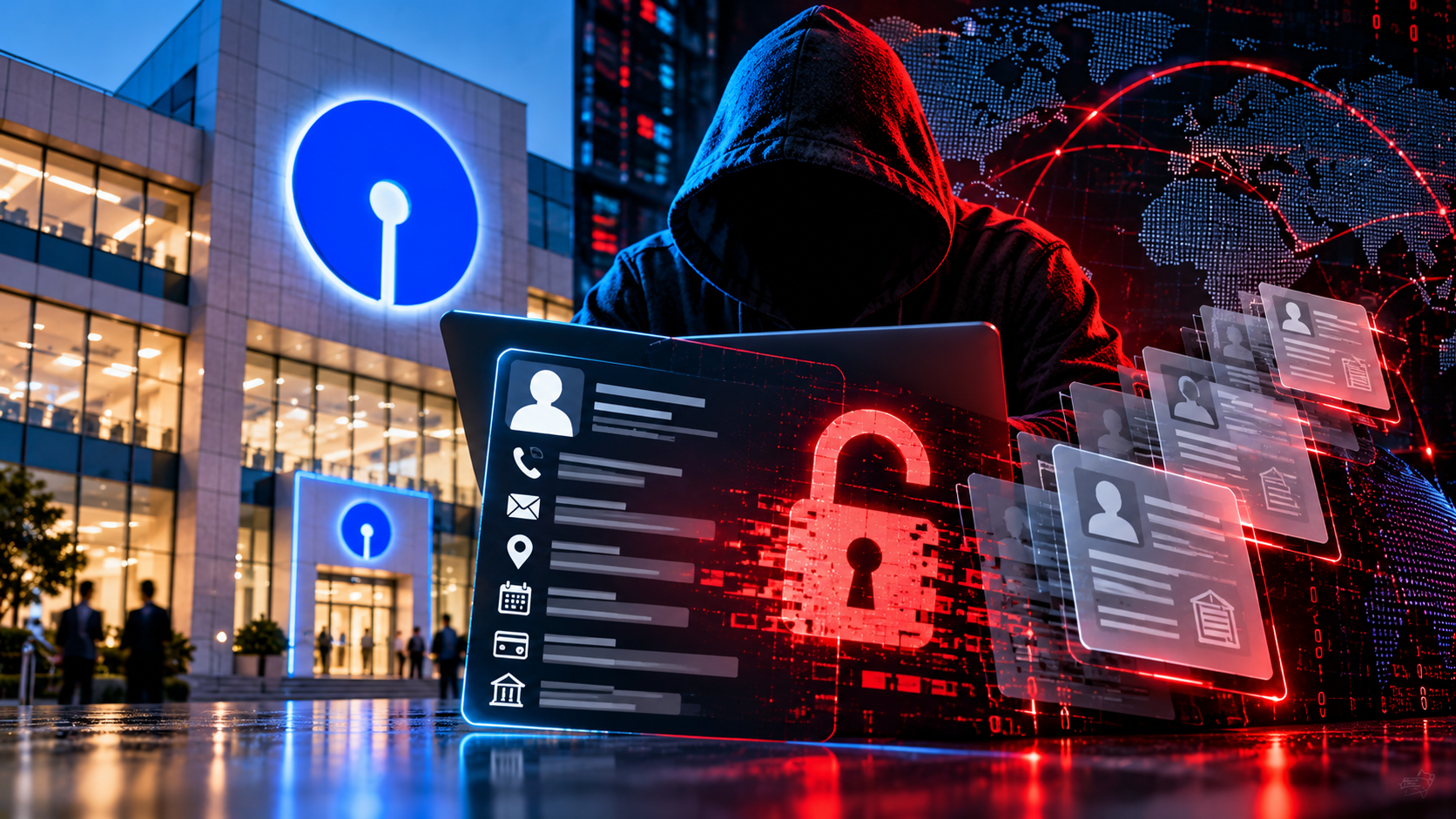
India's largest public-sector lender says exposed information includes personal details and loan records; an independent cybersecurity agency has been engaged to investigate the breach as banks face growing threats from data theft and digital fraud.
State Bank of India (SBI) has reported a cybersecurity incident involving the exposure of 3,897 customer records containing personally identifiable information on the dark web. The disclosure has renewed concerns about data protection in India's banking sector, where growing digital adoption has increased the importance of safeguarding sensitive customer information.
According to the bank's preliminary analysis, the exposed information included customer names, mobile numbers, dates of birth, email addresses, residential addresses, brand and customer identifiers, as well as loan-related records.
SBI has engaged an independent cybersecurity agency to conduct a comprehensive assessment and determine the nature, scope and circumstances of the incident. The investigation is expected to help establish how the information was exposed, whether additional records were affected and what further protective measures may be required.
The bank has stated that the incident is not expected to have a material impact on its core business operations, financial performance or business continuity. However, the exposure of personal and financial information presents potential risks for affected customers, particularly if the data is used for targeted scams or identity-related fraud.
What Information Was Exposed?
The preliminary assessment identified several categories of customer information that may have been disclosed. These include:
-
Personal details: Customer names and dates of birth.
-
Contact information: Mobile numbers and email addresses.
-
Residential information: Customers' home addresses.
-
Customer identifiers: Brand and customer-related identification details.
-
Loan records: Information associated with lending accounts.
The sensitivity of the incident lies not only in the number of records involved but also in the combination of information reportedly exposed. When personal details and loan-related information are brought together, they may enable fraudsters to construct convincing messages and impersonate legitimate financial institutions.
The investigation will need to clarify whether the exposed records contain additional sensitive information, whether the data is current and how the incident occurred. The preliminary disclosure does not, by itself, establish that banking passwords, PINs, OTPs or account balances were exposed.
Why the Data Leak Could Increase Fraud Risks
Personal information can be valuable to cybercriminals even when direct access to bank accounts has not been established. Names, phone numbers, dates of birth and residential addresses can be used to create targeted phishing attempts that appear more credible than generic scam messages.
For example, a fraudster could contact a customer while posing as a bank representative and refer to a loan, an account-related issue or personal details to gain the recipient's trust. The caller may then attempt to obtain confidential credentials, persuade the customer to approve a transaction or direct them to a fraudulent website.
Exposed contact information can also be used for spam, impersonation attempts and social-engineering attacks. If loan-related records contain details about a customer's borrowing arrangements, scammers may use that context to make fraudulent communications appear legitimate.
However, the actual misuse of the exposed SBI records has not been established in the information available about the incident. The risks described above are potential consequences of this type of data exposure, not confirmation that customers have already suffered financial losses.
SBI Engages Independent Cybersecurity Experts
SBI has appointed an independent cybersecurity agency to investigate the incident and conduct a comprehensive assessment.
Such an assessment typically seeks to determine the extent of the exposure, identify possible entry points, establish whether unauthorised access occurred and evaluate the controls that may need strengthening. Investigators may also examine relevant systems, access records and security processes to understand the incident's origin and timeline.
The findings could help the bank determine whether additional customer notifications, security measures or remedial actions are necessary. The outcome will also be important for understanding whether the exposed information originated from the bank's systems, a third-party environment or another point in the data-handling process.
Until the investigation is completed, the precise cause of the incident and the full extent of the exposure remain unclear.
Banking Sector Faces Increasing Cybersecurity Pressure
The incident comes at a time when India's banking sector is under growing pressure to strengthen cybersecurity and protect customer information. Banks increasingly depend on digital platforms, mobile applications, online payment systems and interconnected service providers to deliver financial services.
These systems improve convenience and efficiency but also create a wider environment that institutions must secure. Potential threats include phishing, ransomware, credential theft, unauthorised data access and attacks on third-party service providers.
Financial institutions must therefore maintain strong access controls, monitor unusual activity, regularly test their systems and establish clear procedures for responding to cybersecurity incidents.
Data protection also extends beyond preventing unauthorised transactions. Personal information can be misused even when core banking systems remain operational, making customer communication, incident investigation and prevention of follow-on fraud important elements of the response.
What SBI Customers Should Do
Customers should remain alert to suspicious calls, messages and emails, particularly communications that refer to banking or loan-related information and demand immediate action.
Verify unexpected communications: If someone claims to represent SBI, contact the bank through an independently verified official channel instead of relying on the number or link provided in the message.
Never share confidential credentials: Do not disclose OTPs, PINs, passwords or internet banking credentials to callers or through suspicious websites.
Avoid urgent payment requests: Treat demands to transfer money, install remote-access applications or approve transactions under pressure as potential warning signs.
Monitor account activity: Review bank statements and transaction alerts regularly. Report any unfamiliar transaction or suspected unauthorised activity to the bank immediately.
Protect against identity misuse: Be cautious if someone uses personal or loan-related details to establish credibility. Knowing customer information does not prove that a caller is an authorised bank employee.
Report suspected financial fraud promptly: In India, victims of cyber financial fraud can call the national helpline at 1930 and report incidents through the official National Cyber Crime Reporting Portal at cybercrime.gov.in.
Customers should not assume that every account has been compromised, but taking precautions can reduce the risk of information being exploited in subsequent scams.
Operational Impact and Financial Implications
SBI has said the incident is not expected to materially affect its core operations, financial performance or business continuity. This distinction is important because the exposure of customer records does not automatically mean that banking services have been disrupted or that unauthorised access to customer funds has occurred.
Nevertheless, cybersecurity incidents can carry indirect costs, including forensic investigations, system reviews, customer support, additional security measures and potential regulatory scrutiny. The ultimate implications depend on the investigation's findings, the nature of the compromised information and the effectiveness of the bank's response.
For a large financial institution, maintaining customer confidence is also critical. Transparent communication, timely investigation and appropriate safeguards can help limit the longer-term consequences of a data exposure.
Market Outlook
SBI's reported exposure of 3,897 customer records highlights the growing importance of cybersecurity in India's financial services industry. Although the bank does not expect a material impact on its core operations or financial performance, the exposure of personal and loan-related information creates potential risks for customers and reinforces the need for robust data protection.
The key developments to watch are the findings of the independent cybersecurity assessment, clarification of the source and scope of the leak, and any additional safeguards or customer advisories issued by the bank.
For the wider banking sector, cybersecurity is increasingly a business-continuity and customer-trust issue, not simply an information technology expense. The ability to prevent data breaches, respond quickly when incidents occur and protect customers against follow-on fraud will remain important as digital banking expands.
Customers should stay vigilant without assuming that their accounts have been accessed or funds compromised. The investigation's findings will be essential to establishing the incident's full implications.