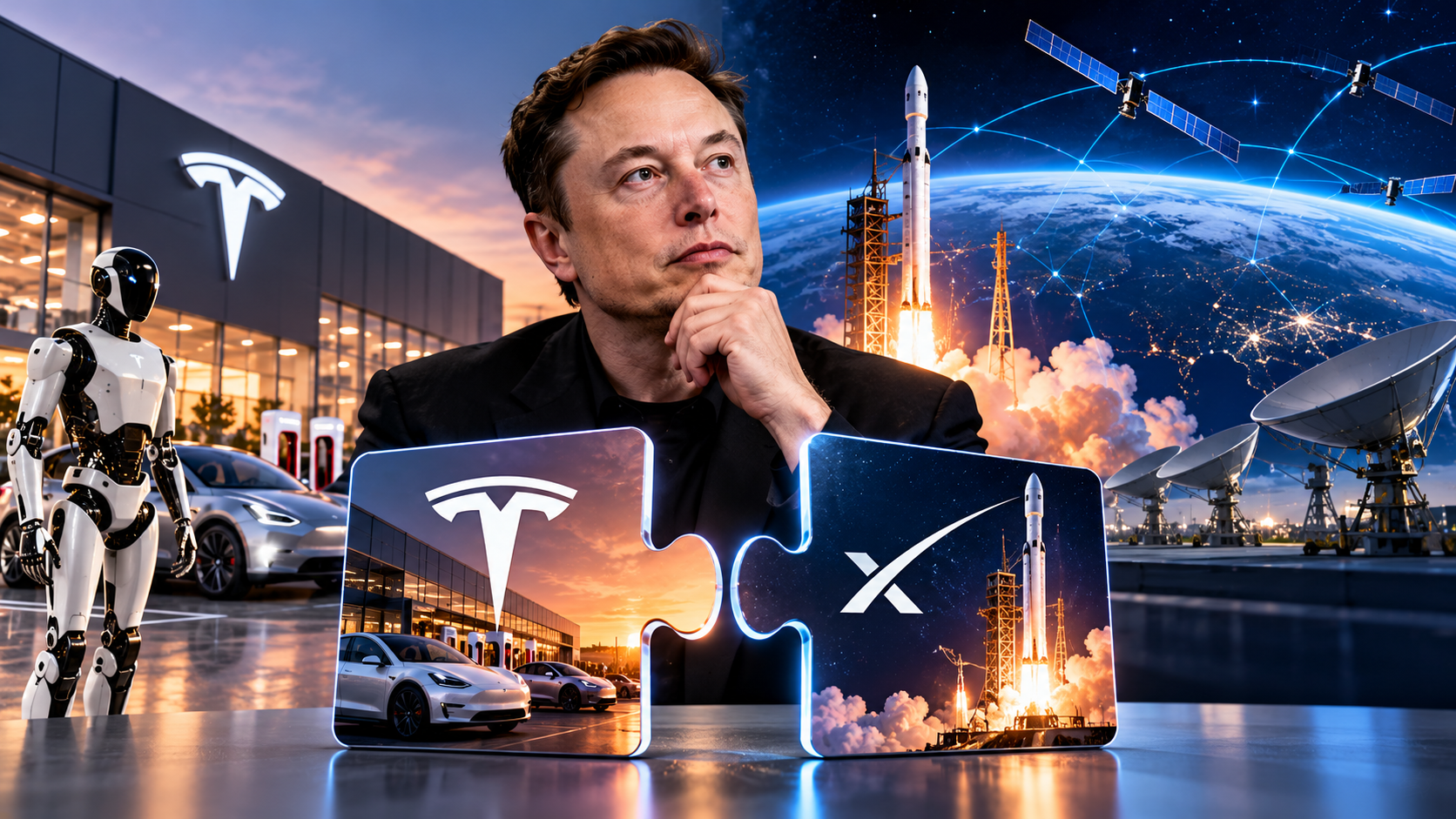
A possible combination of the electric vehicle maker and the aerospace giant could bring AI, robotics, semiconductor design and satellite connectivity under one corporate structure, but shareholder approval and unresolved discussions mean a merger is far from certain.
Elon Musk has indicated that a merger between Tesla and SpaceX is being considered, potentially bringing two of his most prominent businesses under a single corporate structure. Speaking during SpaceX's earnings call on Wednesday, October 21, Musk said special committees had been formed to examine the proposal, while stressing that a transaction was not guaranteed.
The discussions have attracted attention because of the companies' substantial valuations and their expanding interests in artificial intelligence (AI), robotics, computing infrastructure and connectivity. A combination could create opportunities to share technology and resources across industries, although it would also raise complex questions around governance, valuation, financing and shareholder interests.
Musk said shareholder support would be necessary for any deal to proceed. He also indicated that he would stay out of the discussions because of a potential conflict of interest, adding that the committees had not reached an agreement and might ultimately decide against a merger.
Why Musk Sees Potential in Combining Tesla and SpaceX
Tesla and SpaceX operate in different industries but increasingly intersect through advanced technology and infrastructure.
Tesla is primarily known for electric vehicles, energy storage and charging infrastructure, while SpaceX develops launch vehicles, operates satellite communications services through Starlink and is expanding its computing-related activities.
Musk has identified several areas where closer cooperation could create potential benefits:
-
Artificial intelligence: Combining expertise and infrastructure could support AI development and deployment across different applications.
-
Semiconductor design: Greater coordination could help develop specialised chips for computing, autonomous systems and other demanding workloads.
-
Robotics: Tesla's work on humanoid robots and automation could potentially complement SpaceX's engineering and manufacturing capabilities.
-
Satellite connectivity: SpaceX's Starlink network could offer connectivity capabilities relevant to future connected devices and other technology applications.
-
Space-based infrastructure: SpaceX's launch capabilities could support future efforts to deploy large-scale computing or communications systems in orbit.
These are potential areas of cooperation rather than confirmed benefits of a merger. Their commercial value would depend on technical feasibility, investment requirements, regulatory considerations and the ability to integrate operations effectively.
Tesla and SpaceX Have Substantial Valuations
The scale of the two companies makes the proposed transaction particularly significant. The supplied report places Tesla's valuation at approximately $1.5 trillion and SpaceX's at around $2 trillion.
A merger involving businesses of this size would require a detailed assessment of their relative values, ownership structures and the terms offered to existing shareholders. The structure could determine how shareholders participate in the combined entity and how future capital requirements are distributed.
Valuation differences could also complicate negotiations. Tesla's value is closely linked to electric vehicles, energy products, autonomous driving and expectations around robotics and AI. SpaceX's business includes rocket launches, satellite connectivity and other developing technology activities, each with different revenue models and capital requirements.
Any transaction would need to establish how these businesses should be valued together and whether the expected strategic advantages justify the costs and risks of combining them.
Special Committees and Shareholder Approval Remain Critical
The formation of special committees indicates that the proposal is being considered, but it does not mean a deal has been approved or agreed upon.
Musk's decision to stay out of the discussions because of a potential conflict of interest highlights the importance of independent evaluation. When companies associated with the same controlling executive consider a transaction, governance procedures and transparent decision-making become especially important.
The committees would need to assess the proposal's strategic rationale, financial terms, potential conflicts and implications for shareholders. Depending on the final structure and applicable legal requirements, further approvals and regulatory reviews could also be necessary.
Musk has explicitly cautioned against treating the merger as certain. Until the companies announce agreed terms and clarify the approval process, the proposal should be regarded as an ongoing consideration rather than a confirmed corporate transaction.
Musk's Expanding Business Ecosystem
The possible Tesla–SpaceX combination follows earlier moves to consolidate businesses associated with Musk.
In February 2026, SpaceX acquired his artificial intelligence company xAI, bringing the Grok chatbot and the social media platform X under the same corporate umbrella. This followed xAI's acquisition of X in an all-stock transaction in March 2025.
These moves illustrate a broader effort to create links between AI, digital platforms, computing infrastructure and space technology. SpaceX has also expanded its computing-related activities, including providing computing capacity to technology companies.
However, combining businesses can create challenges as well as opportunities. Different operating models, funding needs, customer relationships and governance requirements can make integration complicated. A larger corporate structure does not automatically result in stronger profitability or higher shareholder returns.
SpaceX's Revenue Mix Highlights Its Expanding Operations
The supplied report cited SpaceX's latest quarterly results as showing $7.56 billion in third-quarter revenue from its Super Intelligence business and $5.25 billion from its Connectivity business, which includes Starlink.
These reported figures point to the growing importance of activities beyond traditional rocket launches. Satellite connectivity and computing-related operations could become increasingly significant as demand for communications infrastructure and AI computing expands.
Investors would nevertheless need more information about the businesses' operating costs, margins, capital expenditure and cash generation to assess their financial contribution fully. Revenue alone does not establish profitability or indicate how much value a merger would create.
If the companies pursue a combination, the treatment of these business segments within the new corporate structure could become an important consideration for shareholders.
Market Reaction: SpaceX Shares Rise More Than Tesla
Musk's comments were followed by gains in both companies' shares in after-hours trading, according to the supplied report. SpaceX shares rose more than 8%, while Tesla shares advanced approximately 1.7%.
The stronger reported move in SpaceX suggests that investors may have viewed the proposal as potentially significant for the aerospace company's strategic positioning. However, short-term share-price movements do not establish whether a merger would ultimately be completed or create long-term value.
Investors will need to distinguish between enthusiasm about the possibility of a transaction and the financial implications of its eventual terms. The ownership structure, exchange ratio, governance arrangements and allocation of future investment could all influence how shareholders assess the deal.
Key Risks and Questions for Investors
Despite the strategic possibilities, several issues could determine whether a merger makes commercial sense.
Valuation and deal structure: The companies would need to agree on terms that appropriately reflect their businesses, growth prospects and risks.
Governance and conflicts of interest: Independent scrutiny would be important in evaluating whether the transaction serves shareholders' interests.
Integration complexity: Combining automotive manufacturing, aerospace operations, satellite communications and AI-related activities would require coordination across distinct industries.
Capital requirements: Space infrastructure, semiconductor development, AI computing and robotics can require substantial investment. Investors would need clarity on how funding needs would be managed.
Regulatory scrutiny: The proposed transaction could require reviews and approvals depending on its structure, jurisdictions and the applicable legal framework.
Execution risk: Even if the deal is approved, expected technological and financial synergies may take time to materialise and may not reach initial expectations.
Market Outlook
The possibility of a Tesla–SpaceX merger has placed the spotlight on Musk's strategy of connecting electric mobility, aerospace, satellite communications, AI and robotics. The companies could potentially benefit from shared technological capabilities, infrastructure and research, but the commercial advantages remain unproven.
The immediate focus will be on whether the special committees advance discussions, how the companies approach valuation and governance, and what approval requirements would apply. Until formal terms are announced, the reported after-hours share-price gains should not be interpreted as confirmation that a transaction will take place.
For investors, the key consideration is not simply the size of a potential combined company, but whether a merger would improve long-term earnings, cash generation and capital efficiency without creating excessive financial or operational complexity. Any investment assessment should therefore account for the uncertainty surrounding the proposal and the distinct risks associated with both businesses.