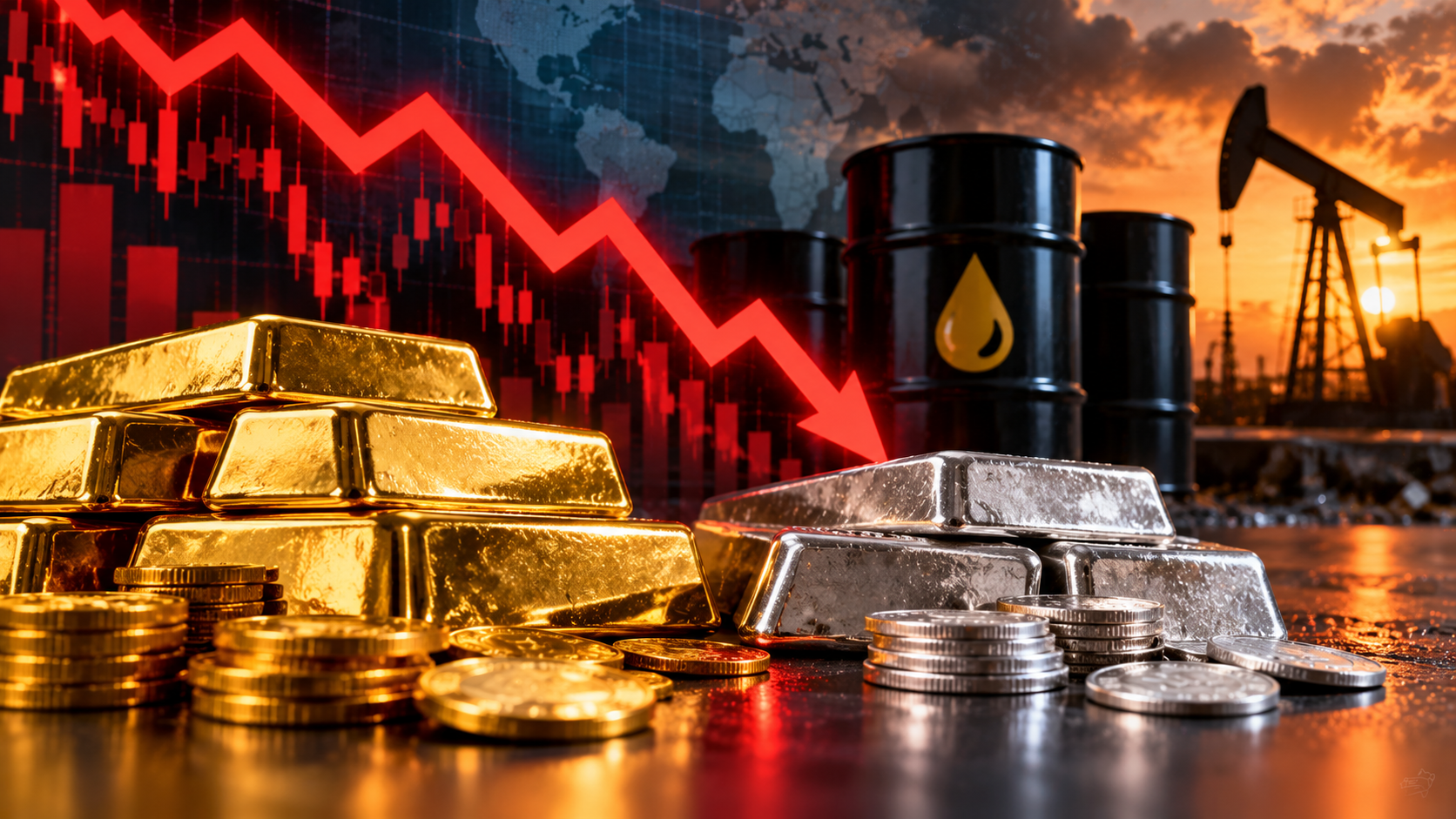
Precious metals face renewed selling pressure as higher oil prices and geopolitical tensions in West Asia raise concerns over persistent inflation; MCX gold trades near ₹1.46 lakh per 10 grams and silver approaches ₹2.10 lakh per kg, with traders watching key technical support and resistance levels.
Gold and silver prices declined on Wednesday, October 21, as elevated crude oil prices revived concerns about inflation and the possibility of interest rates remaining higher for longer. Rising geopolitical tensions in West Asia and reported attacks on oil tankers have added to uncertainty over global energy supplies, putting pressure on precious metals.
In the domestic futures market, December gold contracts on the Multi Commodity Exchange (MCX) were trading near ₹1,46,130 per 10 grams, while December silver futures stood around ₹2,09,752 per kg at the time of the reported market snapshot. Internationally, gold futures on Comex were near $4,139.40 per ounce, and silver futures were around $57.57 per ounce.
The decline highlights the competing forces influencing precious metals. Gold and silver can benefit from geopolitical uncertainty and demand for defensive assets, but rising inflation expectations and the prospect of tighter monetary policy can weigh on prices.
Why Higher Crude Oil Prices Are Weighing on Gold and Silver
Crude oil is a major input for transportation, manufacturing and several other parts of the global economy. A sustained increase in oil prices can raise production and logistics costs, potentially keeping inflation elevated.
When inflation risks increase, central banks may be less inclined to reduce interest rates and could consider tighter policy if price pressures persist. Expectations of higher interest rates can put pressure on gold because the metal does not generate interest income or dividends.
Higher bond yields can make interest-bearing assets relatively more attractive, increasing the opportunity cost of holding gold. A stronger US dollar, if it accompanies changing rate expectations, can also make dollar-denominated commodities more expensive for buyers using other currencies.
Silver faces similar macroeconomic influences, but its price also responds to industrial demand. The metal is used in areas including electronics, solar technology and other industrial applications, making its performance sensitive to both investment sentiment and expectations for economic activity.
The direction of precious metals will therefore depend on how crude oil prices, inflation expectations, bond yields, the US dollar and geopolitical developments evolve.
MCX Gold Opens Lower as Selling Pressure Continues
December gold futures opened ₹191 lower at ₹1,46,328 per 10 grams on the MCX, compared with the previous close of ₹1,46,519. The contract subsequently traded around ₹1,46,130, down ₹389 from the previous close in the reported snapshot.
Gold prices have also moved considerably away from their earlier peak. According to the supplied market data, domestic gold futures had reached a high of ₹1,80,779 per 10 grams earlier in the year.
The latest decline suggests that traders are reassessing the balance between safe-haven demand and the risk of interest rates staying elevated. However, one session's movement does not establish a longer-term trend, and fresh geopolitical developments or changes in monetary-policy expectations could alter market sentiment.
Silver Futures Decline Below ₹2.10 Lakh per Kg
Silver also opened lower on the MCX. The benchmark December contract started at ₹2,10,400 per kg, down ₹1,085 from the previous close of ₹2,11,485. It was subsequently trading near ₹2,09,752, a decline of approximately ₹1,733 in the reported snapshot.
The metal has experienced substantial price volatility this year. The supplied data indicates that silver futures previously touched a high of ₹4,20,048 per kg.
Silver's dual role as an investment asset and an industrial metal makes its outlook more complex than that of gold. Weakness in investment demand can pressure prices, while concerns about industrial activity may add another source of volatility. Conversely, stronger demand from industrial applications can provide support, depending on the broader economic environment.
Investors should distinguish between short-term price movements and the underlying factors affecting physical demand, supply and investment flows.
International Gold and Silver Prices Remain Under Pressure
On Comex, gold futures opened at $4,143.40 per ounce against the previous close of $4,142.60. The contract later traded around $4,139.40, down $3.20 in the reported snapshot.
International gold had previously reached a high of $5,586.20 per ounce, according to the supplied figures.
Comex silver futures opened at $58.15 per ounce, compared with the previous close of $58.00. The contract subsequently traded near $57.57, down approximately $0.43. Silver had earlier touched a reported high of $121.79 per ounce.
These figures reflect the market snapshot available at the time of reporting and can change during the trading session.
International price movements are important for Indian bullion markets, but domestic prices are also influenced by the rupee-dollar exchange rate, import-related costs, taxes and local demand. As a result, domestic futures may not mirror overseas price changes exactly.
Gold Technical Levels: Support at ₹1,45,750
According to Ajay Kedia, director of Kedia Advisory, gold was showing fresh selling pressure in the technical market.
The reported data showed open interest increasing 0.42% to 16,829 contracts as prices declined by ₹747. Rising open interest alongside falling prices can be consistent with fresh positions being added during a decline, although the data should be interpreted alongside price action and other market indicators.
The key gold levels identified in the report are:
-
Initial support: ₹1,45,750 per 10 grams
-
Next support: ₹1,44,980 per 10 grams
-
Immediate resistance: ₹1,47,320 per 10 grams
-
Higher resistance: ₹1,48,120 per 10 grams
A sustained move below the initial support could expose the next support zone. On the other hand, a recovery above ₹1,47,320 may improve short-term sentiment and open the way towards ₹1,48,120.
These are technical reference points rather than guaranteed turning points. Price movements around them will depend on trading volume, global cues and changes in interest-rate expectations.
Silver Technical Levels: Traders Watch ₹2.08 Lakh Support
Silver's technical indicators presented a different picture. Kedia described the market as witnessing short covering, while the supplied figures showed open interest declining 1.45% to 19,522 contracts as prices rose by ₹1,657.
Short covering occurs when traders close existing short positions by buying back contracts. It can support a temporary rebound, but it does not necessarily indicate that a sustained upward trend has begun.
The key silver levels identified in the report are:
-
Initial support: ₹2,08,570 per kg
-
Next support: ₹2,05,650 per kg
-
Immediate resistance: ₹2,13,920 per kg
-
Higher resistance: ₹2,16,360 per kg
A sustained break below ₹2,08,570 could bring the next support at ₹2,05,650 into focus. Conversely, a move above ₹2,13,920 could improve the near-term outlook, with ₹2,16,360 emerging as the next resistance zone.
Traders should monitor whether any rebound is accompanied by stronger buying participation rather than relying on price levels alone.
What Investors Should Monitor Next
The immediate outlook for gold and silver will depend on several interconnected factors.
Crude oil and West Asian tensions: Further supply disruptions or escalation in the region could keep energy prices elevated, increasing inflation concerns while also supporting some safe-haven demand.
Central-bank policy expectations: Changes in expectations for US interest rates could influence bond yields, the dollar and the attractiveness of non-yielding metals.
The US dollar and bond yields: A stronger dollar or rising yields may create additional headwinds for precious metals, while a reversal in either trend could offer support.
Investment and industrial demand: Gold may respond to investment flows and central-bank demand, while silver is also exposed to changes in industrial activity and manufacturing demand.
The rupee-dollar exchange rate: Indian bullion prices can move differently from international prices as currency fluctuations affect the domestic cost of imported precious metals.
Market Outlook
Gold and silver are facing near-term pressure as higher crude oil prices revive concerns about persistent inflation and the possibility of interest rates staying elevated. The latest declines in MCX and Comex contracts show that traders are weighing these risks against the potential safe-haven appeal of precious metals amid geopolitical uncertainty.
For gold, ₹1,45,750 and ₹1,44,980 are the immediate technical support levels identified in the supplied analysis, while ₹1,47,320 and ₹1,48,120 are the resistance levels to watch. For silver, support is seen at ₹2,08,570 and ₹2,05,650, with resistance at ₹2,13,920 and ₹2,16,360.
A sustained increase in oil prices, stronger bond yields or a firmer US dollar could continue to challenge precious metals. However, any easing of geopolitical tensions or a shift towards less restrictive monetary-policy expectations could change the balance.
Investors should monitor the underlying macroeconomic drivers and their own risk tolerance before making decisions. The technical levels cited above are indicative market reference points, not assured price targets or personalised investment recommendations.