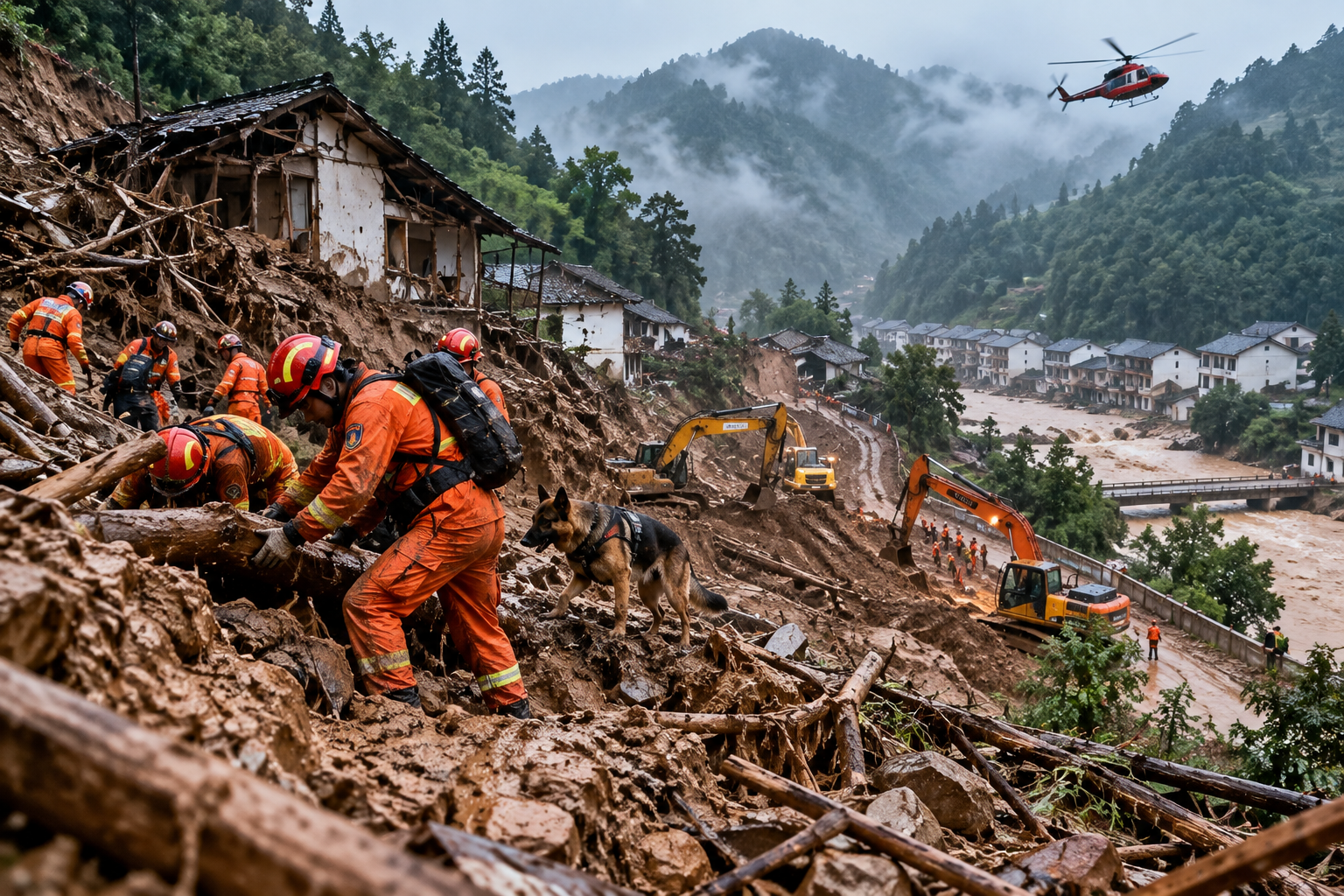
Relentless rain linked to Typhoon Saudel triggered deadly landslides across southeastern China, with rescue teams continuing searches as authorities evacuate thousands from vulnerable areas
Death Toll Rises as Rescue Operations Continue
The death toll from rain-triggered landslides in southeastern China has risen to 16 after search and rescue teams recovered another body in Jiangxi province, state media reported on Thursday.
The landslides struck several parts of Suichuan county following days of heavy rainfall. Authorities have deployed emergency personnel and equipment to affected areas, while rescue teams continue searching for people who may still be trapped or missing.
More than 18,000 people have been evacuated from Suichuan county as officials work to move residents away from landslide-prone locations and other areas facing continuing risks from heavy rain.
Gaoping Town Records Highest Number of Deaths
The largest number of fatalities was reported in Gaoping town, where a major mudslide killed 13 people, according to China's state broadcaster CCTV.
Two additional deaths were recorded in Zuo'an town, while another person was reported dead in Tanghu town. The fatalities were spread across three towns within Suichuan county, highlighting the widespread impact of the extreme weather.
Rescue and recovery teams have been clearing roads and debris to reach affected communities. Heavy mud and damaged infrastructure have complicated access to some locations.
Thousands Moved to Safer Areas
The evacuation of more than 18,000 residents reflects the scale of the threat facing the county. Authorities have been relocating people from areas considered vulnerable to additional landslides, flooding and other rain-related disasters.
Emergency response teams are also working to restore transportation links and clear blocked roads. Construction and rescue machinery has been brought into affected areas to remove mud and debris and reopen access routes.
Officials are expected to maintain heightened monitoring because saturated soil can remain unstable even after rainfall begins to weaken.
Typhoon Saudel Behind Heavy Rainfall
The latest disasters are linked to heavy rainfall that followed Typhoon Saudel, which affected China's eastern and southeastern regions.
Saudel made landfall twice in Zhejiang province on August 28 before making a third landfall as a tropical storm in Fujian province on September 3. Jiangxi and Hunan are inland from Zhejiang and Fujian, but the storm system continued to contribute to heavy rainfall after moving inland.
Prolonged rainfall can significantly increase the risk of landslides, particularly in mountainous and hilly areas where soil becomes saturated and slopes lose stability.
Fatalities Also Reported in Hunan
The severe weather also resulted in deaths in neighbouring Hunan province. Two people were reported killed following rains associated with the typhoon.
State media said the rainfall triggered landslides and other disasters in the region, although the precise cause of those two deaths was not immediately specified.
The incidents underline the broader geographic impact of the storm system, with several inland areas continuing to deal with the consequences of intense rainfall.
Infrastructure and Economic Impact
Extreme rainfall and landslides can cause significant disruption to roads, bridges, power networks, agricultural activity and local businesses. Road blockages can also make it difficult for emergency teams to deliver food, medical supplies and other essential assistance.
For the affected communities, the immediate priority remains rescue, evacuation and restoration of basic services. Longer-term recovery could involve rebuilding damaged infrastructure and providing assistance to households and businesses affected by the disaster.
Weather Risks Remain in Focus
The latest tragedy highlights the growing vulnerability of mountainous communities to extreme rainfall and rain-triggered landslides. When intense precipitation continues over several days, the risk can remain elevated even after a storm has moved away.
Authorities are therefore expected to continue monitoring rainfall, river levels and soil conditions while maintaining evacuation measures in high-risk locations.
With search operations still underway, officials are focusing on recovering victims, assisting displaced residents and preventing further loss of life as southeastern China deals with the aftermath of Typhoon Saudel.