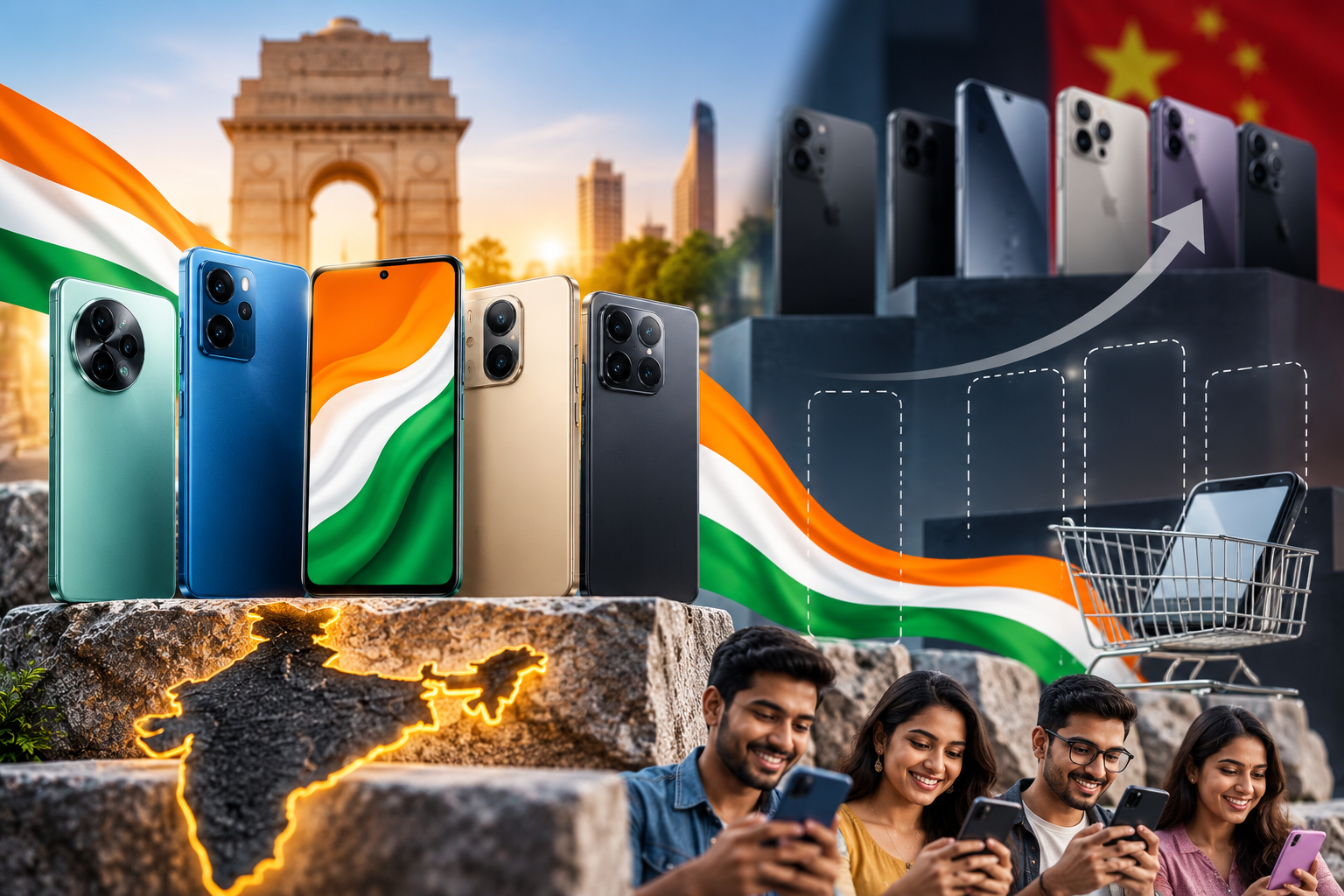
Mivi, AI+, Fire-Boltt and Lava are expanding in the budget segment as rising memory costs reduce model availability and encourage global brands to focus on premium devices
A new opportunity is emerging in India’s sub-₹20,000 smartphone market as rising memory costs force several Chinese smartphone manufacturers to reduce their presence in the mass-market segment and focus more heavily on premium devices.
The shift has encouraged a number of Indian brands to enter or expand their smartphone operations. Companies such as Mivi, AI+, Fire-Boltt and Lava are looking to attract price-conscious consumers with competitively priced devices, online-first distribution and locally developed features.
The opportunity is significant because the sub-₹20,000 category continues to account for a substantial share of India’s overall smartphone market, despite increasing competition and pressure on manufacturers’ margins.
Mivi to Enter Smartphone Market in November
Hyderabad-based audio products company Mivi is preparing to enter the smartphone industry for the first time. The company is scheduled to launch its first smartphone on November 24, with the device expected to be priced below ₹20,000.
Mivi has said that it is developing the phone’s design in-house and plans to offer features such as noise cancellation. The company’s strategy is to provide quality products at value-oriented prices, targeting consumers who are looking for better specifications without moving into the premium segment.
The company eventually plans to assemble smartphones itself and aims to become an original design manufacturer. This would involve designing and manufacturing its own devices and gradually developing capabilities to produce key components in-house.
AI+ Expands Product Portfolio
Noida-based NxtQuantum Shift Technologies, founded by former Realme India CEO Madhav Sheth, has already launched 11 smartphone models and variants under its AI+ brand.
The devices are priced between ₹10,999 and ₹19,999, placing the brand directly in the mass-market segment. AI+ is currently focusing on online sales, with Flipkart serving as its key distribution partner.
NxtQuantum is targeting a 3–4% share of the overall Indian smartphone market during the current financial year. The company believes that an online-first strategy will help keep distribution costs under control and allow it to offer more competitive prices to consumers.
Fire-Boltt Enters with Budget Smartphone Range
Fire-Boltt, which is known for smartwatches and audio products, has also entered the smartphone market with its Boltt range.
The company’s smartphones are priced between ₹10,000 and ₹16,000 and are being sold exclusively through Flipkart. By using an established online platform, Fire-Boltt is attempting to reduce the cost and complexity of building a traditional retail network.
The brand’s entry highlights how consumer electronics companies are increasingly using their existing brand recognition and online distribution capabilities to enter adjacent product categories.
Lava Maintains Its Presence in the Segment
Lava International remains one of the established Indian smartphone brands operating in the budget and mid-range categories.
The company offers smartphones priced between ₹9,999 and ₹19,999 and sells them through online channels as well as approximately 800 offline distribution outlets.
Lava’s wider retail presence gives it an advantage in reaching customers beyond major cities, where offline purchases continue to play an important role. Its existing manufacturing and distribution infrastructure could also help it respond more quickly to changes in market demand.
Rising Memory Costs Reshape the Market
The decline in the number of smartphone models available at lower price points is largely linked to rising memory costs.
According to Counterpoint Research analyst Shubham Singh, the number of brands operating in the sub-₹10,000 segment declined to eight in the second quarter of 2026 from 14 a year earlier.
In the ₹10,000–₹15,000 category, no new model was added during the quarter. Meanwhile, the number of models in the ₹15,000–₹20,000 segment declined to 14 from 16.
Higher memory prices have increased the cost of manufacturing smartphones, putting pressure on already-thin margins in the budget segment. As a result, several established original equipment manufacturers are reducing the number of low-priced models and shifting their focus towards premium devices, where consumers may be more willing to absorb price increases.
Sub-₹20,000 Segment Still Has Strong Demand
Despite the decline in the number of brands and models, the sub-₹20,000 category remains commercially attractive.
The segment accounted for approximately 51% of India’s overall smartphone market in the second quarter of 2026, according to Counterpoint Research. This gives new entrants a sizeable customer base, particularly among first-time smartphone buyers, users upgrading from older devices and consumers in smaller cities.
The segment is also supported by growing demand for smartphones with better cameras, larger batteries, improved processors, 5G connectivity and artificial intelligence-enabled features.
However, success in this category will depend on more than competitive pricing. Brands will need to provide reliable after-sales service, regular software updates, strong battery performance and sufficient distribution support to build consumer trust.
Online-First Strategy Helps Control Costs
New entrants are increasingly choosing online-only or online-first distribution models to reduce operating expenses.
Madhav Sheth said that online sales account for around half of the Indian smartphone market, while building a physical distribution channel can add 30–40% to costs. These expenses are eventually passed on to consumers through higher product prices.
For emerging brands, selling through platforms such as Flipkart can provide access to a nationwide customer base without requiring a large network of distributors and retailers.
However, online-only strategies also have limitations. Brands may find it difficult to build long-term customer loyalty, provide local service support and reach consumers who prefer to experience a product before purchasing it.
As volumes increase, companies such as AI+ may eventually need to expand into offline retail to strengthen their market presence.
Competition Will Remain Intense
Although the movement of Chinese brands towards premium smartphones creates room for Indian companies, the competition in the budget segment remains intense.
Established players continue to benefit from strong brand recognition, extensive supply chains, large advertising budgets and established service networks. They may also introduce new models if memory costs stabilise or if demand in the mass-market segment improves.
Indian brands will therefore need to compete through a combination of pricing, product differentiation, local manufacturing, after-sales service and efficient inventory management.
The ability to maintain product quality while keeping prices affordable will be especially important as consumers become more informed and compare specifications across brands before making a purchase.
Manufacturing Ambitions Could Improve Long-Term Competitiveness
Some Indian brands are looking beyond smartphone assembly and are exploring original design and manufacturing capabilities.
Developing in-house design, component sourcing and manufacturing capabilities could help companies reduce dependence on overseas suppliers over time. It may also allow them to customise products for Indian consumers and improve control over product launches.
However, achieving scale will remain a major challenge. Smartphone manufacturing requires significant investment in research and development, supply-chain management, quality control and service infrastructure.
Government incentives and the expansion of India’s electronics manufacturing ecosystem could support these ambitions, but companies will still need strong volumes and consistent demand to make the business economically viable.
Consumer Demand Could Support a Revival
The current market shift could provide Indian smartphone brands with an opportunity to rebuild their presence in a segment where they have historically faced strong competition from Chinese manufacturers.
If memory costs remain elevated and global brands continue to prioritise premium devices, Indian companies may gain additional shelf space and online visibility. The opportunity could be particularly meaningful in the ₹10,000–₹20,000 range, where consumers remain price-sensitive but increasingly expect premium-like features.
At the same time, the brands will need to avoid excessive discounting, as low prices without sustainable margins could weaken their financial position.
The next phase of competition is likely to focus on product quality, distribution efficiency, service reliability and the ability to deliver higher specifications at affordable prices.
Market Outlook
India’s sub-₹20,000 smartphone segment is emerging as a potential growth opportunity for domestic brands as rising memory costs push several Chinese manufacturers towards premium devices.
Mivi, AI+, Fire-Boltt and Lava are attempting to capture this space through affordable products, online distribution and locally developed capabilities. Their success will depend on whether they can combine competitive pricing with dependable quality, after-sales support and sufficient scale.
For the broader Indian electronics industry, the trend could encourage greater domestic participation in smartphone design, manufacturing and component development. However, intense competition, thin margins and the need for sustained investment will remain key challenges.