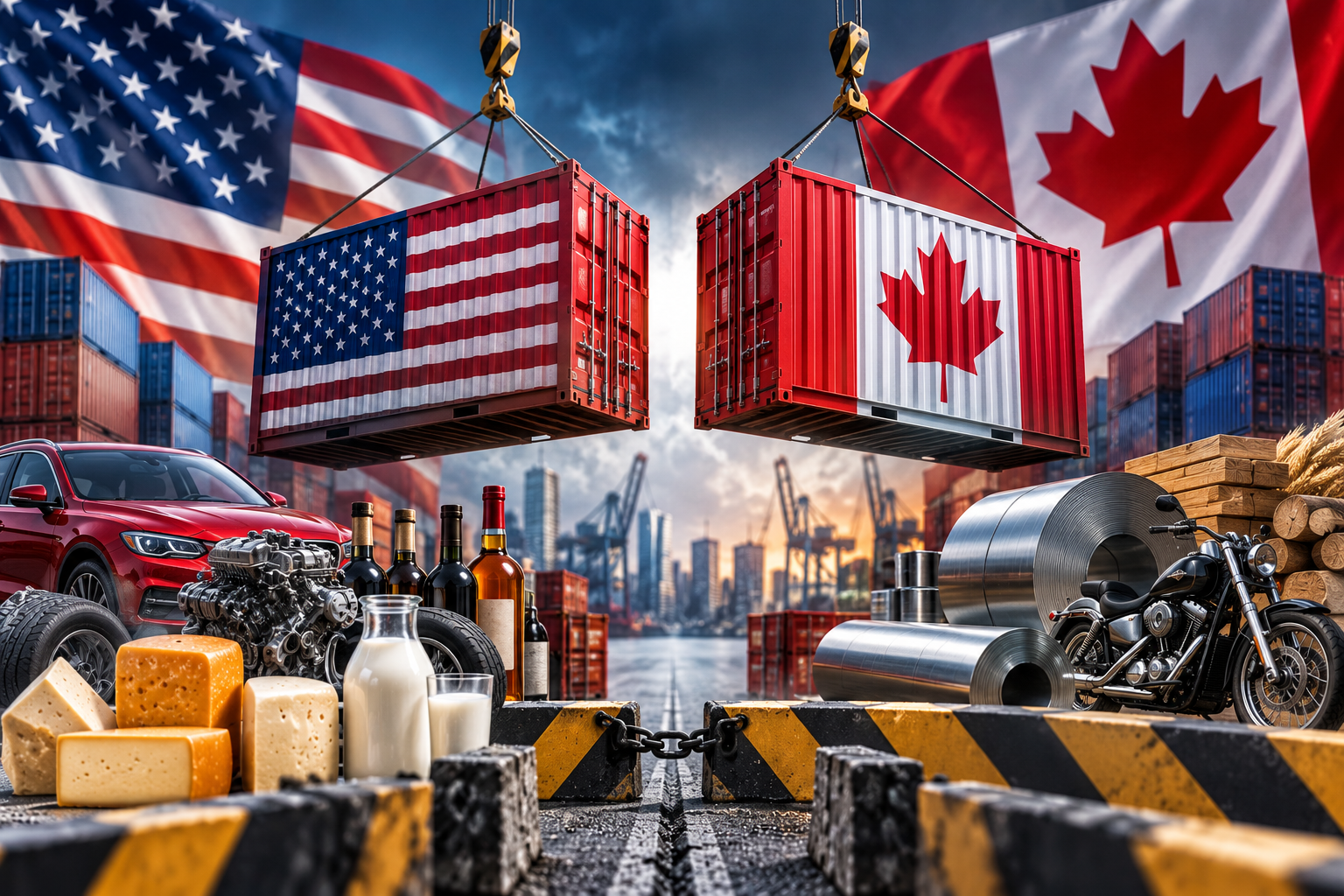
Washington and Ottawa expand their trade dispute with fresh restrictions on automobiles, dairy, alcohol, metals and manufactured goods. The latest measures deepen uncertainty for businesses on both sides of the border as negotiations remain stalled.
US and Canada Expand Trade Restrictions
The trade dispute between the United States and Canada has entered a fresh phase, with both countries imposing new tariffs and restrictions on each other’s goods. The latest measures follow a series of failed attempts to resolve differences that have continued for around 18 months.
The United States has announced new measures targeting Canadian imports, while Canada has introduced retaliatory tariffs on nearly 700 American products worth approximately $28 billion.
The escalation has increased uncertainty for manufacturers, exporters and smaller businesses that depend on cross-border trade.
Which Canadian Goods Face New US Restrictions?
The Trump administration has announced five directives covering Canadian goods and existing tariff arrangements.
The measures include restrictions on selected Canadian motor vehicles and auto parts. Washington has argued that Canada’s tariff system and quotas disadvantage American automobile manufacturers.
The US has also expanded the list of Canadian products facing additional duties in response to Canadian restrictions on American alcoholic beverages.
Selected Canadian dairy products are also facing import restrictions. The White House has criticised Canada’s system for allocating tariff-rate quotas on cheese, saying it creates an unfair barrier for American dairy producers.
Dairy, Alcohol and Motorcycles Among Targeted Products
According to US officials, the latest measures include bans on Canadian dairy products, most alcoholic beverages and motorcycles.
The restrictions are expected to take effect in approximately three weeks.
Washington has linked the alcohol-related measures to Canadian provincial rules that restrict the sale and distribution of US beer, wine and spirits while allowing products from other countries.
The US administration has also announced changes to the list of Canadian goods covered by an earlier round of tariffs.
US Reshuffles Earlier Tariff List
Some products, including cement, road salt and certain medical supplies, have been removed from the earlier tariff list.
At the same time, additional goods such as all-terrain vehicles, certain cheeses and motorboats have been added. These changes are expected to come into effect within a week.
A separate US threat to increase tariffs on Canadian cars and metals to 50% from January 1 remains in place.
The White House has linked the measures to Section 338 of the Tariff Act of 1930, which gives the US president powers to restrict imports from countries considered to be discriminating against American trade.
Why Is Washington Targeting Canada?
The US administration has accused Canada of failing to meet commitments made during trade negotiations.
According to the White House, Ottawa had agreed to address measures that Washington considers discriminatory. The US said negotiations broke down after Canada failed to honour those commitments.
The administration has also pointed to Canadian provincial restrictions on American alcohol and limited access for US companies to provincial procurement markets.
US Government Procurement Also Affected
Trump has separately ordered US government agencies to stop buying Canadian products through the federal government’s main purchasing system.
The General Services Administration and the Office of the US Trade Representative have been directed to begin removing Canadian-origin goods from federal procurement channels.
The government purchasing market involved is estimated to be worth approximately $50 billion.
Trump said Canadian companies have benefited from access to US government contracts while American small businesses have faced barriers in Canada.
He described the policy as “NO RECIPROCITY - NO ACCESS!”, saying Canadian goods will remain excluded from US government supply lists until Ottawa provides what Washington considers equal access for American businesses and farmers.
Canada Retaliates With Tariffs on US Goods
Canada’s latest measures came into force at 12:01 AM on Tuesday, local time, and cover nearly 700 US products.
The tariffs range from 15% to 50% and apply to goods worth approximately $28 billion. The measures form part of Canada’s dollar-for-dollar response to US tariffs imposed on a wide range of Canadian products on August 22.
The affected products include steel and aluminium, as well as consumer and manufactured goods such as toilet paper and coin-operated arcade machines.
Steel, Aluminium and Consumer Goods in Focus
Canada’s retaliatory tariffs are expected to affect a wide range of American exports, including industrial materials and everyday consumer products.
Earlier US tariffs had affected Canadian goods worth more than $28 billion, including plywood, cement, wine and hockey sticks.
The latest measures have increased pressure on Canadian businesses, particularly smaller firms that depend heavily on American products.
Dan Kelly, president of the Canadian Federation of Independent Business, said many small business owners feel caught in the middle of the dispute. He told CBC News that the latest round was focused on small and medium-sized businesses already facing difficult conditions.
Trade Dispute Raises Business Uncertainty
The latest escalation is likely to increase uncertainty for companies operating across the US-Canada border.
Tariffs can raise the cost of imported goods, affect supply chains and put pressure on profit margins. Businesses may also face challenges in adjusting sourcing arrangements and passing higher costs on to customers.
For consumers, the impact could include higher prices for selected imported products, depending on how much of the additional tariff burden is passed through the supply chain.
Negotiations Remain Stalled
The latest measures follow a series of failed attempts by the two countries to resolve their differences.
The US had initially planned to introduce additional tariffs under Section 338 on August 19. The measures were temporarily delayed for three days after Canada made commitments to address the disputed issues.
Washington said Canada subsequently backed away from the agreement and stopped negotiating in good faith on August 21. The US then moved ahead with the revised duties and import exclusions.
Impact on Global Trade and Markets
The escalation between the US and Canada adds to broader concerns over trade protectionism and the future of international supply chains.
Canada and the US have deeply integrated manufacturing and trade networks, particularly in the automotive, metals and industrial sectors. Continued tariff increases could affect cross-border production costs and investment decisions.
The dispute also highlights the risk that trade negotiations may increasingly involve sector-specific restrictions rather than broad agreements.
Market Outlook
The US-Canada trade dispute is likely to remain a source of uncertainty for global markets, particularly for companies exposed to North American trade and manufacturing.
Automobile, metals, industrial and consumer goods companies may remain sensitive to tariff announcements and changes in cross-border trade arrangements. Continued escalation could increase concerns over supply-chain costs and corporate margins.
A resumption of negotiations or a rollback of selected tariffs could ease pressure on affected businesses. However, if the dispute continues to expand, investors may remain cautious toward sectors with significant exposure to US-Canada trade.
The next major market-moving developments will likely depend on further tariff announcements, the response from Canadian authorities and any signs of progress in negotiations.