Rising Oil Prices, Stronger Dollar and US Bond Yield Spike Trigger Fresh Pressure on Indian Financial Markets
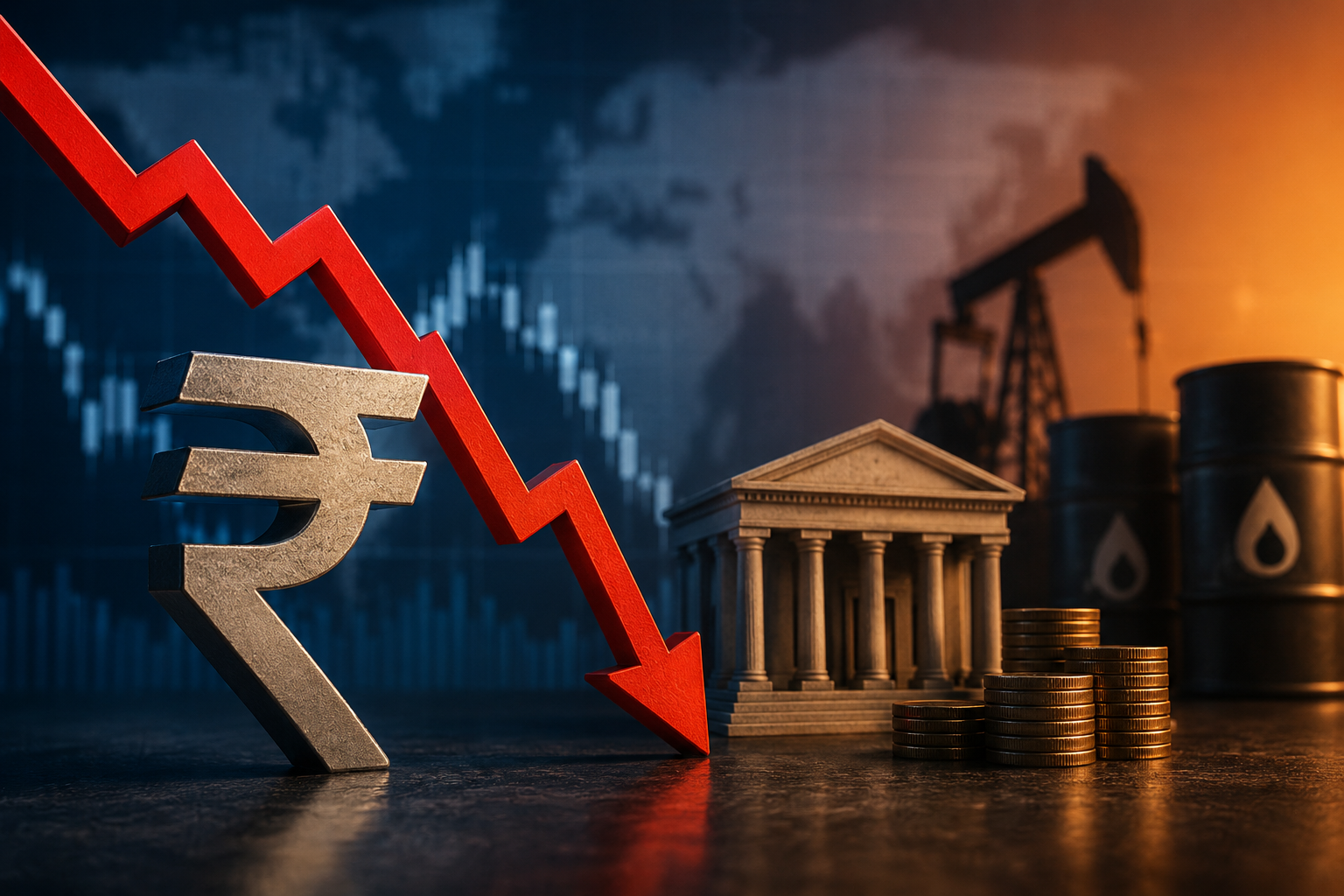
India’s financial markets witnessed heightened volatility on Monday as the rupee weakened to its lowest-ever closing level while government bond yields surged sharply. The decline came amid rising crude oil prices, increasing US Treasury yields, and persistent geopolitical tensions that rattled investor confidence across global markets.
The Indian rupee slipped to an intra-day low of 96.40 against the US dollar before closing at 96.36, marking its weakest closing level in history. The previous record closing low stood at 95.97. Currency traders said strong dollar demand from oil importers, foreign fund outflows, and a strengthening US currency intensified pressure on the domestic unit.
Global Factors Behind the Rupee’s Decline
Financial market experts believe the rupee’s weakness is largely linked to global developments. Crude oil prices have remained elevated due to ongoing geopolitical conflicts and supply concerns in major oil-producing regions. Since India imports nearly 85 percent of its crude oil needs, higher oil prices increase dollar demand and widen the country’s import bill, putting direct pressure on the rupee.
Simultaneously, US Treasury yields have surged as investors expect the US Federal Reserve to maintain higher interest rates for a longer period to control inflation. Rising US yields often attract global capital towards American assets, leading to foreign fund outflows from emerging markets like India.
The strengthening dollar index further added to the pressure on Asian currencies, with the rupee emerging among the worst performers during the trading session.
Bond Market Witnesses Sharp Sell-Off
Alongside currency weakness, India’s bond market also faced heavy selling pressure. The benchmark 10-year government bond yield rose by 7 basis points to 7.13 percent, reflecting investor concerns over inflation and tightening global liquidity conditions.
Bond dealers indicated that higher crude oil prices could push inflation upward in coming months, reducing the possibility of aggressive rate cuts by the Reserve Bank of India (RBI). Rising yields generally indicate falling bond prices, as investors demand higher returns amid uncertainty.
Market participants are now closely monitoring the RBI’s liquidity management strategy and future monetary policy stance. Analysts believe the central bank may continue intervening in the currency market to reduce excessive volatility in the rupee.
Impact on Economy and Investors
A weaker rupee has mixed implications for the Indian economy. Export-oriented sectors such as information technology, pharmaceuticals, and textiles may benefit from improved overseas earnings. However, sectors dependent on imports — including oil marketing companies, aviation, electronics, and automobile manufacturers — could face rising input costs.
Higher bond yields may also increase borrowing costs for companies and the government, potentially affecting infrastructure spending and corporate expansion plans.
Retail investors are advised to remain cautious as global uncertainties continue to influence domestic financial markets. Experts suggest focusing on fundamentally strong companies, maintaining diversified portfolios, and avoiding panic-driven investment decisions during periods of heightened volatility.
What Investors Should Watch Next
Market direction in the coming weeks is expected to depend on several global and domestic triggers, including:
- Movement in international crude oil prices
- US Federal Reserve policy signals
- Foreign institutional investor activity
- India’s inflation and trade deficit data
- RBI intervention and liquidity measures
Analysts believe that unless global commodity prices stabilize and US bond yields cool down, volatility in currency and debt markets could persist in the near term.