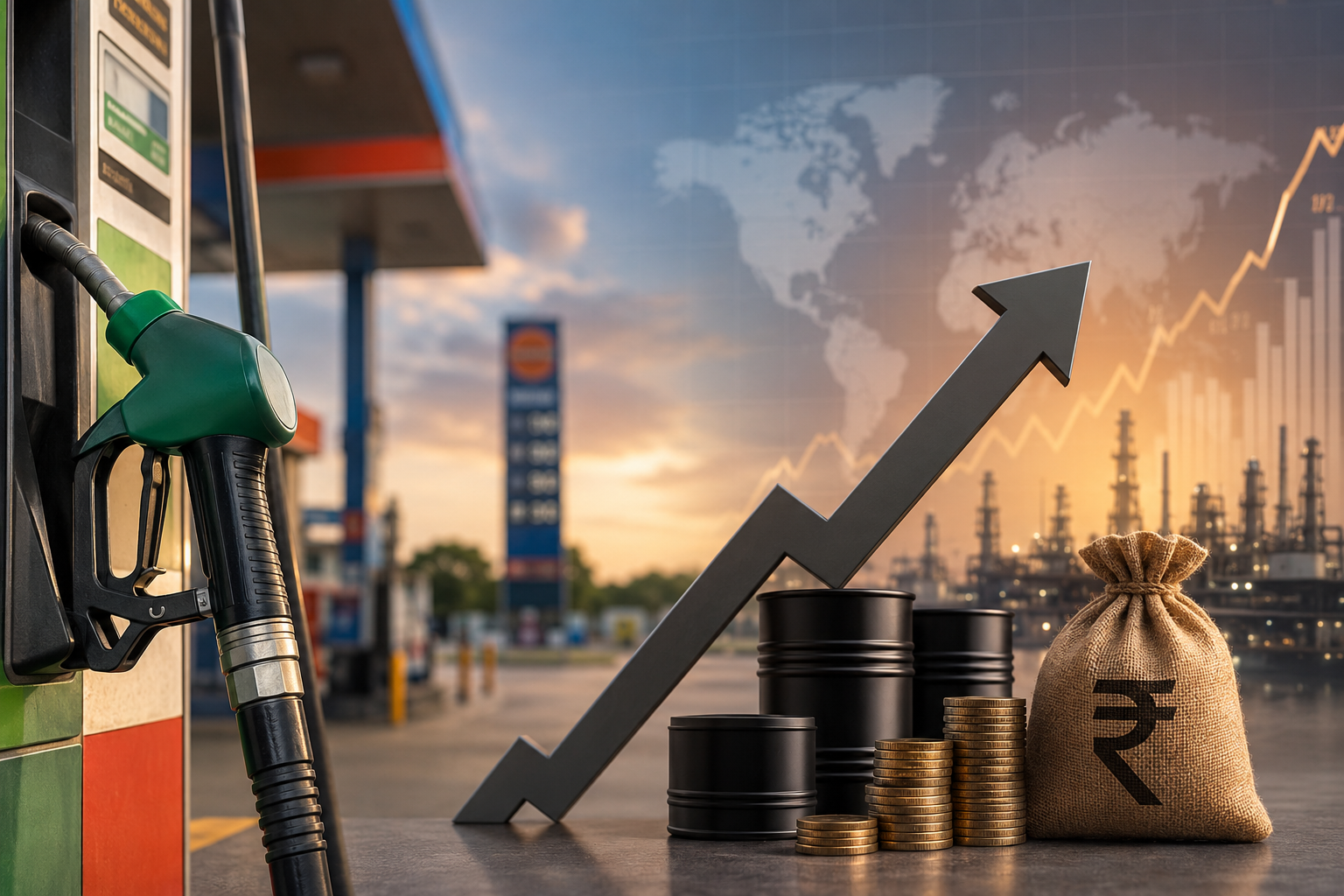
Petrol and Diesel Rates Hit Four-Year High as Oil Companies Struggle With Mounting Losses
India’s fuel prices moved higher once again on Tuesday, with petrol and diesel becoming costlier across major cities after state-run oil marketing companies announced another round of price revisions. The latest increase — the second within a week — reflects the growing pressure from soaring global crude oil prices and rising geopolitical tensions in the Middle East.
In the national capital, petrol prices increased to ₹98.64 per litre, while diesel climbed to ₹91.58 per litre. Similar hikes were reported across Mumbai, Kolkata, Chennai, and several other cities as oil retailers adjusted prices in response to rising international crude rates.
The increase follows a ₹3 per litre hike introduced earlier this month, which itself marked the first major fuel price revision in over four years. With Tuesday’s revision, fuel prices have now reached their highest levels since 2022.
Industry experts believe the recent increases still cover only a fraction of the actual cost burden faced by oil marketing companies. Retailers are reportedly continuing to absorb significant losses due to elevated crude oil prices and a weak refining margin environment.
Middle East Conflict Drives Crude Oil Surge
Global oil prices have remained volatile after escalating conflict involving Iran, Israel, and the United States disrupted trade routes in the Strait of Hormuz — one of the world’s most important oil transit corridors.
Since late February, benchmark crude prices have surged more than 50 per cent, sharply increasing import costs for countries heavily dependent on foreign oil supplies. India imports nearly 85 per cent of its crude oil requirements, making domestic fuel pricing highly sensitive to international market movements.
Analysts say prolonged geopolitical instability could keep crude prices elevated for an extended period, adding further pressure on the Indian economy.
Government Balancing Consumer Relief and Fiscal Pressure
For several months, retail fuel prices had remained largely frozen despite rising crude costs, as authorities attempted to shield consumers from inflationary shocks ahead of major elections. However, the widening gap between international oil prices and domestic retail rates significantly increased financial stress on public sector oil companies.
According to petroleum ministry officials, recent hikes have only partially reduced daily losses incurred by fuel retailers. Oil companies are still estimated to be losing hundreds of crores every day on petrol, diesel, and cooking gas sales.
The government now faces the challenge of balancing inflation management with the financial stability of oil companies and the broader fiscal health of the economy.
Inflationary Impact May Spread Across Sectors
Higher fuel prices are expected to impact transportation, logistics, manufacturing, and food distribution costs in the coming months. Economists warn that continued fuel inflation could gradually push up prices of essential goods and services across sectors.
India’s wholesale inflation has already accelerated sharply due to higher energy costs, while retail inflation has also shown signs of firming up. Rising diesel prices, in particular, could directly affect freight movement and agricultural transportation costs.
Market observers believe inflation risks may remain elevated if global crude prices continue to stay above current levels.
Private Retailers Also Raise Fuel Rates
Private fuel retailers had already started increasing prices earlier this year in response to market conditions. Premium fuel outlets in several cities are now selling petrol and diesel at substantially higher rates compared to state-run retailers.
The widening pricing gap reflects the ongoing stress within India’s fuel retailing sector, where companies are trying to balance competitive pricing with rising operational and procurement costs.
Energy Conservation Measures Gain Momentum
Amid growing pressure on India’s import bill and foreign exchange reserves, the government has intensified calls for fuel conservation. Authorities have encouraged work-from-home practices, reduced official travel, and lower fuel consumption across departments and businesses.
Several state governments have also issued advisory measures to reduce unnecessary transportation and improve energy efficiency within administrative operations.
Outlook Remains Uncertain
The future trajectory of fuel prices will largely depend on global crude oil trends and geopolitical developments in the Middle East. If tensions continue to escalate, further price revisions in India cannot be ruled out.
For investors and businesses, the current environment highlights the importance of monitoring energy markets closely, as sustained fuel inflation could influence corporate profitability, consumer spending, interest rates, and overall economic growth in the months ahead.