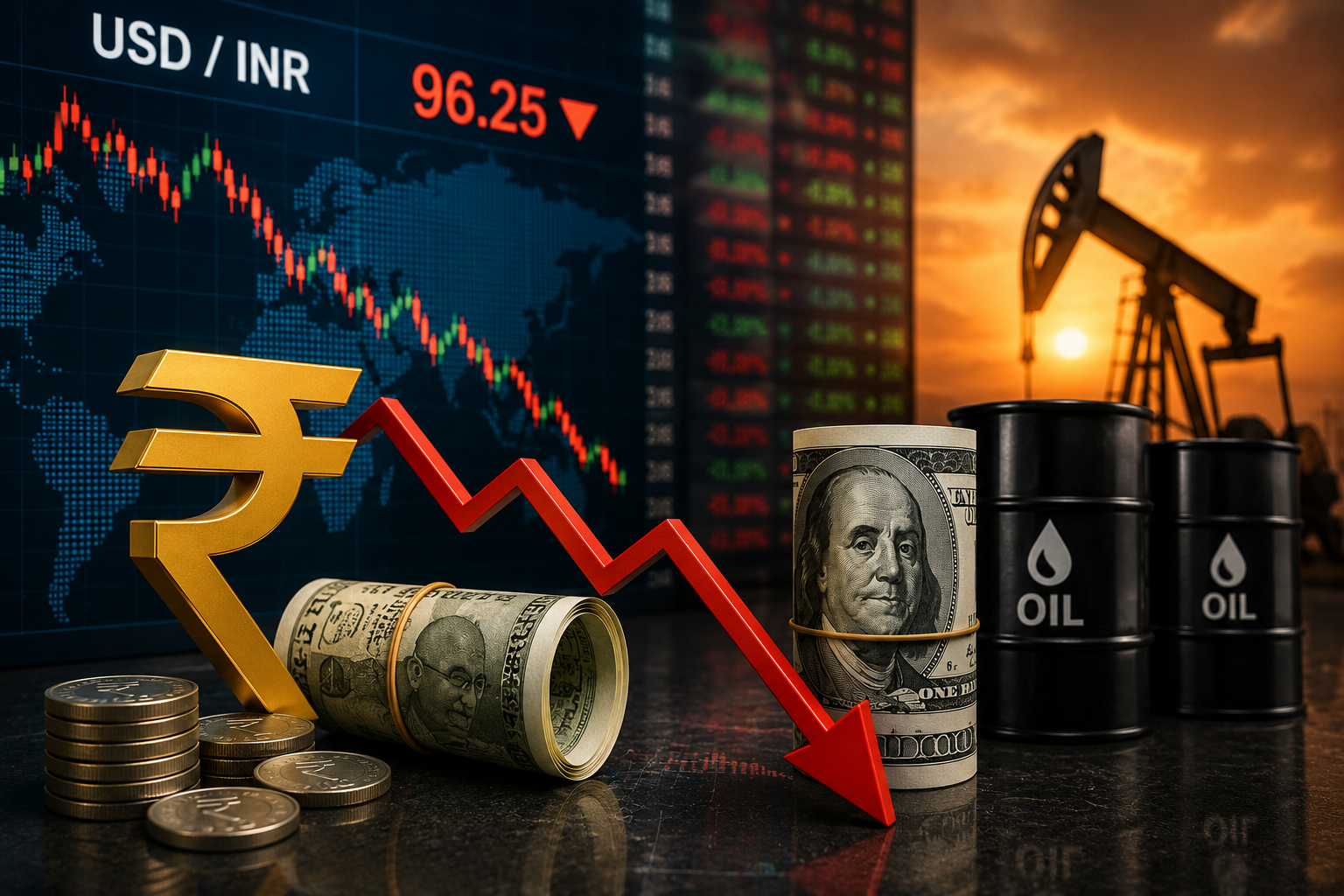
Rising crude prices, stronger dollar and West Asia tensions put severe pressure on Indian currency despite RBI monitoring measures
At the interbank foreign exchange market, the rupee opened weak at 96.19 against the US dollar before sliding further to touch a historic low of 96.25, marking a sharp decline of 44 paise from the previous close.
The latest fall comes just days after the rupee breached the 96-per-dollar mark for the first time, reflecting growing concerns over India’s external balance, inflation outlook and rising import costs.
Crude Oil Surge Intensifies Pressure on Rupee
A major factor behind the rupee’s sharp decline has been the continued surge in global crude oil prices amid escalating tensions involving Iran and disruptions in the West Asia region.
Brent crude futures climbed more than 1.8 per cent to trade above $111 per barrel, significantly increasing concerns for oil-importing economies such as India.
Higher crude prices directly increase India’s import bill because the country depends heavily on imported oil to meet domestic energy demand. Rising oil payments increase the demand for US dollars, weakening the rupee further.
Forex market experts warned that sustained crude prices above $110 per barrel could create additional pressure on India’s trade deficit, inflation and fiscal stability in the coming months.
Strong Dollar and Global Risk Aversion Hurt Emerging Markets
The strengthening US dollar has also added to the pressure on emerging market currencies globally.
The dollar index, which measures the greenback against a basket of major currencies, remained firm near 99.32 amid growing global uncertainty and safe-haven demand.
Market participants said investors are increasingly moving funds towards safer dollar-denominated assets as geopolitical tensions continue to rise.
Currency traders noted that the Indian rupee is particularly vulnerable because of the combination of high oil prices, foreign fund outflows and growing uncertainty around global growth conditions.
Analysts Warn of Further Weakness Ahead
According to market experts, the rupee could remain under pressure unless geopolitical tensions ease or oil prices cool significantly.
Analysts stated that reopening of the Strait of Hormuz and reduction in conflict-related disruptions would be crucial for stabilising global energy markets and reducing pressure on the Indian currency.
Some forex experts have warned that the rupee could even approach the psychological 100-per-dollar mark if crude oil prices remain elevated and capital outflows continue.
However, market participants also pointed out that the Reserve Bank of India and the government have already started taking proactive measures to contain volatility and manage forex outflows.
Government Tightens Precious Metal Imports
Amid rising pressure on foreign exchange reserves, the government recently announced measures aimed at reducing non-essential imports.
After sharply increasing import duties on gold and silver from 6 per cent to 15 per cent earlier this month, the government has now placed silver imports under a licensed regime.
The move is intended to reduce demand for precious metal imports and help control the outflow of foreign exchange at a time when the rupee is facing significant stress.
The effective duty on gold and silver imports now exceeds 18 per cent after including additional taxes.
Stock Markets React Negatively to Currency Pressure
The sharp fall in the rupee also weighed heavily on domestic equity markets during early trade.
BSE Sensex dropped more than 830 points, while NIFTY 50 fell over 230 points as investors reacted to concerns over rising inflation, higher import costs and geopolitical uncertainty.
Sectors heavily dependent on imports and crude oil, including aviation, paints and chemicals, remained under pressure.
However, exporters such as IT and pharmaceutical companies may benefit partially from a weaker rupee because of improved overseas earnings realisations.
RBI Forex Reserves Offer Some Cushion
Despite the sharp currency depreciation, India’s foreign exchange reserves continue to provide an important buffer against external shocks.
According to the latest Reserve Bank of India data, India’s forex reserves rose by $6.295 billion to nearly $697 billion during the week ended May 8.
The increase was largely supported by gains in gold reserves and foreign currency assets.
Economists believe India’s strong reserve position gives the RBI sufficient flexibility to intervene in currency markets and manage excessive volatility if required.
Investors to Watch Oil Prices and RBI Response
Going forward, market sentiment is expected to remain heavily dependent on movements in crude oil prices, geopolitical developments in West Asia and possible policy actions by the RBI.
Investors will also closely monitor foreign institutional investor flows, inflation data and global central bank signals for further direction in currency and equity markets.
Analysts believe volatility could remain elevated in the near term as global markets continue reacting to geopolitical risks and uncertainty surrounding energy supplies.