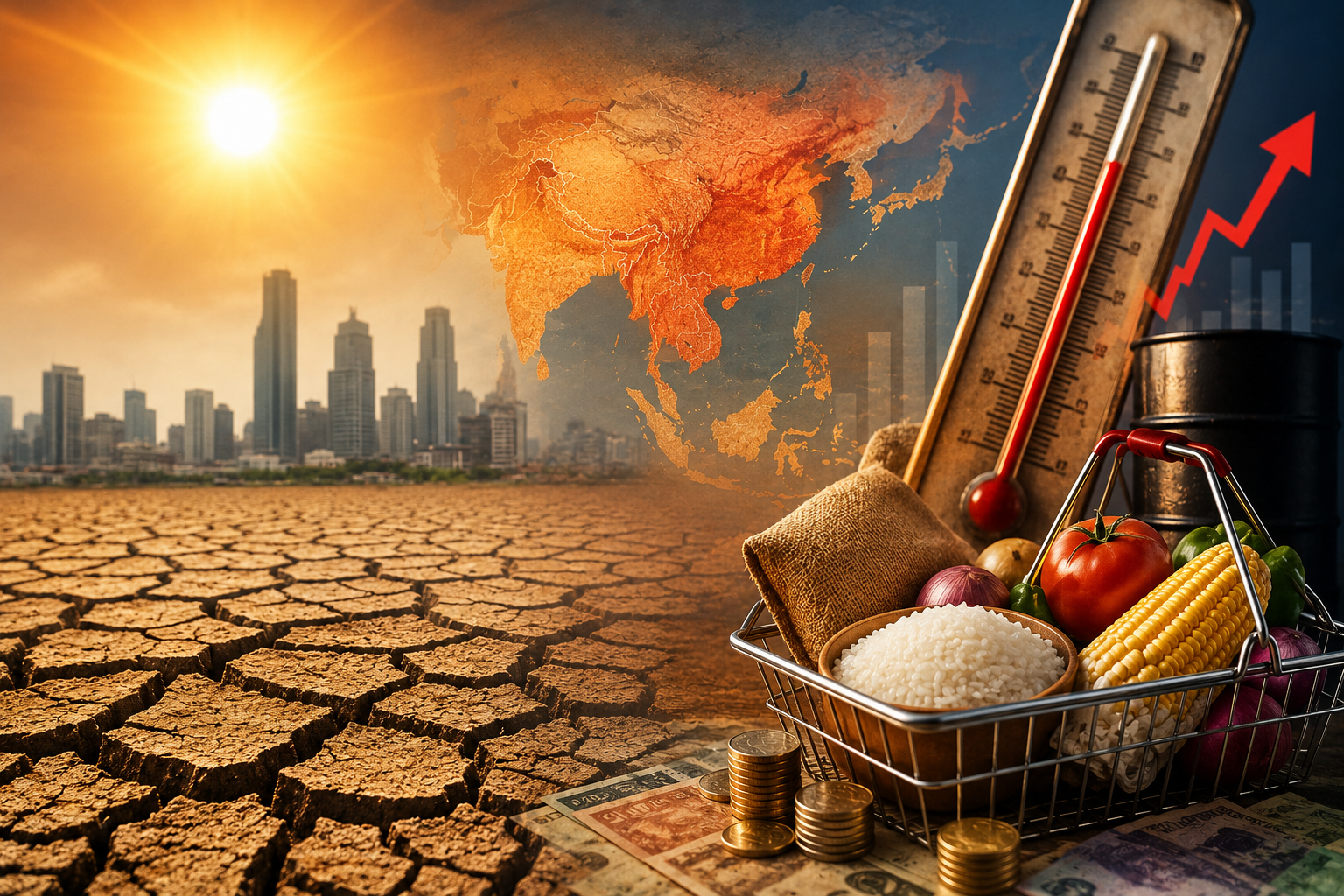
Rising temperatures, weak monsoon risks, and expensive energy could trigger a fresh inflation wave across emerging Asian economies
Asian economies are facing mounting economic pressure as extreme heat waves linked to the developing El Niño weather pattern threaten to worsen inflation already fueled by elevated global oil prices and geopolitical tensions.
Economists warn that rising temperatures, weaker rainfall, and supply disruptions could sharply increase food and energy prices across the region during the second half of 2026. The inflation risks are especially severe for emerging Asian nations where food and fuel account for a major share of household spending.
Inflation Accelerates Across Emerging Asia
Several Asian economies have already reported multiyear highs in inflation, driven primarily by rising transportation, logistics, electricity, and fuel costs.
The sharpest price increases have been recorded in countries such as the Philippines and Pakistan, where inflation has surged above central bank comfort levels. Pakistan’s inflation has climbed into double digits, while the Philippines continues to struggle with rising import costs and slowing consumer demand.
Analysts say the worsening climate outlook could intensify these pressures further in the coming months.
El Niño Threatens Food Security and Crop Production
The developing El Niño weather system is expected to bring hotter temperatures and drier conditions across large parts of Asia, including India, Southeast Asia, and Oceania.
Food inflation remains a major concern because food items account for nearly 40–50 per cent of consumer inflation baskets across many emerging Asian economies. Any disruption to crop production or agricultural supply chains could therefore significantly raise retail inflation and weaken household purchasing power.
Economists at Oxford Economics warned that geopolitical tensions, higher fertiliser costs, climate uncertainty, and possible export restrictions by governments may keep food inflation elevated well into 2027.
Fertiliser and Energy Costs Add to Inflation Risks
The recent surge in fertiliser prices linked to escalating tensions in West Asia is also expected to push agricultural production costs higher. Experts believe the impact of these higher input costs will become more visible during the second half of the year as farmers face increasing pressure from expensive fuel, irrigation, and transportation.
At the same time, weaker hydropower generation caused by dry weather could force countries such as India, Vietnam, and parts of China to rely more heavily on coal and natural gas for electricity production. This may increase power tariffs and industrial operating costs across the region.
India Faces Monsoon and Food Inflation Concerns
India remains particularly vulnerable due to its dependence on seasonal monsoon rains for agricultural production. The Reserve Bank of India has already warned that weaker rainfall could affect crop yields and push food prices higher.
Economists now expect India’s inflation to remain above 5 per cent during the upcoming fiscal year, exceeding earlier projections. Rising temperatures may also increase electricity demand as households and businesses depend more heavily on cooling systems, adding further stress to energy markets.
Several global financial institutions have lowered India’s future growth forecasts amid concerns that prolonged inflationary pressure could weaken consumption and investment activity.
Central Banks May Be Forced to Stay Aggressive
Asian central banks are increasingly facing difficult policy choices as inflation risks build alongside slowing economic growth.
The Bangko Sentral ng Pilipinas has indicated readiness to tighten monetary policy further if inflation continues to rise. Economists believe additional interest-rate hikes may become necessary despite concerns about slowing economic activity.
Similarly, Pakistan’s central bank has already raised interest rates unexpectedly to control inflation, while analysts in South Korea and Japan are warning that policymakers may be falling behind the inflation curve.
In Japan, persistent increases in food prices, especially staple items such as rice, are making inflation more entrenched. Some analysts now expect the Bank of Japan to consider further policy tightening in the coming months.
Bond Markets Signal Growing Investor Anxiety
Investor concerns over inflation and economic uncertainty are also becoming visible in Asian bond markets. Yields on government bonds across several emerging Asian economies have risen sharply since the escalation of geopolitical tensions in West Asia.
The International Monetary Fund has warned that inflation across parts of Asia could rise by as much as four percentage points next year if current pressures continue. Meanwhile, the Asian Development Bank has raised its regional inflation forecast for 2026 significantly.
Richer Asian Economies Better Positioned but Not Immune
Developed Asian economies such as Singapore, Japan, and South Korea may be relatively more resilient because their economies rely more heavily on services and diversified industries rather than food-heavy consumption baskets.
However, economists caution that prolonged climate disruptions and elevated energy prices could eventually impact consumer spending, manufacturing costs, and monetary policy decisions even in these stronger