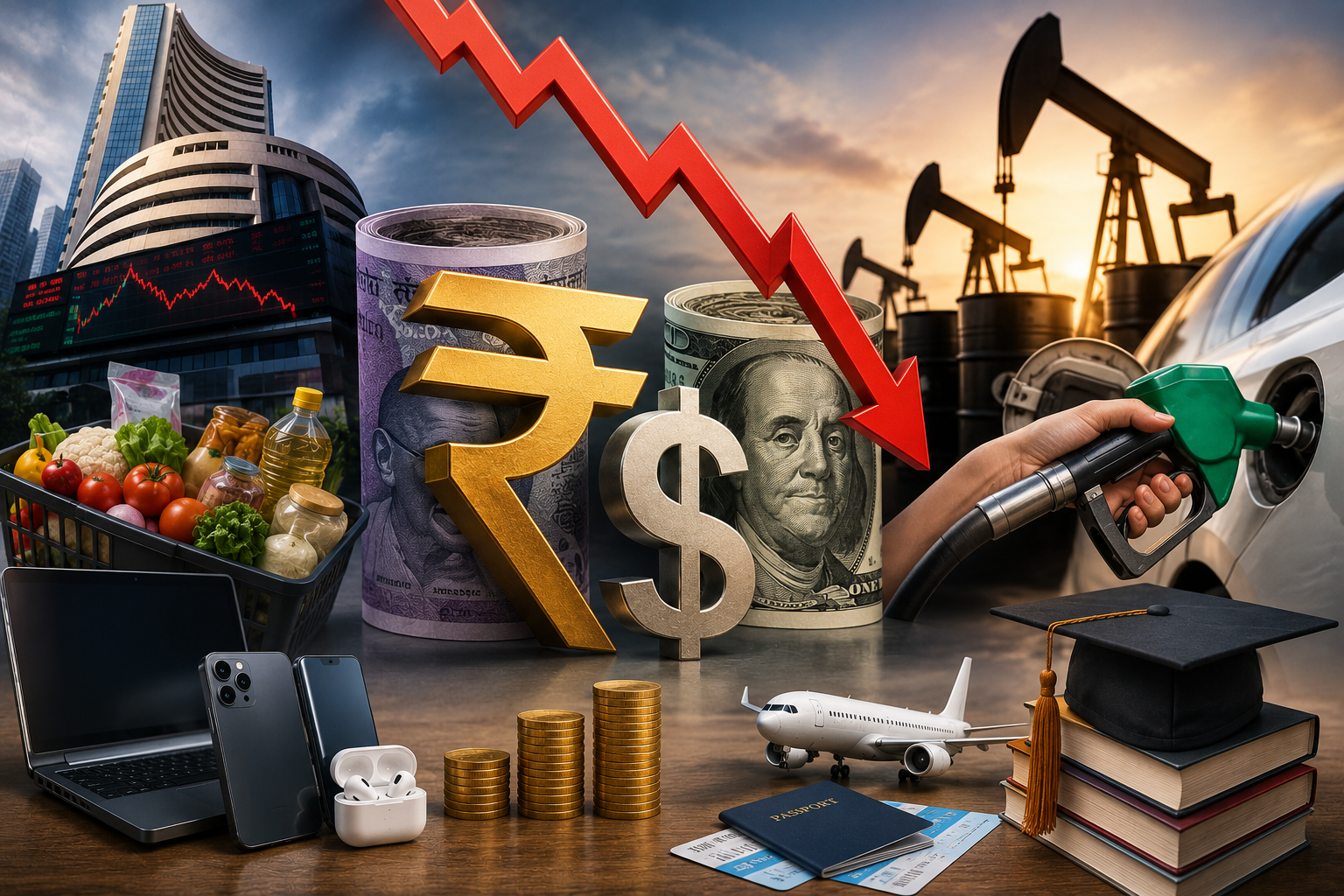
The weakening currency comes at a time when global crude oil prices remain elevated, putting additional pressure on India’s import bill and the broader economy. Economists say the impact may not be visible immediately across every sector, but over time consumers are likely to feel the pressure through higher prices for fuel, electronics, imported goods, healthcare products, and overseas spending. India imports a large share of its crude oil, natural gas, edible oils, electronics, and industrial raw materials. When the rupee weakens against the dollar, these imports become more expensive, increasing costs for businesses as well as households. The first and most immediate effect of a weaker rupee is usually visible in fuel prices. As oil imports become more expensive, transportation and logistics costs increase across the economy. Businesses often pass these higher costs on to consumers through increased prices for goods and services. Economists say the impact generally unfolds in two phases: Higher fuel costs can affect everything from food delivery and airline tickets to manufacturing and retail pricing. Several everyday products and services are especially vulnerable to rupee depreciation because they rely heavily on imported components or foreign currency pricing. Among the categories expected to witness price pressure are: Experts say electronics and consumer durable products could see higher prices if currency weakness persists, as many components are sourced internationally. Healthcare costs may also rise because several pharmaceutical ingredients and medical devices are imported. The impact of rupee weakness is most immediate for families planning international travel or funding education abroad. Since tuition fees, accommodation, and living expenses are paid in foreign currencies, even a small fall in the rupee can significantly increase total costs for students and travellers. International holidays are also becoming more expensive due to higher airfare costs, hotel prices, and foreign exchange conversion expenses. Financial planners suggest several strategies to manage currency-related risks: Experts also recommend evaluating overseas education loans carefully, especially when repayments are linked to foreign currencies. Currency weakness often increases volatility in financial markets, particularly if foreign investors turn cautious and reduce exposure to emerging markets. However, analysts say the broader Indian economy remains relatively stable despite the rupee decline. Certain sectors may actually benefit from a weaker rupee, especially export-oriented industries such as: These companies earn revenues in dollars and other foreign currencies, which become more valuable when converted into rupees. On the other hand, sectors heavily dependent on imports may face pressure on profit margins due to rising raw material and operational costs. Market experts advise investors to focus on businesses with strong pricing power, lower import dependence, and stable balance sheets during periods of currency volatility. Borrowers with foreign currency-linked loans may also face uncertainty during periods of rupee depreciation. When the rupee weakens sharply, repayment obligations and EMIs linked to foreign currencies can rise significantly. However, financial experts point out that long-term currency cycles often balance out over time. Borrowers are advised to: Financial planners stress that managing risk is more important than trying to predict currency movements. Despite the pressure on imports and household spending, economists note that a weaker rupee can also support exports by making Indian goods and services more competitive globally. India’s export sector has remained strong in recent quarters, helping partially offset the negative impact of higher import costs. However, if crude oil prices remain elevated and currency weakness continues, inflationary pressure could increase further, affecting household budgets and consumer spending across sectors. For now, economists believe careful financial planning, disciplined spending, and diversified investments will be important for households navigating a period of higher currency and commodity market volatility.Fuel and Transportation Costs Likely to Rise First
Products That Could Become More Expensive
Foreign Travel and Overseas Education Become Costlier
Impact on Investments and Stock Markets
What Borrowers Should Know About Foreign Currency Loans
Broader Economic Impact Remains Closely Watched
The Indian rupee has fallen to a record low against the US dollar, raising concerns about rising household expenses, imported inflation, and increasing costs for international travel and foreign education.