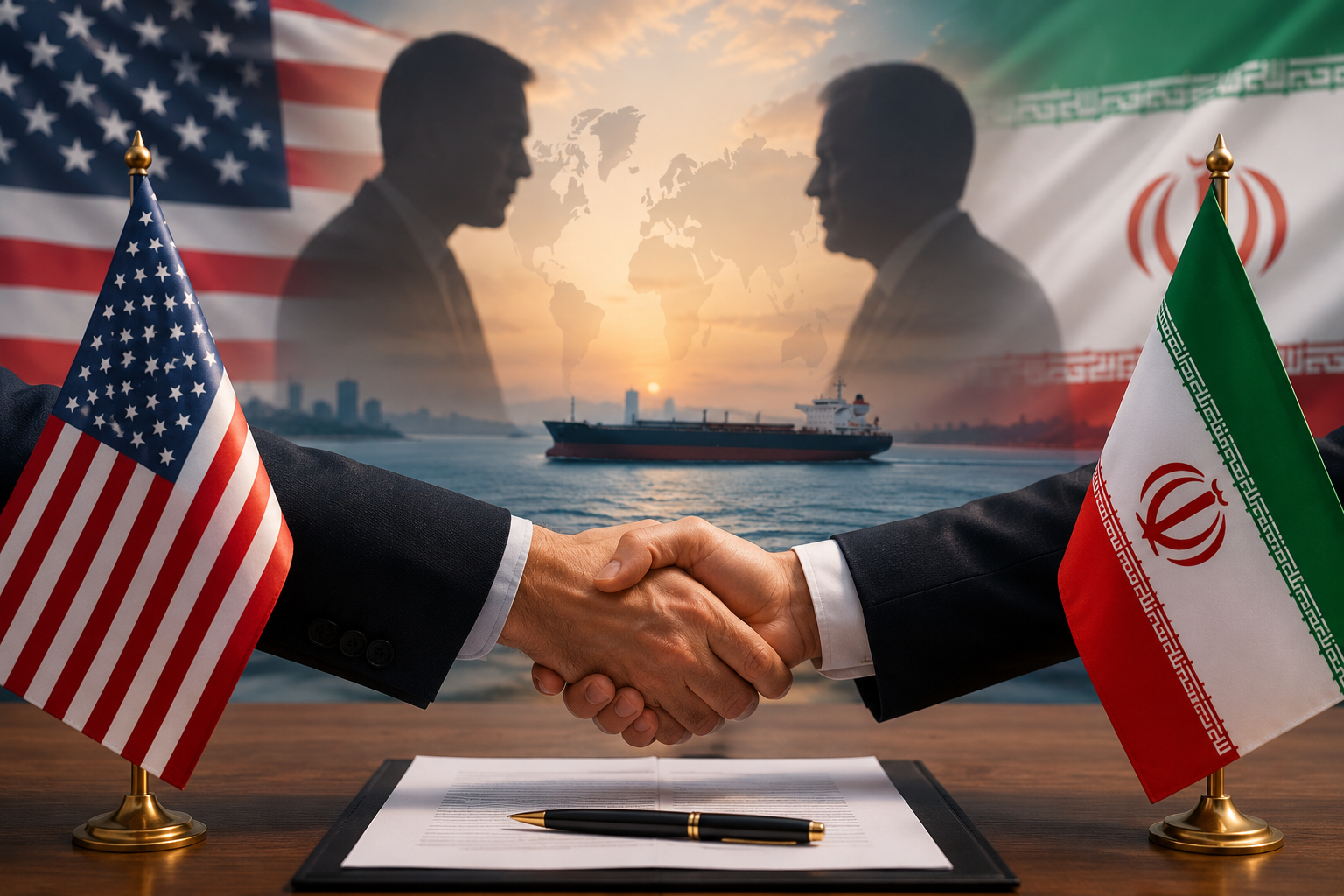
One-Page Framework Could Pause Hostilities, Ease Sanctions and Restart Nuclear Negotiations
The United States and Iran are reportedly moving closer to a preliminary diplomatic agreement aimed at easing regional tensions, halting military escalation and reopening formal negotiations over Iran’s nuclear programme.
According to multiple reports, negotiators are working on a short memorandum of understanding (MoU) that could establish the foundation for a broader peace framework and reduce the risk of further conflict in the Gulf region.
The proposed understanding is being viewed as the most significant diplomatic progress between Washington and Tehran since the latest conflict began, raising hopes across global financial and energy markets.
Draft Deal Could Open Path Toward Ceasefire
The emerging framework reportedly consists of a concise 14-point, one-page memorandum designed to immediately reduce hostilities and create a temporary diplomatic window for deeper negotiations.
Sources familiar with the discussions indicate that the proposal could include:
- A temporary moratorium on Iran’s nuclear enrichment activity
- Gradual easing of selected US sanctions
- Release of frozen Iranian financial assets
- Measures to reduce maritime tensions in the Strait of Hormuz
- A 30-day negotiation period for broader nuclear and security talks
While no final agreement has been officially confirmed, diplomatic sources suggest the next 48 hours could prove critical as Iran reviews several key provisions.
Trump Signals Progress in Negotiations
U.S. President Donald Trump indicated that negotiations with Iran are making substantial progress.
Trump recently announced a temporary pause in “Project Freedom,” a US-led initiative designed to help commercial vessels navigate through the Strait of Hormuz amid heightened regional tensions.
The president stated that the operation was being paused temporarily to allow space for a possible agreement to be finalised.
However, Trump also clarified that broader US maritime restrictions and blockade measures targeting Iranian-linked shipping activity would remain operational.
The announcement was interpreted by markets as a sign that Washington is increasingly prioritising diplomacy over direct military escalation.
US Shifts Focus Toward Maritime Security
U.S. Secretary of State Marco Rubio stated that offensive military operations against Iran had ended, signalling a shift in Washington’s strategy.
American officials indicated that the primary focus is now on safeguarding commercial shipping routes and maintaining stability in the Gulf rather than pursuing additional direct strikes.
The policy adjustment reflects growing international concern about the economic consequences of prolonged instability around the Strait of Hormuz, one of the world’s most strategically important oil transit corridors.
Global Markets React Positively
Financial markets responded positively to reports of diplomatic progress between the United States and Iran.
Global crude oil prices declined sharply as fears of a prolonged disruption in Gulf energy supplies began to ease. Equity markets across several regions also witnessed improved sentiment as investors welcomed signs of de-escalation.
India and other major energy-importing nations remain particularly sensitive to developments in the Gulf region due to their dependence on crude oil and LNG imports routed through the Strait of Hormuz.
Analysts believe a diplomatic breakthrough could help stabilise energy prices, reduce inflationary pressure and improve global market confidence.
Nuclear Issue Remains Central Challenge
Despite the progress, major differences reportedly remain regarding Iran’s nuclear programme.
Western governments continue to seek stricter limitations on uranium enrichment and enhanced international monitoring, while Iranian officials insist that their nuclear activities are intended for peaceful purposes.
Iran has also repeatedly demanded credible guarantees that future agreements would not be unilaterally abandoned, referencing the United States’ withdrawal from the 2015 nuclear deal during Trump’s earlier presidency.
Experts believe any long-term agreement will require extensive negotiations beyond the proposed interim framework.
Strait of Hormuz Continues to Dominate Global Attention
The Strait of Hormuz remains one of the biggest geopolitical flashpoints in the conflict.
A substantial portion of global crude oil and LNG shipments passes through the narrow waterway every day, making any military escalation or shipping disruption a major concern for international trade and energy security.
The recent tensions have already caused volatility in oil prices, shipping insurance costs and freight markets.
Industry observers say even temporary stability in the region could significantly reduce pressure on global energy markets.
Investors Closely Monitoring Next 48 Hours
Market participants worldwide are now closely tracking diplomatic developments between Washington and Tehran.
Investors believe the coming days could determine whether the current negotiations evolve into a broader peace process or whether geopolitical tensions return to escalation mode.
Analysts say sectors most sensitive to developments include:
- Energy and oil markets
- Shipping and logistics
- Defence stocks
- Aviation and transportation
- Emerging market equities
The outcome of the negotiations may also influence inflation expectations, central bank policy outlooks and global investment flows.
Diplomatic Window Opens Amid High Stakes
While substantial uncertainty remains, the latest diplomatic progress has created cautious optimism that both sides may be willing to avoid a prolonged regional conflict.
Experts note that even a temporary understanding could provide markets and governments valuable breathing space while longer-term negotiations continue.
For now, the possibility of a US-Iran interim agreement has shifted global focus from military escalation toward diplomacy — a development that financial markets, energy-importing nations and geopolitical observers will continue to watch very closely.