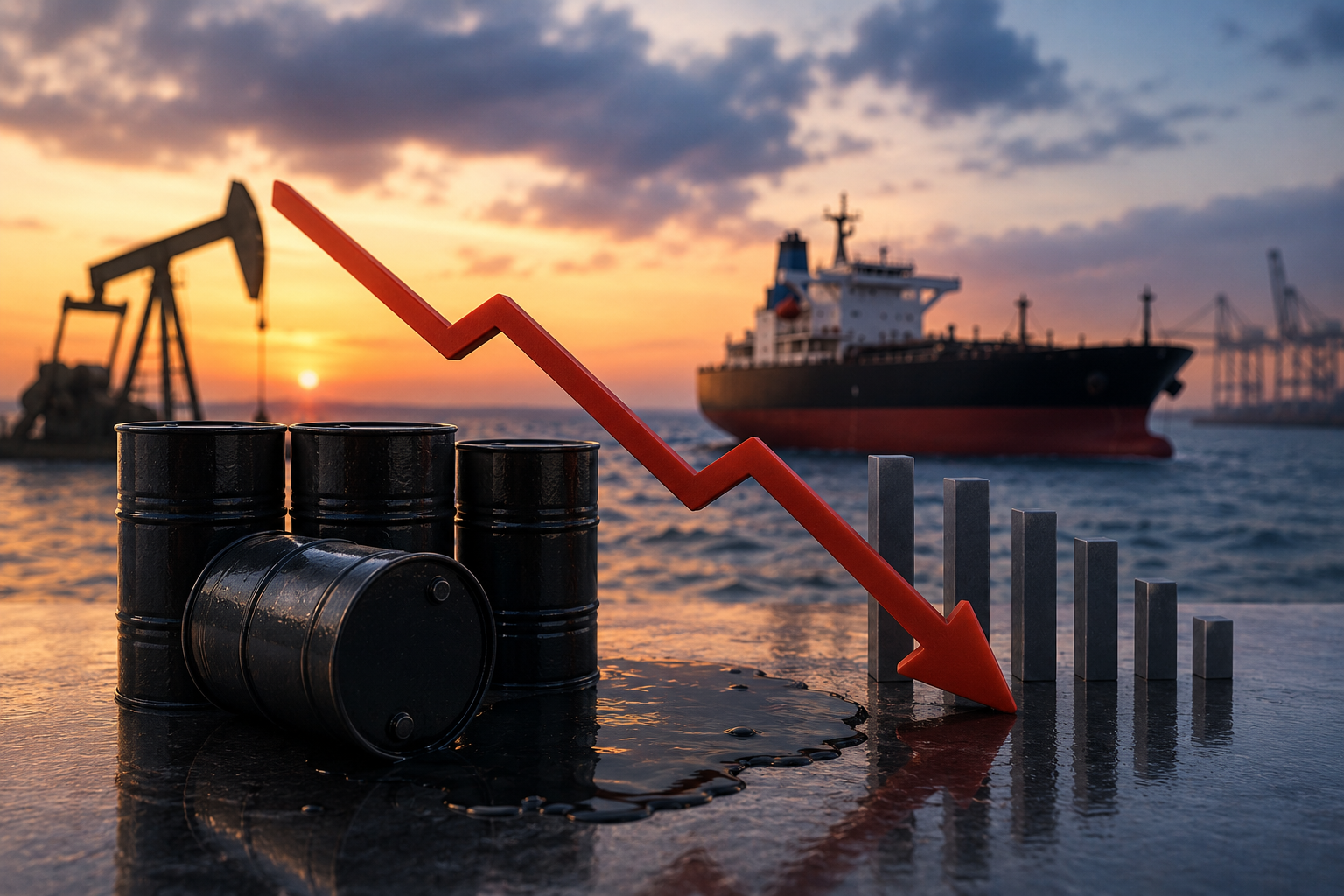
Markets React Positively as Temporary Diplomatic Window Reduces Immediate Supply Concerns
Global crude oil prices witnessed a sharp decline after U.S. President Donald Trump announced a temporary pause in operations aimed at reopening the Strait of Hormuz, fueling hopes of a possible diplomatic agreement with Iran.
The development eased fears of an immediate escalation in the Gulf region, prompting traders to reduce risk premiums that had recently pushed oil prices to multi-month highs. Energy markets have remained highly volatile in recent weeks as tensions between Washington and Tehran intensified, threatening one of the world’s most critical oil transit routes.
WTI and Brent Crude Extend Decline
U.S. West Texas Intermediate (WTI) crude futures fell by more than $2 during early Asian trading, slipping close to the $100-per-barrel mark. The decline followed another sharp correction in the previous trading session, when crude prices dropped after reports suggested that a ceasefire arrangement in the region was largely holding despite isolated exchanges of fire.
International benchmark Brent crude also extended losses, closing significantly lower as concerns over immediate supply disruptions began to ease.
Analysts said traders were reacting to the possibility that a diplomatic solution could prevent a prolonged disruption in shipping activities through the Strait of Hormuz, which handles a substantial portion of global crude oil exports.
Trump Signals Pause, But Blockade Remains
Speaking on Tuesday, Trump stated that the operation to reopen the strait would be temporarily paused to provide time for discussions and the potential signing of an agreement. However, he also clarified that the blockade itself would remain active for now.
The statement created mixed sentiment across commodity markets. While investors welcomed the reduced chances of immediate military confrontation, uncertainty remains over the long-term stability of shipping routes in the Gulf region.
Several shipping companies and energy traders continue to monitor the situation cautiously, with insurance costs and freight rates for oil tankers still elevated due to geopolitical risks.
Strait of Hormuz Remains Critical to Global Energy Trade
The Strait of Hormuz continues to play a central role in the global energy supply chain. A significant share of crude exports from major oil-producing nations passes through the narrow waterway every day, making any disruption a major concern for international markets.
Energy economists warn that even temporary instability in the region can trigger sharp movements in oil prices, impact inflation trends and increase transportation and manufacturing costs worldwide.
Countries heavily dependent on imported energy, particularly across Asia and Europe, remain vulnerable to sustained volatility in the Gulf.
Inventory Data Adds Pressure on Prices
Adding to the downward momentum in oil markets, fresh inventory data from the United States pointed to stronger supply conditions. According to industry sources citing figures from the American Petroleum Institute, U.S. crude oil inventories declined for the third consecutive week.
Crude stockpiles reportedly fell by more than 8 million barrels during the latest reporting week. Gasoline inventories and distillate stocks also registered substantial declines.
Market analysts said the inventory drawdown reflects continued strong fuel demand and tighter supply conditions in the United States. However, traders largely focused on geopolitical developments rather than inventory fundamentals during the latest trading session.
Energy Stocks and Global Markets in Focus
The decline in crude prices also impacted energy-related stocks across global markets. Shares of oil exploration, refining and shipping companies witnessed mixed trading as investors reassessed the outlook for commodity prices.
Financial markets are expected to remain highly sensitive to further developments involving the United States, Iran and maritime security in the Gulf region.
Investors are now closely watching whether diplomatic negotiations can progress into a formal agreement or whether tensions could flare up again, potentially triggering another surge in oil prices.
Inflation Outlook Could Improve if Oil Stabilises
Economists believe that sustained moderation in crude prices could provide relief to global inflation concerns, especially at a time when several central banks are evaluating future interest rate decisions.
Lower oil prices may help reduce fuel and logistics costs, easing pressure on businesses and consumers. However, analysts caution that geopolitical uncertainty in the Middle East remains elevated, meaning energy markets could continue to experience sharp swings in the near term.
For now, the temporary pause in operations around the Strait of Hormuz has offered markets a short-term sense of relief, though the broader geopolitical conflict remains unresolved.