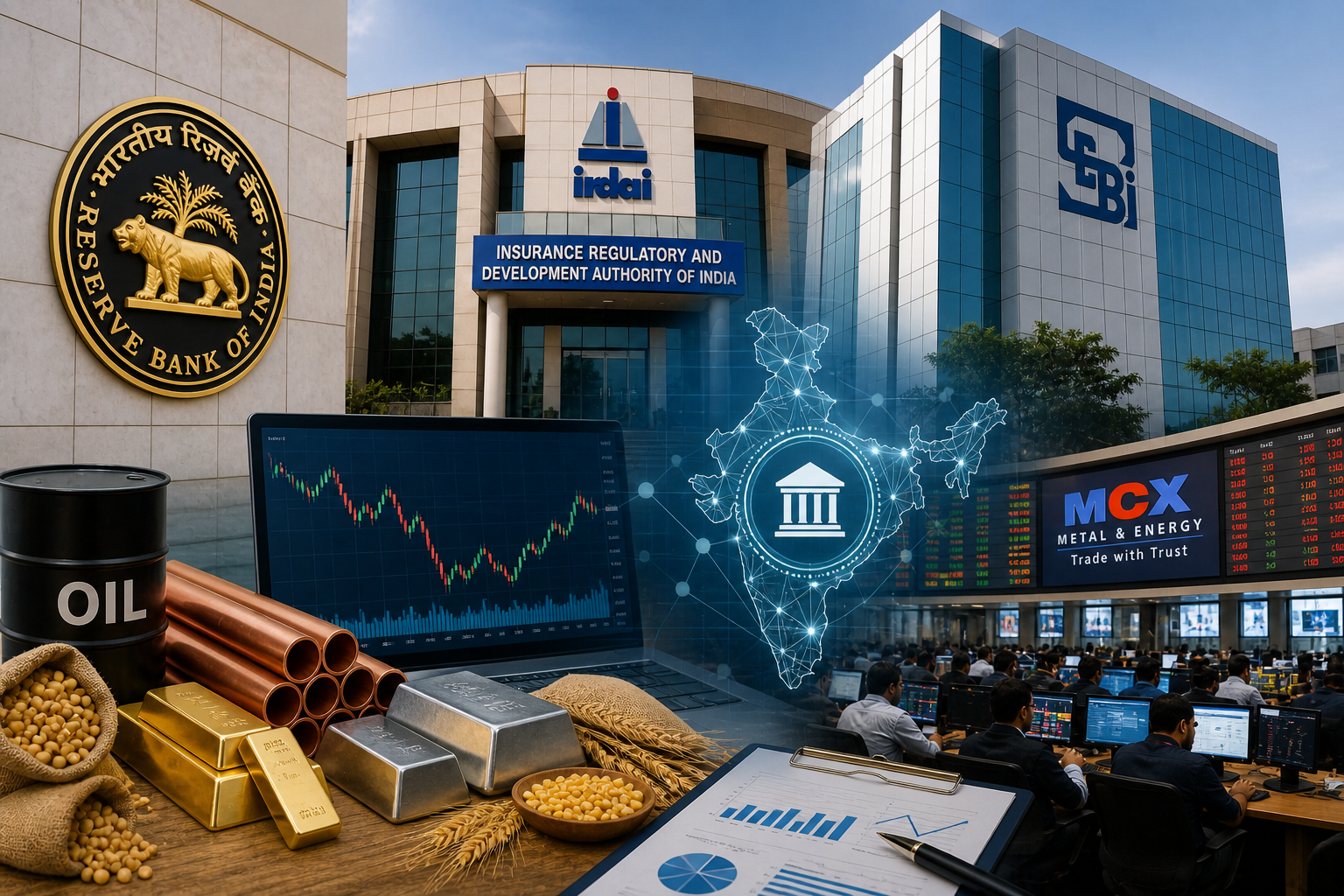
The development is significant for India’s evolving commodity markets, where broader institutional participation has long been viewed as a key growth catalyst. SEBI had earlier proposed expanding the commodity derivatives ecosystem by enabling participation from banks, pension funds, and other large institutions. However, the latest stance from RBI and IRDAI suggests that systemic risk concerns continue to outweigh potential benefits. The hesitation reflects fears around volatility, risk management complexity, and exposure to speculative activity—factors that could impact financial stability if not tightly regulated. Shares of Multi Commodity Exchange of India reacted negatively to the news, falling over 3% intraday. As India’s leading commodity exchange, MCX stands to benefit significantly from increased institutional participation. The lack of regulatory support may slow down: Without participation from banks and insurers, market growth could remain largely dependent on retail and proprietary traders. The role of pension funds remains uncertain. While India’s pension regulator has explored allowing exposure to commodity derivatives, no clear decision has been communicated. If permitted in the future, pension funds could provide a stable and long-term capital base, potentially offsetting the absence of banks and insurers. Regulatory hesitation stems from several structural concerns: These concerns have led regulators to adopt a gradual and cautious approach. Despite the setback, SEBI continues to push for strengthening India’s commodity markets. At the same time, the regulator is expanding its oversight in emerging areas such as artificial intelligence. SEBI has announced plans to issue an advisory regarding risks from advanced AI tools like Anthropic Mythos, highlighting concerns around system vulnerabilities, algorithmic misuse, and market manipulation. For market participants, the development signals: Investors should track regulatory updates closely, as policy shifts can significantly impact market structure and valuations. India’s commodity derivatives market is likely to evolve incrementally rather than through rapid liberalisation. While immediate expansion through banks and insurers appears unlikely, ongoing dialogue between regulators and market participants could pave the way for calibrated reforms. In the meantime, SEBI’s balanced approach—promoting growth while tightening risk oversight—aims to ensure that market development does not come at the cost of financial stability.
SEBI Flags Limited Institutional Participation; AI Risk Advisory Also in Pipeline
Institutional Entry Faces Regulatory Hurdles
Impact on MCX and Commodity Markets
Pension Funds: A Grey Area
Why Regulators Are Cautious
SEBI’s Dual Focus: Market Growth and Risk Control
What This Means for Investors
Outlook: Gradual Evolution, Not Disruption
India’s financial markets received a cautious regulatory signal as the Reserve Bank of India and the Insurance Regulatory and Development Authority of India indicated reluctance to allow banks and insurance companies to invest in commodity derivatives