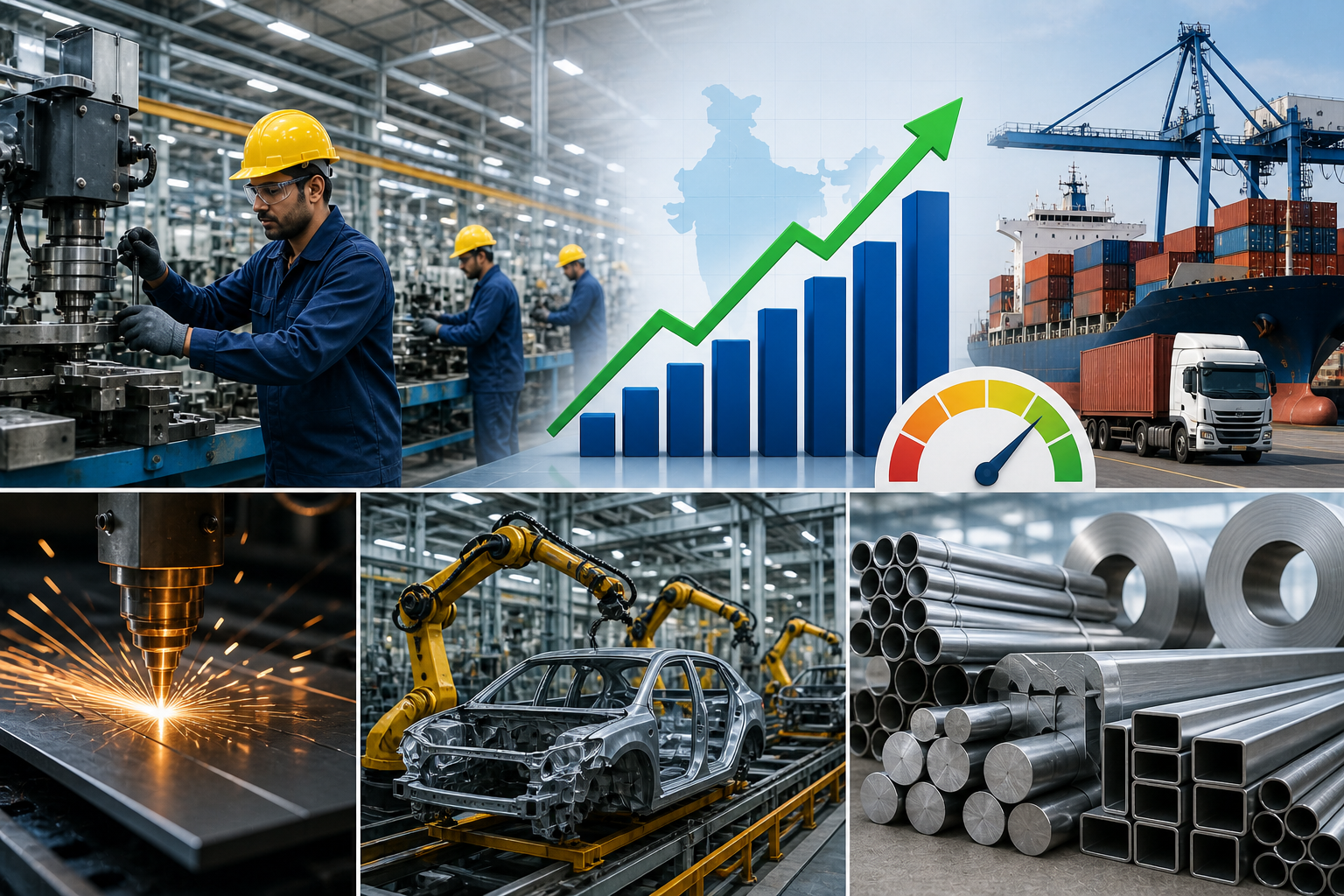
India Manufacturing PMI at 54.7: Growth Sustains, But Cost Pressures Spike
Export Demand Supports Expansion While Input Inflation Hits 44-Month High
Growth Continues, But Momentum Remains Moderate
The latest PMI reading marks the 54th consecutive month of expansion in India’s manufacturing activity. However, it also represents one of the slowest growth rates in nearly four years, suggesting that momentum remains subdued despite improvement from March lows.
A PMI reading above 50 signals expansion, while below 50 indicates contraction. At 54.7, the sector is growing—but at a measured pace.
Export Orders Drive Recovery
A key positive in the April data was a sharp rise in export orders, which expanded at the fastest pace in seven months. This helped offset softer domestic demand and supported overall production growth.
Improving global demand and supply chain adjustments appear to be benefiting Indian exporters, particularly in sectors such as engineering goods, chemicals, and textiles.
Inflationary Pressures Intensify
One of the most critical concerns emerging from the data is the sharp rise in input costs. Manufacturers reported the fastest increase in cost burdens since August 2022, driven by higher prices of:
- Aluminium and metals
- Chemicals and petroleum products
- Electrical components
- Fuel and logistics
These cost pressures have largely been attributed to geopolitical disruptions, particularly tensions in West Asia, which have impacted global supply chains and commodity prices.
Firms Pass on Costs to Consumers
As input costs surged, manufacturers increased output prices at the fastest rate in six months. This indicates a gradual pass-through of inflation to end consumers, which could have broader implications for retail inflation and monetary policy.
The consumer goods segment, while seeing relatively slower cost increases compared to other sectors, still recorded the highest output price inflation among all categories.
Demand Conditions Remain Uneven
While new orders and production levels improved, their growth rates remain among the weakest seen in over three years. Survey participants cited several challenges:
- Intense competitive pressures
- Delays in client approvals
- Global geopolitical uncertainty
These factors have tempered demand momentum despite an otherwise supportive macroeconomic backdrop.
Employment Growth Picks Up
On a positive note, hiring activity strengthened in April, with job creation rising to a 10-month high. This reflects cautious optimism among manufacturers, who are expanding workforce capacity in anticipation of future demand recovery.
Inventory and Procurement Trends
Manufacturers continued to increase purchases of raw materials and semi-finished goods. However, the pace of expansion slowed to one of the weakest levels in over two years, indicating cautious inventory management amid uncertain demand and rising costs.
Market Implications
For investors, the PMI data presents a balanced outlook:
- Positive Signals: Continued expansion, strong export growth, improving employment
- Risks: Rising input costs, margin pressures, demand uncertainty
Sectors such as capital goods, export-oriented manufacturing, and industrials may remain in focus, while margin-sensitive industries could face near-term headwinds.
Outlook: Resilient but Challenged
India’s manufacturing sector continues to demonstrate resilience, supported by export demand and steady output growth. However, the sharp rise in inflationary pressures and moderate demand conditions highlight the need for cautious optimism.
Going forward, trends in global commodity prices, geopolitical stability, and domestic consumption will play a crucial role in determining the trajectory of manufacturing growth in the coming months.