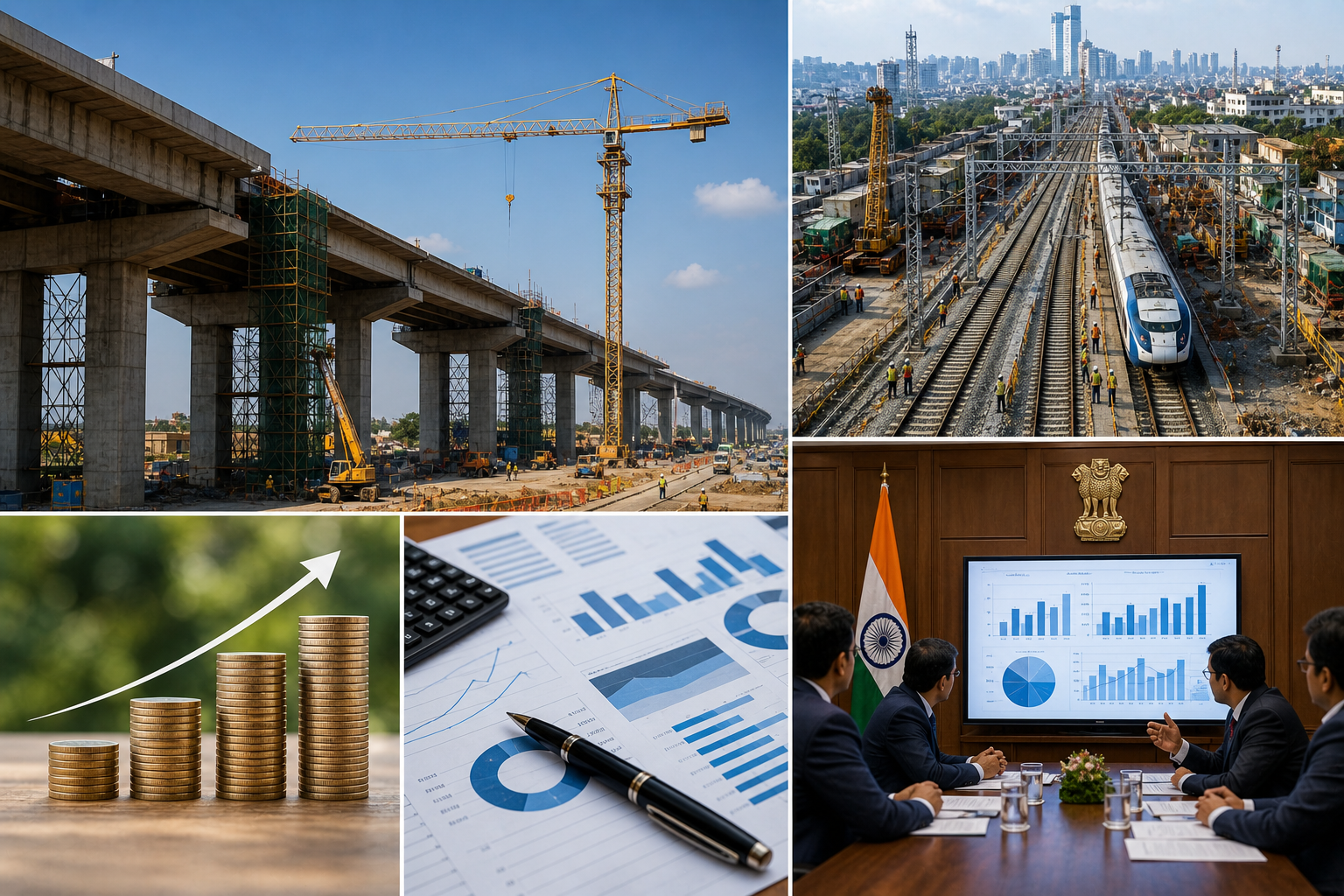
The Indian government has reaffirmed its commitment to sustaining capital expenditure (capex) at ₹12.22 lakh crore for the current fiscal year, despite rising fiscal pressures driven by global uncertainties. A senior official from the Ministry of Finance emphasized that capex will remain a key priority to support economic growth and infrastructure development.
Fiscal Stress Mounts Amid Global Uncertainty
The government’s stance comes at a time when fiscal challenges are intensifying due to geopolitical tensions in West Asia and their impact on global markets. Rising crude oil prices and supply disruptions are adding pressure on government finances, while recent cuts in excise duties on petrol and diesel could affect tax revenues.
Expenditure Secretary V Vualnam acknowledged that the coming quarters may bring multiple “stress points,” particularly in terms of tax buoyancy and fiscal balance.
Capex Seen as Key Growth Engine
Despite these challenges, the government views capital expenditure as a critical driver of economic momentum. Investments in infrastructure—such as roads, railways, and industrial corridors—are expected to stimulate demand, create jobs, and crowd in private investment.
Maintaining capex at planned levels signals the government’s focus on long-term growth over short-term fiscal adjustments.
Balancing Growth and Fiscal Discipline
The decision to sustain capex highlights a delicate balancing act:
- Growth Support: Infrastructure spending boosts economic activity
- Fiscal Prudence: Managing deficits amid lower tax inflows
- Inflation Risks: Higher oil prices may increase subsidy burden
- Revenue Pressure: Excise duty cuts could limit fiscal flexibility
The government will likely rely on improved efficiency, better tax compliance, and strategic spending to manage this balance.
Market Implications: Positive for Infrastructure and Capital Goods
The continued capex push carries important implications for investors:
- Infrastructure Sector: Strong pipeline of projects supports growth
- Capital Goods Companies: Increased demand for machinery and equipment
- Cement & Steel: Likely to benefit from construction activity
- Private Investment: Government spending may crowd in private capital
Outlook: Navigating a Challenging Global Environment
While fiscal pressures remain, the government’s decision to prioritise capex indicates confidence in India’s growth trajectory. However, external risks—such as geopolitical tensions and commodity price volatility—will continue to influence fiscal outcomes.
Conclusion
The government’s commitment to sustaining capital expenditure despite fiscal stress underscores its long-term growth strategy. By prioritising infrastructure and development spending, policymakers aim to keep economic momentum intact even in a challenging global environment.
For investors, this signals continued opportunities in infrastructure-linked sectors, while also highlighting the importance of monitoring fiscal trends and global risks.