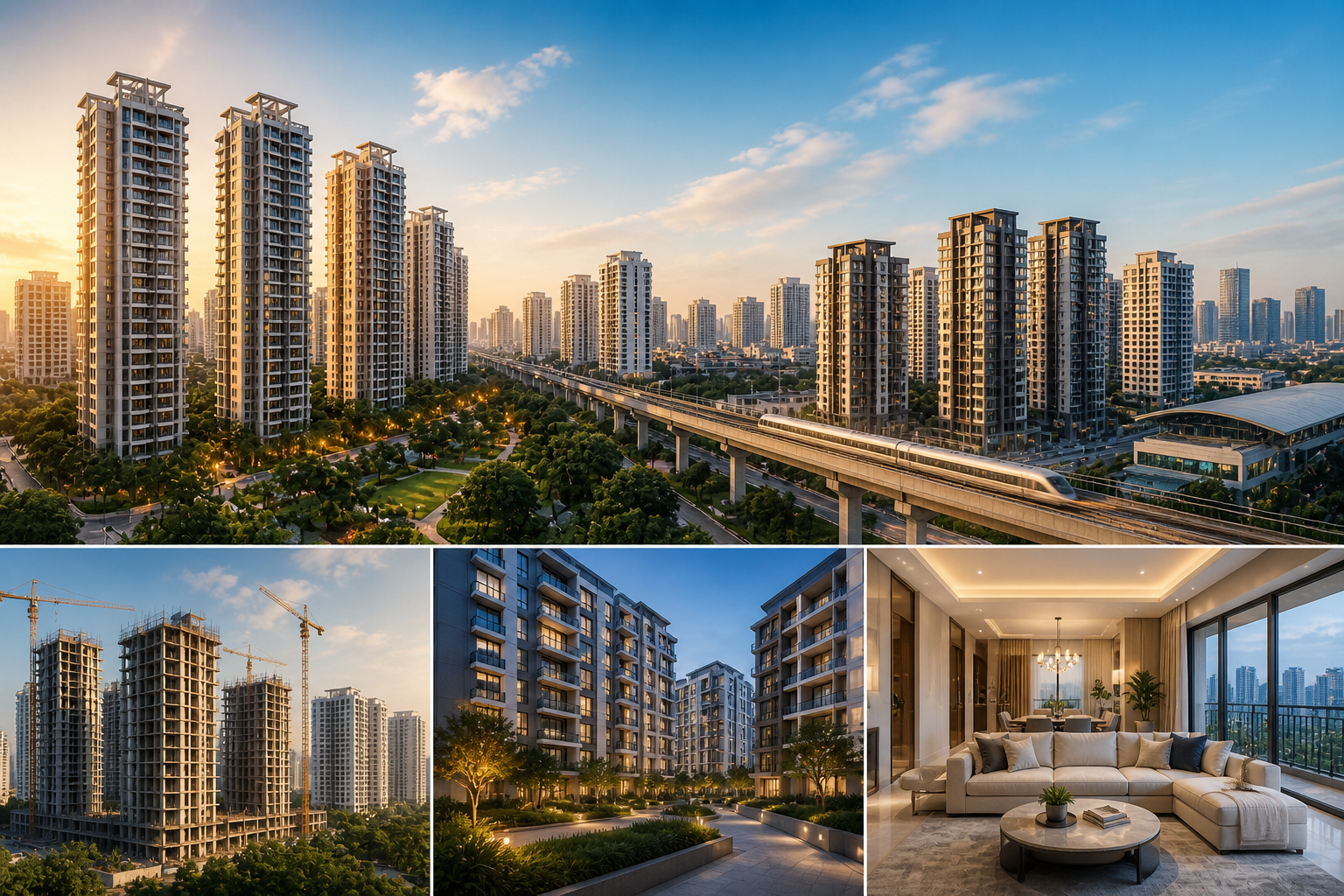
India’s residential real estate market continued its upward trajectory in the January–March 2026 quarter, with apartment prices rising between 8% and 20% across major cities, according to JLL India. The growth has been fuelled by escalating land acquisition costs, higher raw material prices, and developers increasingly focusing on premium housing projects.
The analysis spans the country’s top property markets, including Delhi NCR, Mumbai, Bengaluru, Pune, Chennai, Hyderabad, and Kolkata.
Supply Outpaces Demand Growth
While housing demand remained resilient, supply growth significantly outpaced sales during the quarter, indicating a cautious buyer sentiment.
- Housing sales rose 8% year-on-year to 70,631 units
- New launches increased 13% to 90,023 units
- Developers accelerated project launches anticipating future demand
This divergence highlights a transitional phase in the housing market, where developers are positioning for long-term growth while buyers remain selective amid economic uncertainties.
Premium Housing Segment Dominates Market Activity
A clear shift toward high-value housing continues to define market dynamics:
- Homes priced above ₹1 crore saw a 30% surge in sales
- Premium housing accounted for 71% of total transactions, up from 59% last year
- The ₹1.5 crore–₹3 crore segment recorded a sharp 67% growth
In contrast, affordable housing witnessed a slowdown:
- Units priced below ₹50 lakh declined by 24%
- Overall share of homes below ₹1 crore dropped to 29%
This trend reflects both rising affordability challenges and developers’ preference for higher-margin projects.
Key Cities Lead Growth and New Launches
The bulk of residential activity remained concentrated in leading urban centres:
- Bengaluru emerged as the top market for new launches with over 27,000 units
- Delhi NCR recorded a sharp 64% rise in new supply
- Together, these two markets accounted for nearly 45% of total launches
Meanwhile, price growth remained strong across cities like Kolkata, Chennai, Bengaluru, and Delhi NCR, which posted annual increases in the range of 12% to 15%.
Outlook: Price Growth to Continue, But Pace May Moderate
Looking ahead, the residential market is expected to maintain an upward price trend, although the rate of increase may slow if demand growth remains moderate.
Rising input costs—particularly construction materials and labour—are likely to keep upward pressure on property prices. However, the widening gap between supply and demand suggests buyers are becoming more cautious, which could stabilise the market in the coming quarters.
Investment Perspective: Opportunities and Risks
For investors, the current environment presents a mixed outlook:
- Premium Segment: Continues to offer strong growth potential
- Affordable Housing: Faces demand challenges but may offer long-term opportunities
- Market Timing: Increased supply could create selective buying opportunities
- Urban Focus: Top metro cities remain the most attractive investment destinations
Conclusion
India’s housing market is entering a nuanced phase—characterised by rising prices, strong premium demand, and cautious buying behaviour. While developers remain