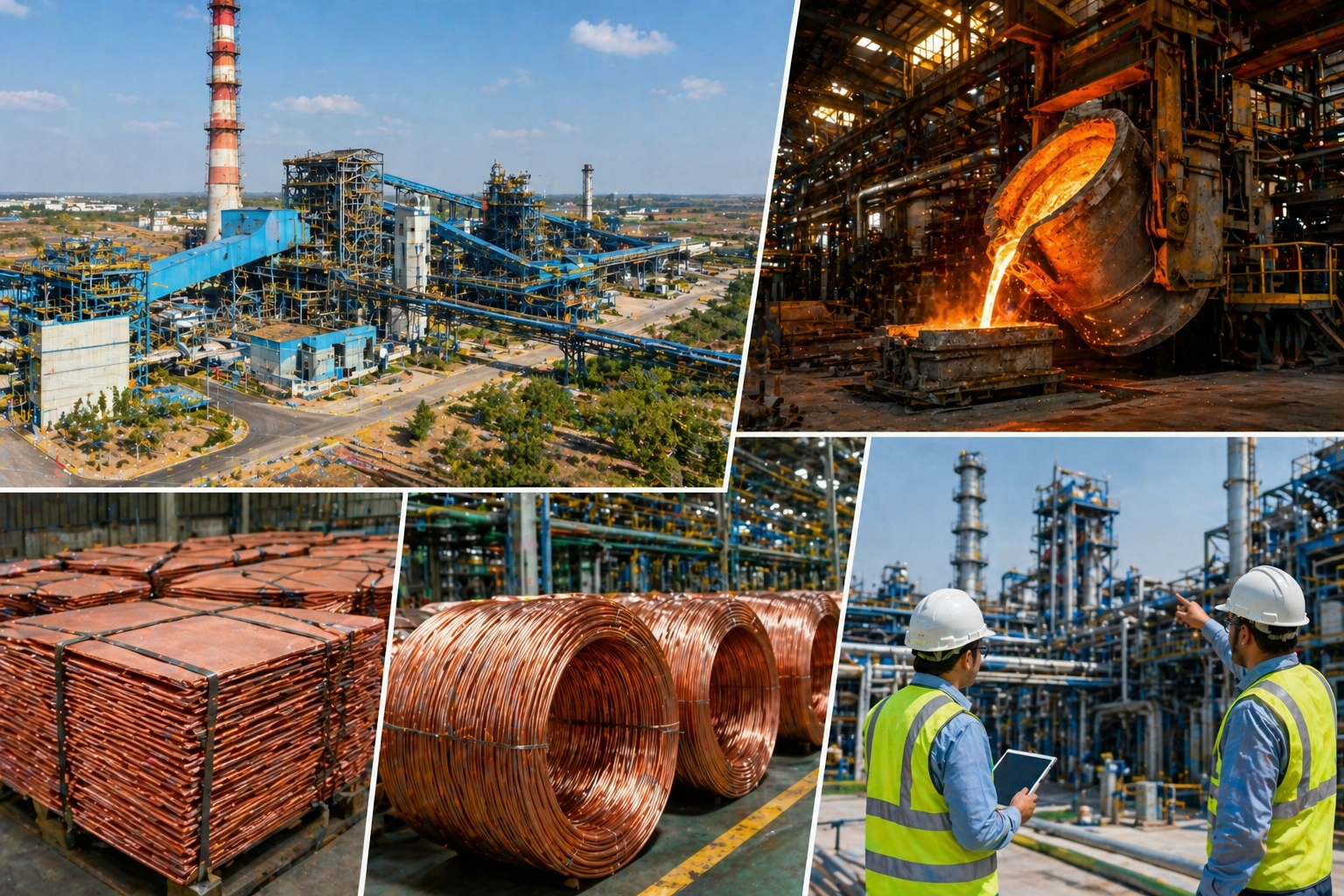
Adani Enterprises is encountering operational hurdles at its flagship copper smelting project in Gujarat, raising concerns over production timelines and its role in strengthening India’s position in the global copper supply chain. The $1.2 billion Kutch copper plant, operated through Kutch Copper Limited (KCL), has struggled to achieve stable output nearly a year after commissioning, highlighting the complexities involved in scaling large industrial infrastructure. Despite being operational for around ten months, the plant has not reached meaningful production levels: While Adani Enterprises maintains that stabilisation is progressing steadily, independent indicators suggest otherwise. Sources point to engineering complexities and raw material quality concerns as key obstacles: These factors can significantly impact operational efficiency in integrated smelting-refining setups. To address this, procurement teams are reportedly seeking higher-quality copper concentrate shipments for upcoming months. Independent monitoring firm Earth-i has indicated limited signs of sustained smelting activity at the Kutch site since mid-2025, based on satellite observations such as: However, the company has continued to receive shipments of copper concentrate, suggesting partial or intermittent operations. The plant requires approximately 1.6 million tonnes of copper concentrate annually to run at full capacity. However: This mismatch between capacity and raw material availability is a critical bottleneck. The Kutch plant is seen as a key project in diversifying global copper supply, currently dominated by China, which accounts for nearly half of global smelting capacity. Industry consultancies such as CRU and Wood Mackenzie had projected the plant to contribute 175,000–385,000 tonnes of output in 2026, making its delays significant for global supply expectations. The facility operates on an integrated design: Despite this, the company has imported over 26,000 tonnes of copper anodes in the past two years—indicating reliance on external inputs to sustain operations. Adani Enterprises has denied major engineering issues, stating:
Technical issues, feedstock challenges slow ramp-up at strategic $1.2 billion facility
Production Yet to Stabilise
Technical Challenges and Feedstock Issues
Satellite Data Raises Questions
Supply Chain Constraints Add Pressure
Strategic Importance in Global Copper Market
Integrated Model Adds Complexity
Company Response
Adani Enterprises is encountering operational hurdles at its flagship copper smelting project in Gujarat.