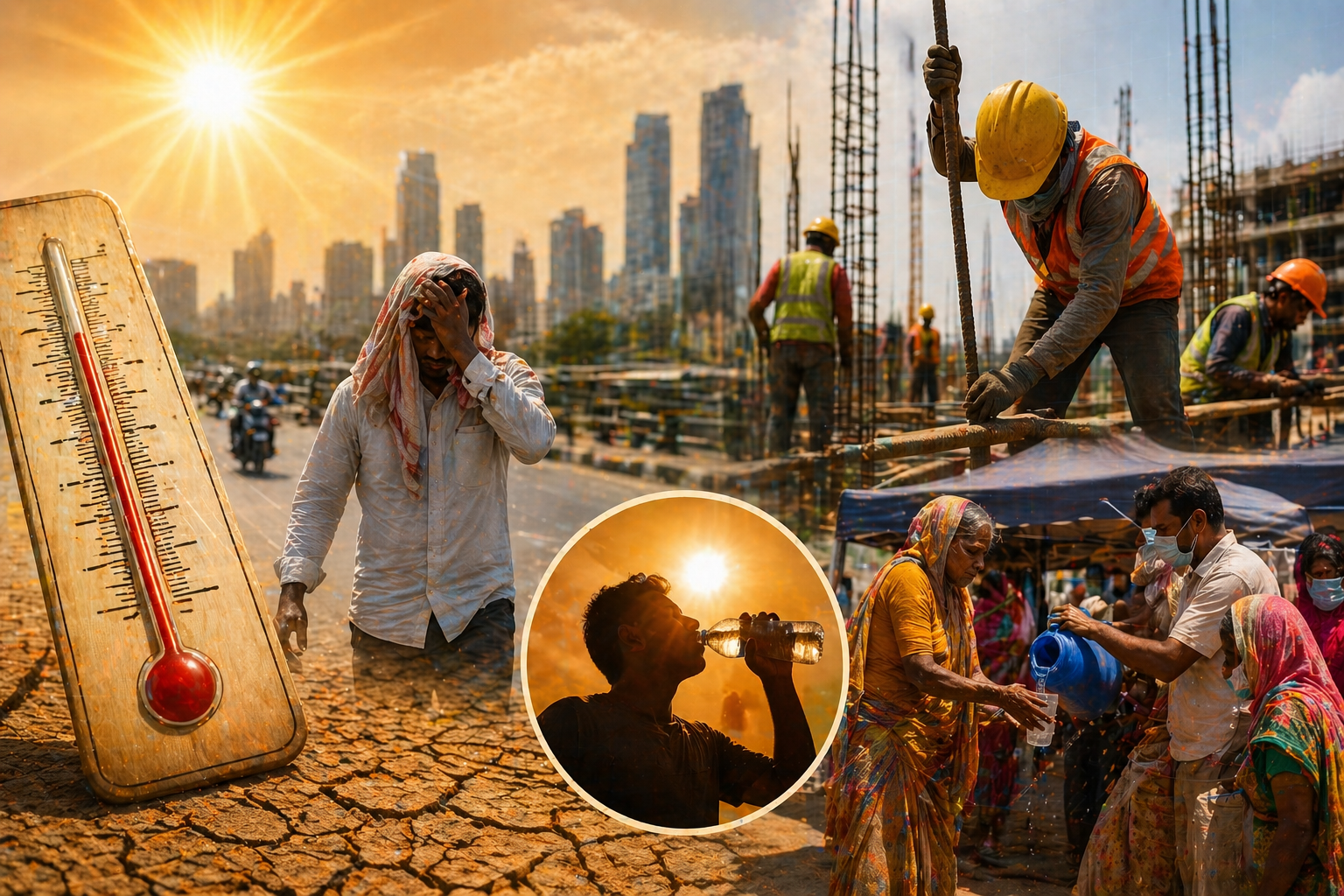
Vulnerable Groups at High Risk; States Asked to Act Before Crisis Escalates
The National Human Rights Commission (NHRC) has issued a strong advisory to 21 states and Delhi, calling for immediate and proactive measures to combat the growing threat of heatwaves. With temperatures crossing critical thresholds across several regions, the Commission stressed the need for early intervention to protect vulnerable populations.
Heatwave Intensity Rising Across India
India is witnessing increasingly severe heat conditions, with several regions recording temperatures above 40°C. The frequency and duration of heatwaves have intensified in recent years, largely driven by changing climate patterns.
The NHRC noted that such extreme weather events are no longer isolated incidents but part of a broader trend requiring systematic preparedness and long-term planning.
Who Is Most at Risk?
The impact of heatwaves is not evenly distributed. The Commission highlighted that the following groups are particularly vulnerable:
- Elderly individuals and people with pre-existing health conditions
- Infants, newborns, and children
- Outdoor workers such as labourers, delivery personnel, and vendors
- Economically weaker sections and homeless populations
These groups often lack access to adequate shelter, hydration, and healthcare, making them more susceptible to heat-related illnesses such as heatstroke and dehydration.
States Directed to Take Advance Action
The NHRC has written to multiple states including Gujarat, Bihar, Tamil Nadu, Madhya Pradesh, and West Bengal, urging authorities to activate preventive mechanisms before conditions worsen.
Key Measures Recommended:
- Setting up cooling centres and shaded public spaces
- Ensuring uninterrupted drinking water supply
- Issuing public advisories and heat alerts
- Strengthening healthcare systems to handle emergencies
- Providing protection and rest breaks for outdoor workers
The Commission emphasized that preparedness must be anticipatory rather than reactive.
Data Signals Urgent Need for Action
According to data from the National Crime Records Bureau (NCRB), over 3,700 deaths due to heatstroke were reported between 2019 and 2023. This highlights the deadly consequences of inadequate preparedness and delayed response.
Economic and Social Impact of Heatwaves
Beyond health risks, heatwaves also pose serious economic challenges:
- Reduced productivity in labour-intensive sectors
- Disruption in construction and outdoor work
- Increased risk of fire accidents
- Pressure on electricity demand and water resources
These factors can have a cascading impact on local economies and livelihoods, especially in urban and semi-urban areas.
Following NDMA Guidelines for Effective Response
The NHRC has urged all states to align their action plans with guidelines issued by the National Disaster Management Authority (NDMA). These include early warning systems, public awareness campaigns, and coordinated emergency responses.
States have also been asked to compile district-level action reports to ensure accountability and track preparedness efforts.
Looking Ahead: Need for Long-Term Climate Resilience
Experts believe that tackling heatwaves requires a combination of immediate relief and structural reforms. Urban planning, green cover expansion, improved housing, and climate-resilient infrastructure will play a key role in mitigating long-term risks.
Conclusion: Prevention is the Only Sustainable Strategy
The NHRC’s directive highlights a crucial shift toward proactive governance in the face of climate challenges. As heatwaves become more frequent and intense, timely action can save lives and protect livelihoods.
For policymakers and investors alike, the message is clear — climate resilience is no longer optional, but a necessity for sustainable growth and social stability.