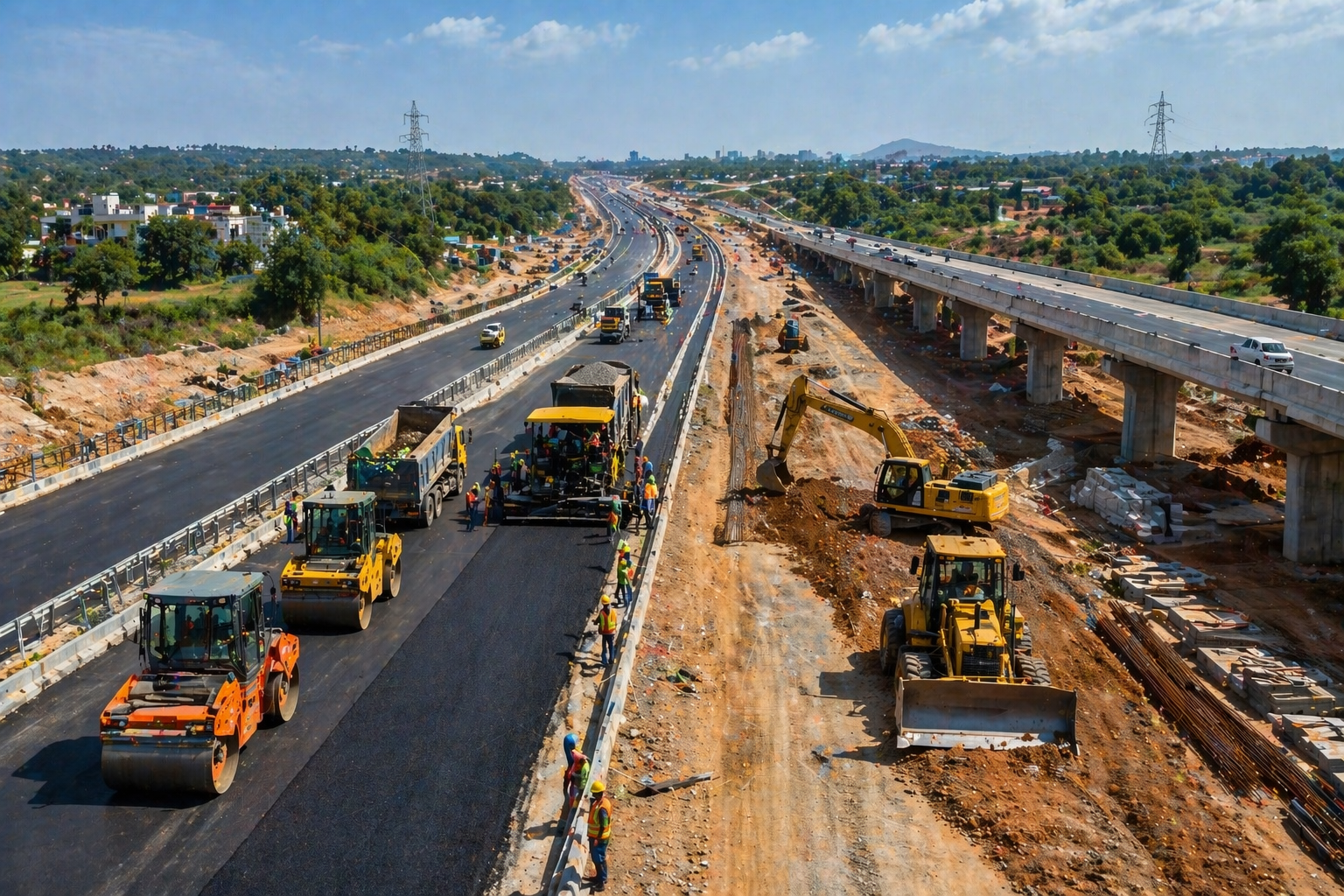
Construction at 9,380 km Falls Short of 10,000 km Goal; Execution Bottlenecks Persist
India’s highway construction momentum saw a noticeable slowdown in FY26, with total construction reaching 9,380 km—well below the government’s target of 10,000 km. The shortfall underscores persistent execution challenges in large-scale infrastructure projects.
Officials from the Ministry of Road Transport and Highways attributed the miss primarily to delays in land acquisition and pending regulatory approvals.
Weakest Performance Since FY18
The FY26 construction figure marks the lowest pace of highway building since 2017-18, when around 9,829 km of roads were constructed. This is a significant shift from the strong growth phase seen in recent years, when highway expansion was a key driver of infrastructure development.
The slowdown indicates that while intent and investment remain strong, on-ground execution continues to face hurdles.
Land Acquisition: The Biggest Roadblock
Land acquisition remains one of the most critical bottlenecks in India’s infrastructure ecosystem. Delays in securing land not only push project timelines but also increase costs and create uncertainty for contractors and developers.
In addition to land issues, projects are often delayed due to environmental clearances, utility shifting, and coordination challenges between central and state authorities.
Ripple Effect on Economy and Allied Sectors
Highway construction plays a crucial role in boosting economic activity by improving connectivity, reducing logistics costs, and supporting industrial growth. A slowdown in execution can have a cascading impact on sectors such as cement, steel, and construction equipment.
It may also delay the benefits of improved freight movement and regional development that come with enhanced road infrastructure.
Govt Likely to Push Reforms and Faster Clearances
To address these challenges, the government is expected to focus on streamlining land acquisition processes, improving inter-agency coordination, and accelerating project approvals.
Digitisation of land records, faster dispute resolution mechanisms, and policy reforms could play a key role in improving execution efficiency going forward.
Long-Term Infrastructure Story Remains Intact
Despite the FY26 shortfall, India’s long-term infrastructure growth story remains strong. Continued government focus on capital expenditure, expressway development, and connectivity projects is expected to sustain momentum over the coming years.
With structural reforms and improved execution, highway construction is likely to regain pace and move closer to targets in future fiscal periods.
Investor Perspective: Monitor Execution Trends
For investors, the slowdown highlights the importance of tracking execution efficiency in infrastructure projects. Companies linked to roads, EPC, cement, and construction materials may see near-term volatility but continue to benefit from long-term demand.
As policy support and funding remain robust, the sector’s growth potential remains intact, provided execution challenges are effectively addressed.