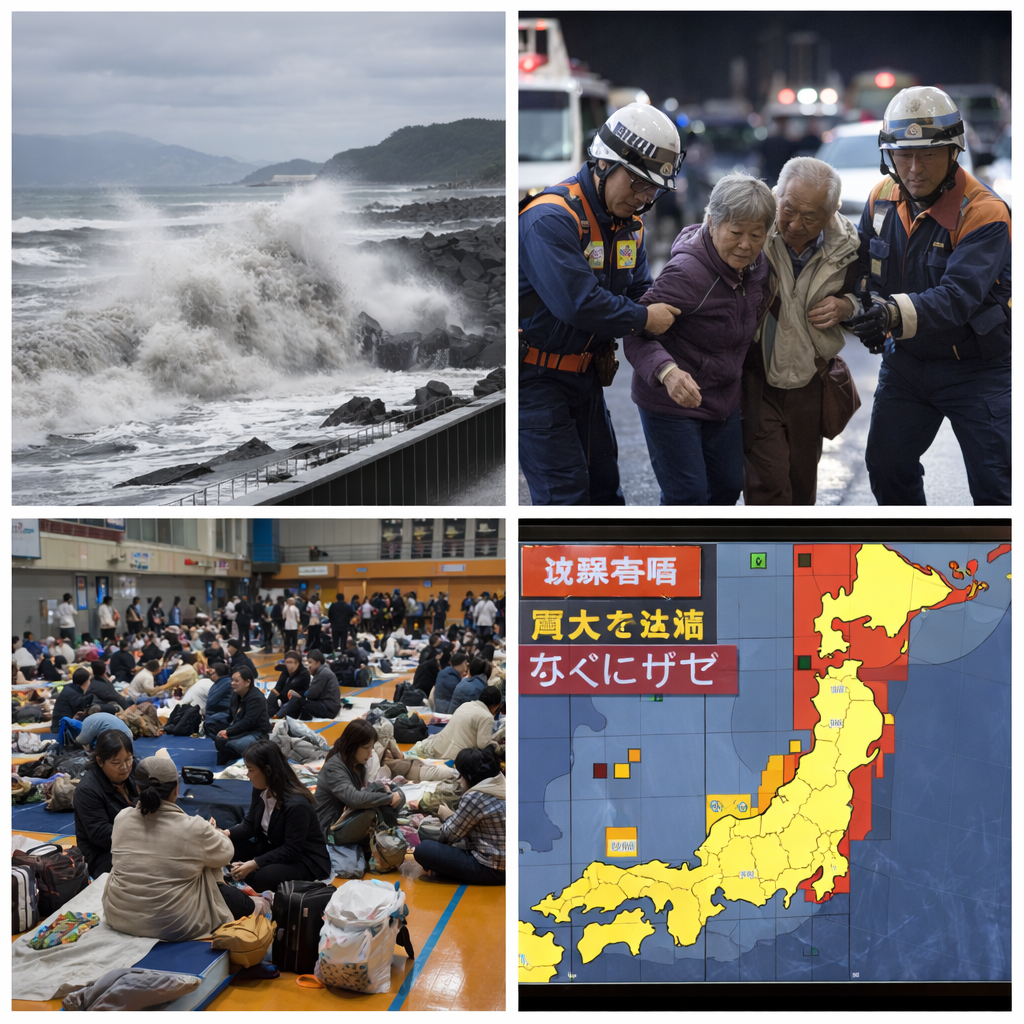
Coastal Regions on High Alert as Authorities Warn of Up to 3-Metre Waves
A powerful 7.4-magnitude earthquake struck off the northern coast of Japan on Monday, triggering an immediate tsunami alert and widespread emergency response measures. The tremor occurred near the Sanriku coastline at approximately 4:53 pm local time, according to the Japan Meteorological Agency.
The earthquake originated at a shallow depth of around 10 kilometres beneath the seabed, increasing the likelihood of strong surface shaking and potential tsunami formation. Authorities warned that waves of up to 3 metres could impact coastal areas shortly after the quake. Public broadcaster NHK confirmed that evacuation advisories had been issued across vulnerable regions.
Evacuations Underway, Emergency Systems Activated
Local governments quickly activated disaster response systems, urging residents in low-lying coastal zones to evacuate to higher ground. Sirens were sounded in multiple towns, while transportation services in some regions were temporarily suspended as a precaution. Emergency shelters have been opened to accommodate displaced residents.
Japan’s advanced early warning systems helped deliver alerts within seconds of the quake, allowing many residents valuable time to respond. Authorities emphasized that even smaller tsunami waves can pose serious risks due to strong currents and flooding potential.
Economic and Infrastructure Impact Being Assessed
While initial reports did not confirm large-scale damage, officials are assessing the impact on infrastructure, including ports, highways, and power facilities. Northern Japan’s coastal belt is home to key fishing industries and industrial operations, raising concerns about potential economic disruptions if damage is confirmed.
Investors are closely monitoring developments, as natural disasters in Japan can temporarily affect supply chains, especially in sectors such as manufacturing, electronics, and shipping. Any prolonged disruption could have ripple effects on regional and global markets.
Japan’s Seismic Vulnerability Remains a Key Risk
Situated along the Pacific Ring of Fire, Japan is among the most earthquake-prone countries in the world. The country has invested heavily in disaster preparedness, resilient infrastructure, and rapid response mechanisms following past events such as the 2011 Tohoku Earthquake and Tsunami.
Despite these advancements, earthquakes of this magnitude continue to pose serious threats, particularly when accompanied by tsunami risks. Authorities are continuing to monitor aftershocks and wave activity, urging the public to remain cautious until all warnings are lifted.
Markets Watch Closely as Situation Develops
Financial markets often react cautiously to major natural disasters in Japan due to its critical role in global trade and manufacturing. Analysts suggest that while short-term volatility may arise, Japan’s strong disaster management systems typically help limit long-term economic damage.
Further updates are expected as authorities evaluate the full extent of the impact and confirm whether tsunami waves have caused any coastal damage.