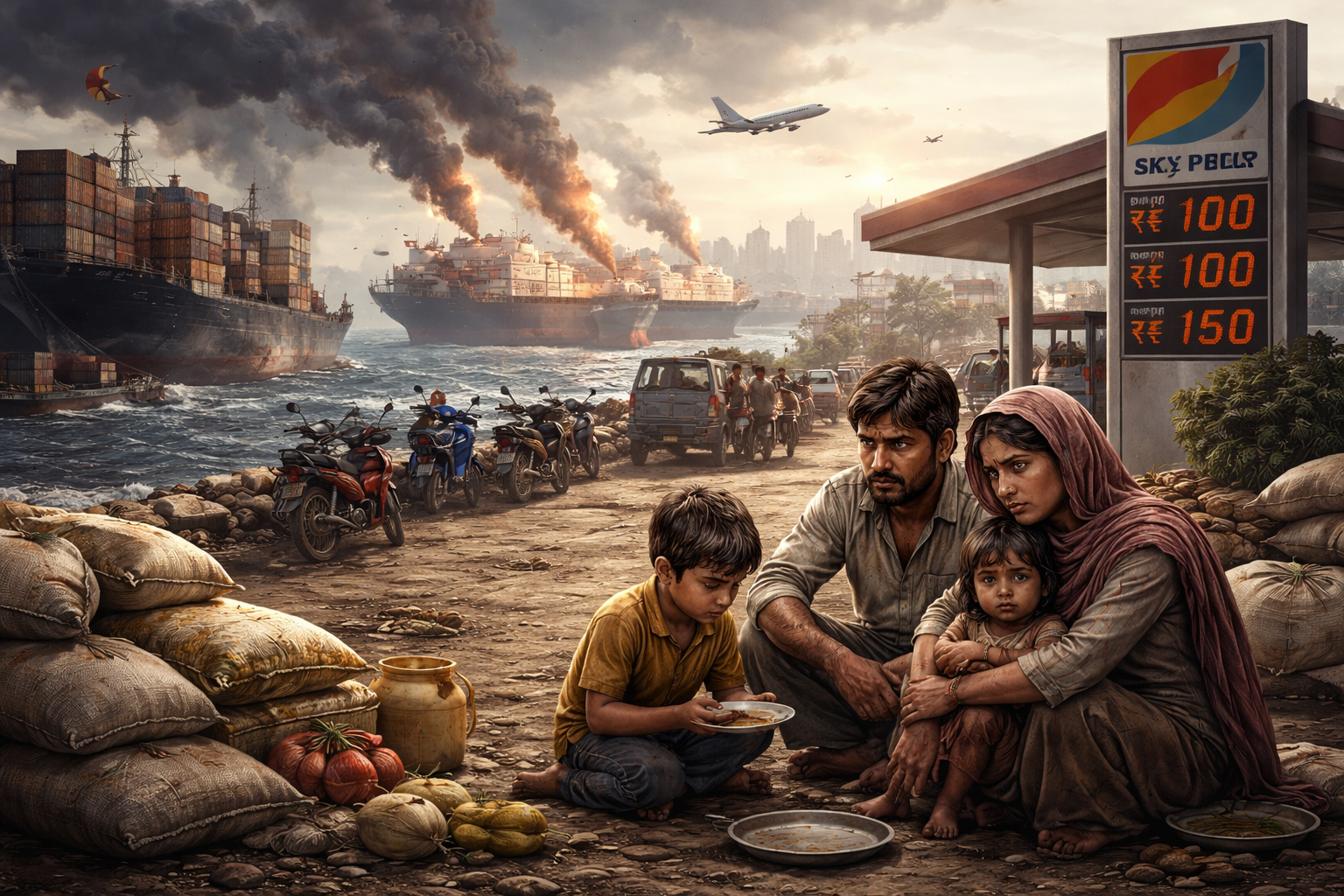
Conflict Shock Ripples Across India’s Economy
A recent report by the United Nations Development Programme highlights that escalating military tensions in West Asia could significantly impact India’s economy. The report estimates that up to 2.5 million additional people in India may fall into poverty, driven by rising global uncertainty and cost pressures.
The crisis is increasing prices of fuel, freight, and essential inputs, reducing household purchasing power and putting pressure on vulnerable populations. As inflation rises, low-income groups are expected to face the harshest impact.
Energy Dependence Amplifies Risk
India’s heavy reliance on West Asia for energy imports makes it particularly exposed. The country imports over 90% of its crude oil needs, with a large share sourced from the region. Any disruption in supply chains or shipping routes—especially near strategic chokepoints—can trigger sharp increases in fuel prices.
Higher energy costs cascade across the economy, raising transportation expenses, production costs, and ultimately retail prices, worsening inflationary pressures.
Trade and Supply Chain Disruptions
West Asia accounts for a significant share of India’s trade, contributing nearly 14% of exports and over 20% of imports. Disruptions in shipping routes, rising insurance costs, and delays are already affecting supply chains.
Key export sectors such as gems and jewellery, textiles, tea, and basmati rice may experience order cancellations or slower demand. Import-dependent industries could face shortages of critical raw materials, impacting production cycles.
Remittances and Migrant Workers at Risk
India has a large diaspora in Gulf countries, with over 9 million Indians working in the region. These workers contribute nearly 40% of India’s total inward remittances, making them a crucial pillar of household incomes.
Economic slowdown or instability in Gulf economies could reduce job opportunities and remittance flows, directly affecting millions of families in India who depend on this income.
MSMEs and Informal Sector Face Pressure
The report warns that Micro, Small, and Medium Enterprises (MSMEs) and informal workers are among the most vulnerable. Nearly 90% of India’s workforce operates in the informal sector, where financial buffers are limited.
Industries such as construction, hospitality, food processing, and small-scale manufacturing may see rising input costs and shrinking demand. This could lead to job losses, reduced working hours, and business disruptions.
Food Security and Agriculture Concerns
The timing of the crisis is critical as India approaches the Kharif sowing season. Rising fertiliser costs and supply uncertainties could impact agricultural productivity.
Additionally, higher food prices combined with weaker incomes may increase food insecurity, especially in rural and low-income urban households.
Impact on Human Development
The UNDP report also projects a setback in India’s human development progress, with a potential decline in overall welfare indicators. While the impact may appear moderate in statistical terms, it reflects broader challenges in health, income, and living standards for millions.
Global and Regional Outlook
Globally, the crisis could push up to 8.8 million people into poverty, with South Asia expected to bear the largest share. The economic cost for the Asia-Pacific region could reach $299 billion, underlining the scale of disruption.
Countries with high dependence on energy imports and external trade—like India—are expected to experience stronger ripple effects.
Opportunities Amid Crisis
Despite the challenges, the situation also highlights the need for long-term resilience. Strengthening domestic supply chains, diversifying energy sources, and enhancing social protection systems could help reduce vulnerability to external shocks.
The crisis may accelerate India’s shift toward renewable energy and localized production ecosystems, offering a pathway for sustainable growth in the future.