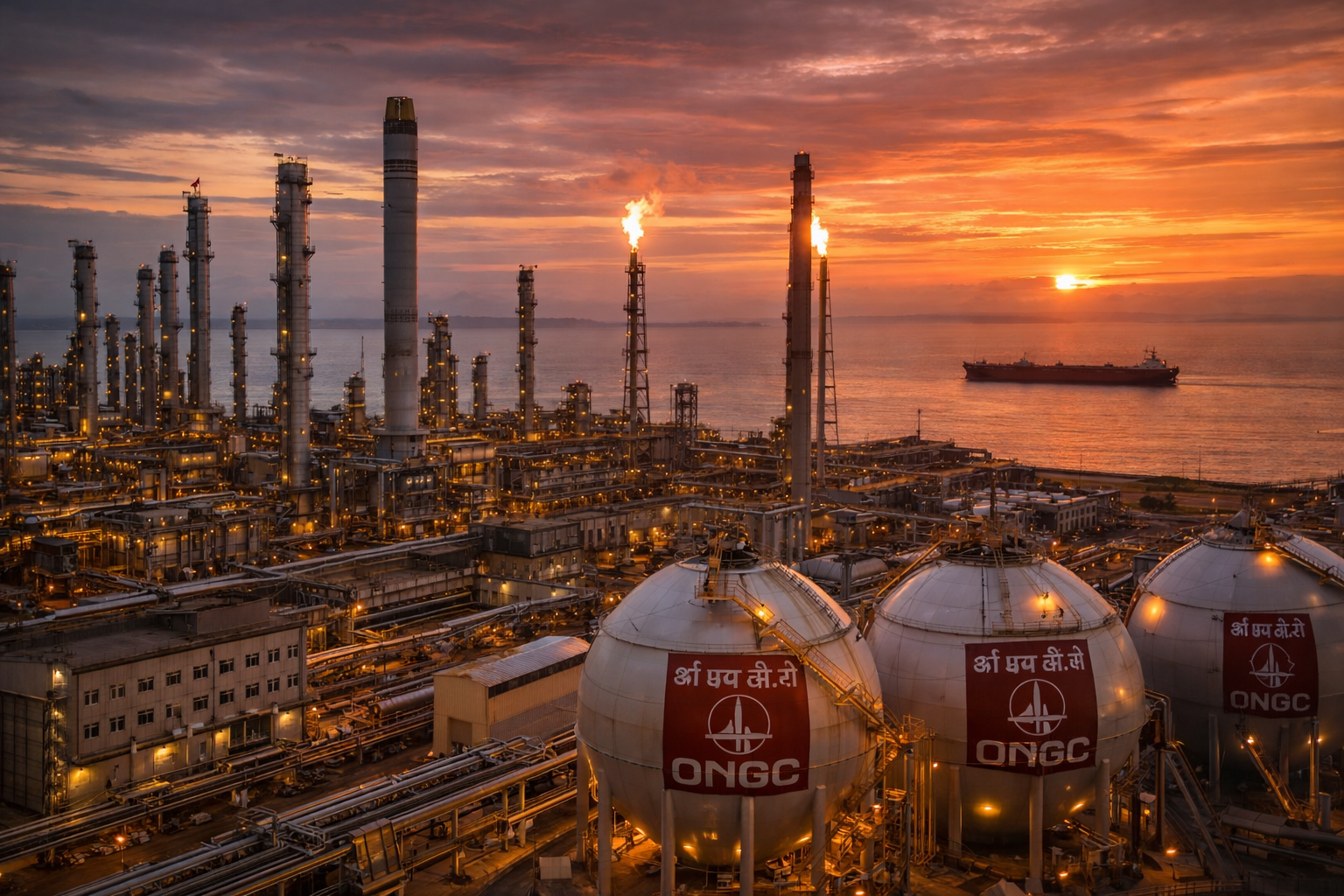
India Urged to Boost Domestic Output, Build Storage & Diversify Energy Sources Amid Global Uncertainty
In a strong message on India’s energy security, Oil and Natural Gas Corporation Chairman and CEO Arun Kumar Singh has called for a strategic overhaul of the country’s reliance on West Asia, warning that evolving geopolitical tensions are reshaping global energy dynamics.
Speaking at an energy conclave hosted by the Petroleum and Natural Gas Regulatory Board, Singh highlighted that recent disruptions have exposed vulnerabilities in India’s energy sourcing model.
Heavy Dependence on West Asia Under Scanner
India’s energy basket remains significantly dependent on imports from West Asia:
- ~50% of crude oil imports
- ~30% of natural gas supply
- 85–90% of LPG consumption
A recent six-week disruption in a key Gulf shipping route triggered supply constraints, forcing India to prioritise energy distribution—an alarming signal for policymakers and industry alike.
Global Energy Landscape Undergoing a “Paradigm Shift”
Singh emphasized that the global energy order is no longer stable:
- Rising geopolitical conflicts
- Increasing de-globalisation trends
- Growing resource nationalism among producing nations
“The assumption that proximity ensures supply security must be reconsidered,” Singh cautioned.
He added that in a multipolar world, energy access could increasingly be influenced by geopolitical alignments rather than market dynamics.
Strategic Storage: The New Insurance Policy
One of the key takeaways from ONGC’s stance is the urgent need to expand India’s strategic petroleum reserves.
- Acts as a buffer during supply shocks
- Helps stabilize domestic fuel prices
- Ensures energy availability during crises
Singh stressed that building large-scale storage capacity is no longer optional but essential for national security.
🇮🇳 Domestic Exploration Becomes Critical
Reducing import dependency will require aggressive domestic exploration:
- Focus on deep-water and untapped reserves
- Enhance technological capabilities in extraction
- Accelerate policy support for upstream investments
“We must chase every available resource within the country—this is an existential necessity,” Singh remarked.
Diversification Across Energy Mix
ONGC has advocated for a diversified and resilient energy ecosystem:
- Expand renewable energy integration
- Strengthen alternative fuel infrastructure
- Increase reliance on piped natural gas (PNG) for households
This approach ensures that even during disruptions, critical sectors like household energy remain unaffected.
Rising Volatility in Energy Markets
Singh pointed out unprecedented volatility in global energy markets:
- Refining margins exceeding crude costs
- Unpredictable price swings
- Supply chain disruptions
These factors make it increasingly difficult for countries to rely solely on traditional supply chains.
Smart Investment Insight
The evolving energy narrative opens up long-term investment opportunities in:
- Oil & gas exploration companies
- Strategic storage infrastructure players
- City gas distribution (PNG networks)
- Renewable energy and green transition sectors
Investors should watch for government policy shifts, capex announcements, and global crude trends.
The Road Ahead for India
India’s energy strategy is expected to pivot towards:
- Self-reliance in production
- Diversified global sourcing
- Robust storage infrastructure
- Integrated energy planning
Bottom Line:
The recent energy shock has delivered a clear message—India must move beyond geographical comfort and build a resilient, diversified, and self-reliant energy ecosystem to navigate an increasingly uncertain global landscape.