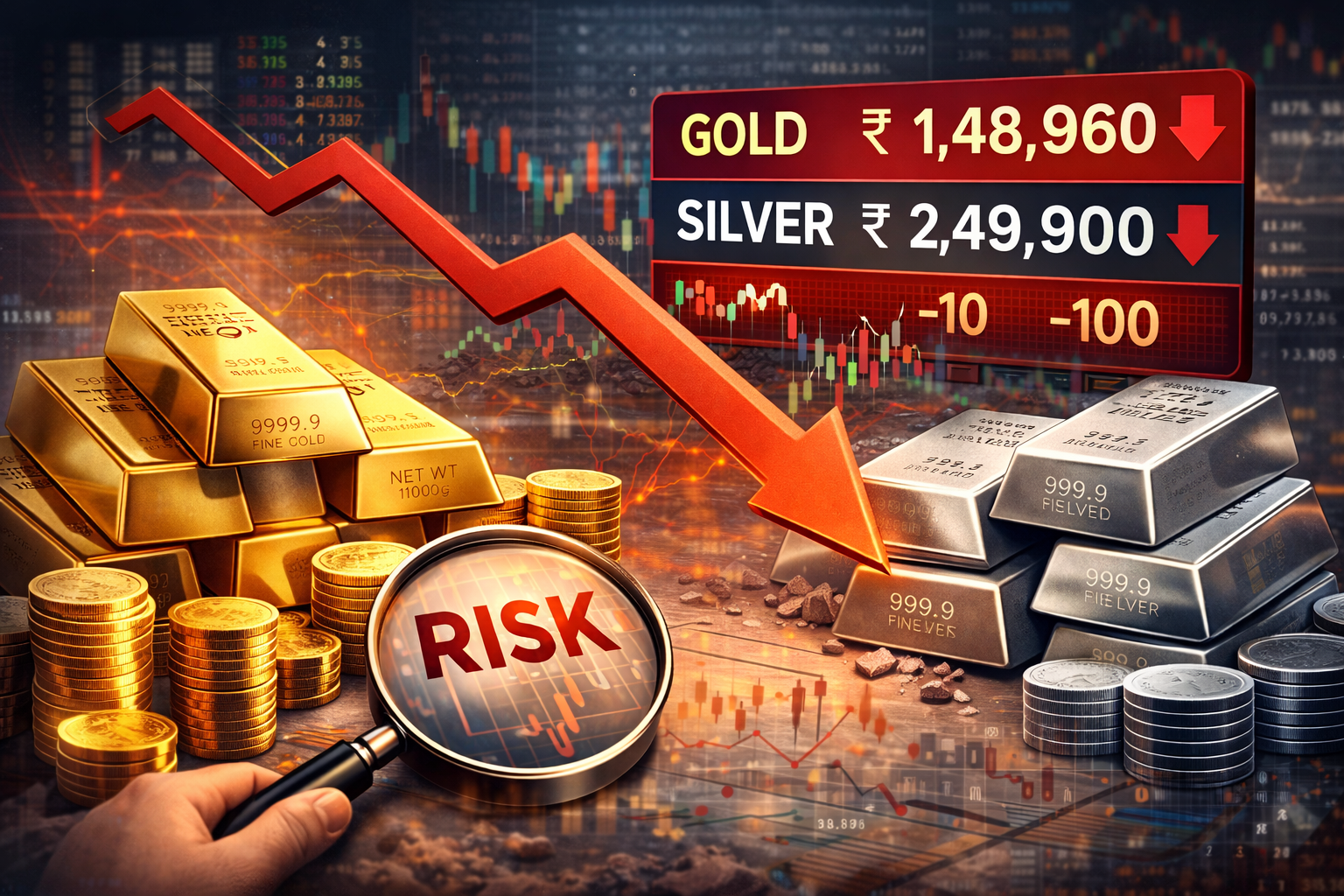
Global Uncertainty and Interest Rate Fears Weigh on Precious Metals
New Delhi:
Gold and silver prices witnessed a slight decline in early trade on Friday, as global market pressures—particularly a stronger US dollar and rising crude oil prices—impacted investor sentiment. Despite the minor drop, bullion continues to trade near elevated levels, reflecting ongoing geopolitical uncertainty and inflation concerns.
Gold Prices Slip Across Major Indian Cities
The price of 24-carat gold declined by ₹10, with 10 grams trading at ₹1,48,960 in Mumbai and Kolkata, while Chennai recorded a higher price of ₹1,49,990. In Delhi, gold was priced at ₹1,49,110 per 10 grams.
Similarly, 22-carat gold prices eased by ₹10 to ₹1,36,540 in most metro cities. Delhi saw slightly higher rates at ₹1,36,690, while Chennai stood at ₹1,37,490.
The decline remains marginal, indicating that the overall bullish trend in gold has not yet reversed.
Silver Prices Follow Downward Trend
Silver prices also saw a correction, falling ₹100 to ₹2,49,900 per kg in Delhi, Mumbai, and Kolkata. In Chennai, silver traded higher at ₹2,54,900 per kg.
The movement in silver prices reflects both global commodity trends and shifts in industrial demand expectations.
Global Market Drivers Behind the Decline
Internationally, gold prices dropped sharply, with spot gold falling over 2% and futures declining nearly 3%. Several macroeconomic factors are influencing this trend:
- Strengthening US Dollar: Makes gold costlier for foreign investors
- Rising Crude Oil Prices: Fuels inflation concerns and tighter monetary policy expectations
- Geopolitical Tensions: Ongoing conflict in West Asia adding volatility
Recent statements by Donald Trump regarding continued military action have further heightened uncertainty in global markets.
Interest Rate Outlook Pressures Gold
Gold typically performs well during inflationary periods, but rising interest rates reduce its appeal. As central banks consider tightening policies to control inflation, non-yielding assets like gold face selling pressure.
Higher bond yields and a stronger dollar are currently drawing investor flows away from bullion.
Gold’s Performance Since Conflict Began
Gold prices have declined nearly 12% since late February, when the West Asia conflict escalated. This indicates that despite being a safe-haven asset, gold is currently being influenced more by currency strength and interest rate expectations.
Meanwhile:
- Silver has seen sharper volatility
- Platinum and palladium have shown resilience due to industrial demand
Investor Strategy: Caution with Opportunity
For investors, the current scenario presents both risks and opportunities:
- Short-term investors should remain cautious due to high volatility
- Long-term investors may consider gradual accumulation during dips
- Diversification remains key amid uncertain global conditions
Gold continues to play an important role as a hedge, but timing and allocation are crucial in the current environment.
Outlook: Volatility Likely to Continue
With geopolitical tensions unresolved and global macroeconomic conditions evolving rapidly, gold and silver prices are expected to remain volatile in the near term.
Key triggers to watch include:
- Movement in crude oil prices
- US Federal Reserve policy decisions
- Strength of the US dollar
- Developments in the West Asia conflict
A shift in any of these factors could significantly alter the trajectory of precious metals in the coming weeks.