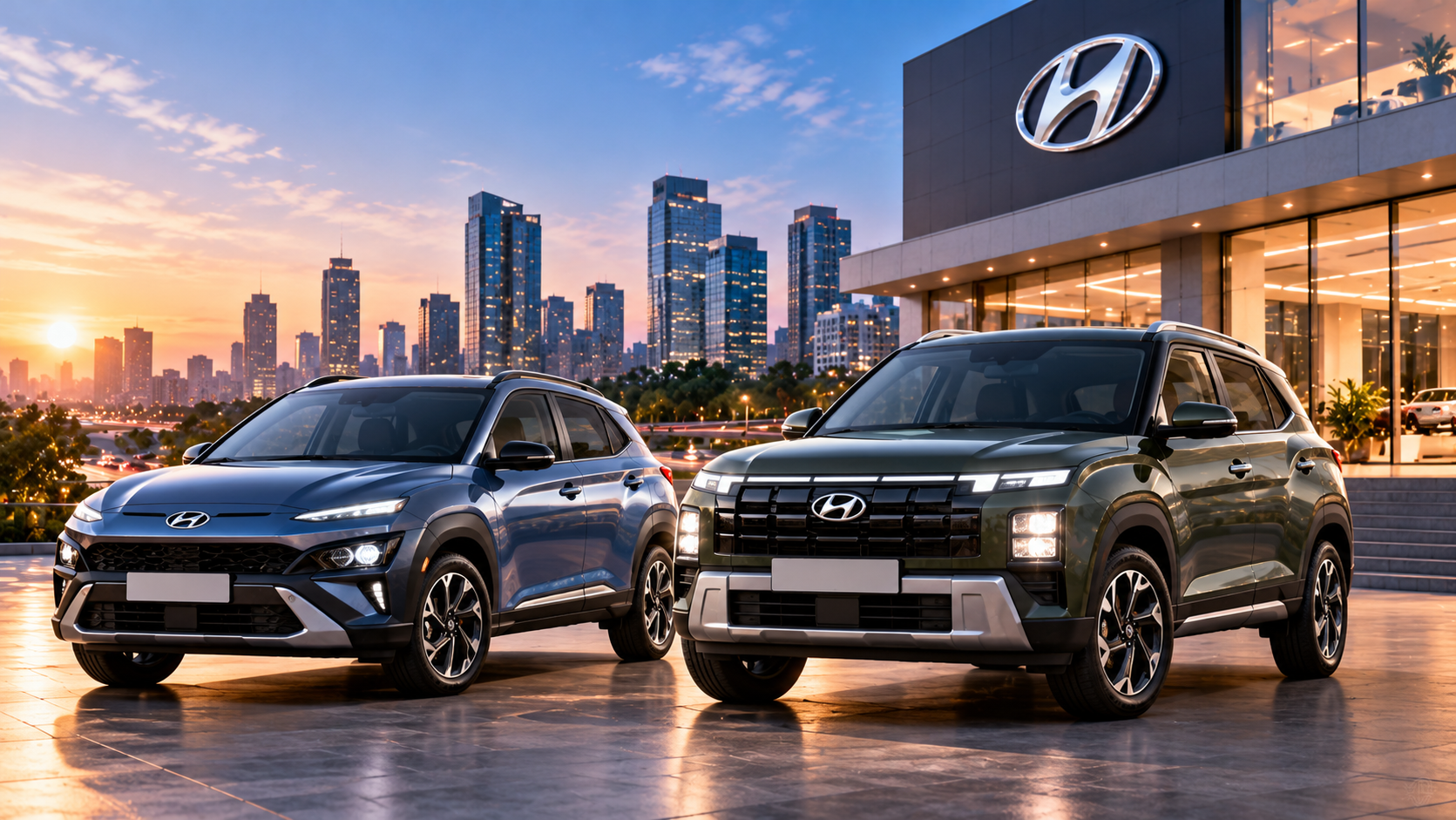
Hyundai Motor India aims to sell at least 250,000 units of the Creta and newly launched Bayon annually from 2027, strengthening its position in a mid-size utility vehicle segment that recorded around 900,000 sales in the previous financial year.
Hyundai Motor India is stepping up its strategy to strengthen its presence in the country's competitive mid-size sport utility vehicle (SUV) market, setting an annual sales target of at least 250,000 units for its Creta and newly launched Bayon models. The company expects the two vehicles to help sustain its position in a segment that has become increasingly important to the Indian passenger vehicle industry.
The target was outlined by Hyundai Motor India Managing Director and Chief Executive Officer Tarun Garg during the launch of the Bayon. He indicated that 250,000 annual units would serve as a baseline rather than a ceiling, leaving room for further growth as the company expands its product offering and reaches additional customer segments.
The strategy marks a significant development in Hyundai's approach to the mid-size SUV category. While the Creta has been the company's principal offering in the segment, the introduction of the Bayon gives it a second model to compete for buyers across a wider range of price points and preferences.
The move comes at a time when competition is intensifying, rival manufacturers are broadening their SUV portfolios, and Hyundai is seeking to address a recent slowdown in Creta sales.
Mid-Size Utility Vehicle Segment Offers a Major Growth Opportunity
India's mid-size utility vehicle segment, covering models approximately 4–4.4 metres in length and including SUVs and multi-purpose vehicles, recorded sales of around 900,000 units in the previous financial year, according to data from the Society of Indian Automobile Manufacturers (SIAM).
The segment accounted for close to 35% of Hyundai Motor India's total domestic sales in FY26, highlighting its importance to the company's overall business.
Hyundai sold nearly 200,000 Creta units annually over the last two financial years, establishing the model as a major contributor to its domestic sales. The addition of Bayon is intended to expand the company's addressable customer base and help it capture a larger share of the segment's growth.
According to Garg, the market is large enough to support multiple models from the same manufacturer. The company believes that introducing a second vehicle will allow it to reach customers whose requirements or budgets may differ from those of existing Creta buyers.
The strategy also reflects a broader shift in the Indian automobile market, where manufacturers increasingly rely on multiple SUV nameplates to serve distinct customer preferences rather than depending on a single flagship model.
New Bayon Positioned Between Venue and Creta
Hyundai has positioned the Bayon between its sub-four-metre Venue and the larger Creta in its domestic portfolio. The new SUV carries a starting ex-showroom price of ₹9.99 lakh, placing it within reach of customers looking to upgrade from smaller vehicles while seeking an alternative to more expensive mid-size SUVs.
The positioning gives Hyundai an opportunity to cover a wider portion of the SUV market through a more clearly differentiated product range.
The Venue caters to buyers seeking a compact SUV, while the Creta targets customers looking for a larger vehicle with a broader set of features and configurations. The Bayon is intended to bridge this gap and attract incremental demand.
However, the success of this positioning will depend on how clearly the new model differentiates itself in terms of design, features, performance, ownership costs and value for money.
Automakers must also manage the risk of internal competition between models. If the Bayon mainly attracts existing Hyundai customers who would otherwise have purchased a Creta, the incremental benefit could be limited. The greater opportunity lies in attracting buyers from competing brands or encouraging customers to move into Hyundai's portfolio from other vehicle categories.
Creta Sales Decline Despite Strong Segment Growth
The launch of the Bayon comes against the backdrop of weakening Creta sales in the first half of FY27.
Creta sales declined by more than 9% year-on-year to 89,727 units during the first six months of the financial year, even as the broader segment expanded by more than 50%, according to the figures cited in the report.
This divergence suggests that Hyundai has not fully captured the growth available in the category during the period.
Garg attributed part of the pressure to limited supplies of diesel variants. The diesel version of the Creta reportedly had a waiting period exceeding one month, indicating that supply constraints may have affected the company's ability to fulfil demand.
Supply availability is an important factor in the automobile business because customers facing long waiting periods may switch to competing models. Even when underlying demand remains healthy, production limitations can affect deliveries, market share and customer satisfaction.
The Bayon could help Hyundai strengthen its overall presence in the segment, although its ability to compensate for Creta's recent weakness will depend on production volumes, customer acceptance and the availability of the right product configurations.
Hyundai Expands Beyond a Single Mid-Size SUV
The Bayon is Hyundai's first new nameplate in the mid-size SUV segment since the Creta was introduced in 2015, making the launch an important portfolio expansion.
The competitive landscape has changed significantly since then. Maruti Suzuki has established multiple offerings through models such as the Grand Vitara and Victoris, alongside the Ertiga in the broader utility vehicle category. Tata Motors has also expanded its product range with vehicles including the Curvv and Sierra.
This broader selection gives consumers more choices across design, body styles, features and pricing.
For Hyundai, a two-model strategy could help distribute demand across different customer groups and reduce reliance on the Creta alone. It could also provide the company with additional opportunities to respond to changing consumer preferences.
However, operating multiple models within a similar segment requires careful product planning. Pricing overlap, feature differentiation, marketing expenditure and production allocation will all influence whether the expanded portfolio improves overall profitability.
Industry competition is likely to remain intense as established manufacturers defend their market positions and new product launches seek to attract buyers in one of India's most important passenger vehicle categories.
Petrol and CNG Powertrains to Drive Bayon Strategy
Hyundai plans to offer the Bayon with petrol and compressed natural gas (CNG) powertrains, with no diesel or electric variant planned for the model at present.
Garg said the company's market research indicated that petrol would account for a significant share of demand in this category. Hyundai's decision to focus on petrol and CNG reflects an attempt to simplify the model range and concentrate on powertrains that it believes will appeal to its target customers.
Petrol vehicles remain relevant for customers prioritising convenience and broad availability, while CNG can appeal to buyers seeking lower fuel expenditure, particularly those with high annual driving distances and access to refuelling infrastructure.
The absence of a diesel option may limit the Bayon's appeal among customers who prefer diesel vehicles for their driving characteristics and usage patterns. Nevertheless, Hyundai intends to retain diesel powertrains in other models where it considers them commercially relevant.
The decision also highlights the growing importance of powertrain planning in India's automobile market. Manufacturers must balance customer preferences, regulatory requirements, fuel costs, emissions standards and the economics of developing multiple variants.
Although the Bayon will not initially offer an electric version, Hyundai has broader plans to expand its electric vehicle portfolio in India.
Chennai Plant to Manufacture the New SUV
Hyundai will manufacture the Bayon at its Chennai plant, where the new model is expected to support production utilisation following the transfer of Venue production to Pune.
The manufacturing decision could help the company use its existing production infrastructure more efficiently, although the actual benefit will depend on capacity utilisation, supply-chain readiness and demand for the new vehicle.
Manufacturing efficiency is an important factor in the automobile industry, where production volumes, component sourcing and the utilisation of assembly lines influence costs and profitability.
A successful Bayon launch could support the Chennai facility by adding a new model to its production schedule. However, ramp-up execution will be critical to ensuring that supply keeps pace with demand without creating excessive inventory.
With Bayon joining the lineup, Hyundai's portfolio comprises 10 models across six SUVs, two sedans and two hatchbacks, with offerings spanning petrol, diesel, CNG and electric powertrains.
The wider portfolio gives Hyundai multiple routes to serve different segments of the Indian passenger vehicle market.
Broader Investment Plans Strengthen Hyundai's India Focus
The Bayon launch forms part of Hyundai's broader expansion strategy in India. In May 2025, the company announced plans to introduce 26 models in the country by the end of the decade. The roadmap includes 20 internal combustion engine vehicles and six electric vehicles, comprising new models, full model changes and product enhancements.
The expansion is intended to strengthen Hyundai's competitiveness in a market where consumer preferences are evolving and manufacturers are increasing investments in new technologies, products and production capabilities.
Hyundai Motor Group has also committed to investing $15.5 billion in India by 2032, according to the announcement referenced in the report. The investment commitment underscores the strategic importance of India to the group's long-term plans.
For the domestic automotive industry, such investments could support product development, manufacturing, technology adoption and the broader supply-chain ecosystem. The eventual impact will depend on how capital is deployed and the pace at which new products gain market acceptance.
For Hyundai Motor India, the key challenge will be to convert its product expansion and manufacturing investments into sustainable sales growth, stronger market positioning and improved financial performance.
Competitive Risks and Execution Challenges
Despite the growth opportunity, Hyundai faces several challenges in achieving its target of at least 250,000 annual sales from the Creta and Bayon.
First, the mid-size SUV segment is crowded, with established competitors offering multiple models and competing aggressively on price, features and customer experience.
Second, the company must ensure that the Bayon attracts incremental customers rather than simply shifting sales away from the Creta or Venue. Clear differentiation between the three models will be essential.
Third, production and supply-chain execution will play a significant role. The recent pressure on Creta sales, partly attributed to limited diesel availability, highlights the importance of matching production with customer demand.
Finally, the company will need to balance attractive pricing with margins. A competitive product can generate higher volumes, but profitability also depends on production costs, discounting, input prices and the mix of variants sold.
The 250,000-unit target is therefore an important measure of Hyundai's ambitions, but sustained success will depend on both demand generation and operational execution.
Market Outlook
Hyundai Motor India's plan to sell at least 250,000 Creta and Bayon units annually represents a strategic push to strengthen its position in India's mid-size SUV market. With the segment recording around 900,000 sales in the previous financial year, the opportunity remains significant. The new Bayon provides Hyundai with an additional product to address customer demand between the Venue and Creta.
However, the recent decline in Creta sales, rising competition and the need to manage product differentiation mean that the new model's contribution will be closely watched. Production efficiency at Chennai, powertrain availability, customer acceptance and pricing discipline will be critical to achieving the company's ambitions.
For investors tracking Hyundai Motor India and the wider automobile sector, the important indicators will include monthly wholesale and retail sales, model-wise demand, market share, waiting periods, inventory levels and profitability. The Bayon could strengthen Hyundai's product portfolio, but the extent of its contribution will become clearer as sales build through 2027.