Government says overseas expansion is essential for Singapore Airlines as Air India’s losses and potential funding requirement attract political scrutiny
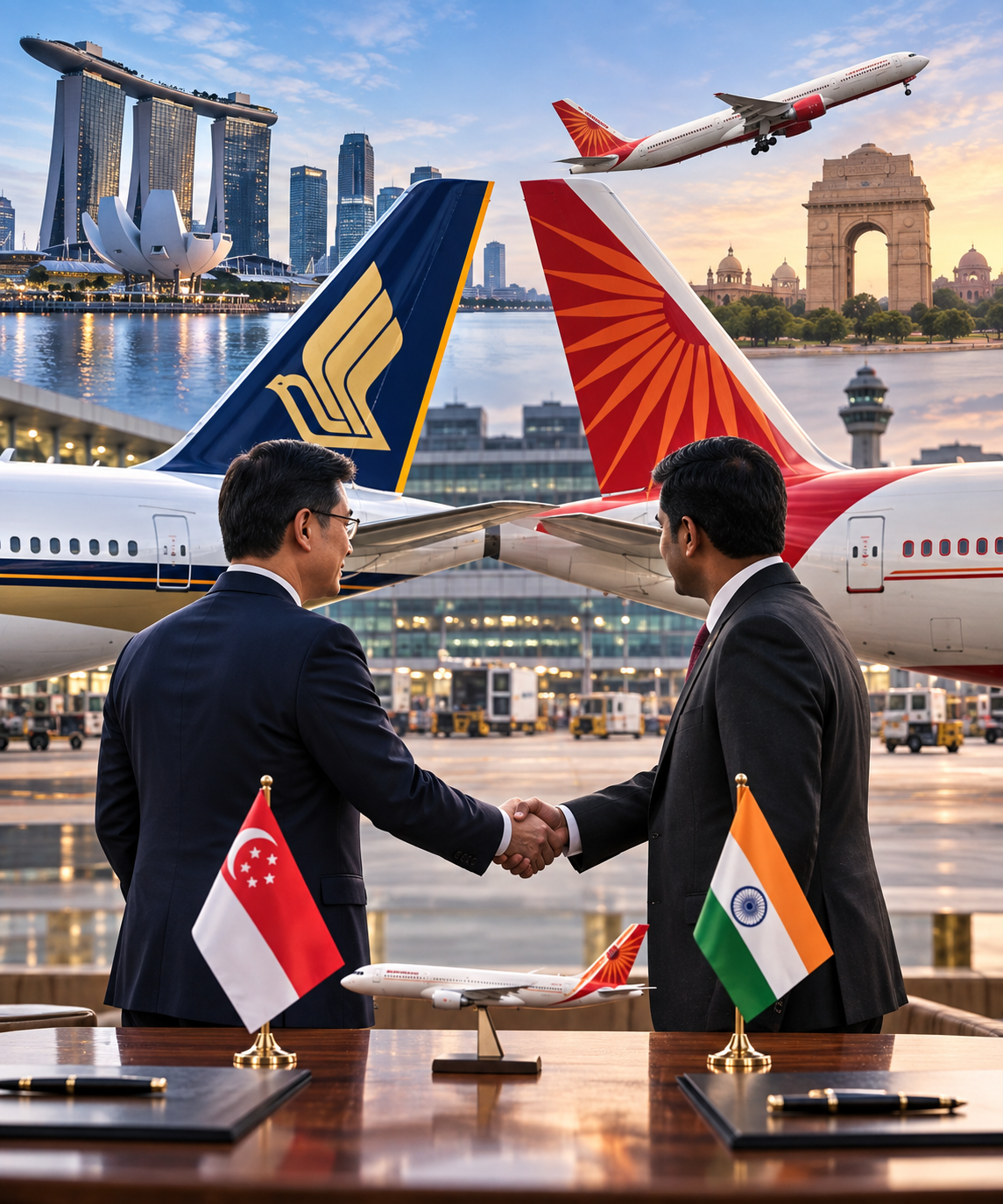
Singapore’s Transport Minister Jeffrey Siow has defended Singapore Airlines’ investment in Air India, saying the city-state’s flag carrier needs to expand internationally because there is a limit to the number of people who can travel to and from Singapore.
Responding to questions in Parliament, Siow said Singapore Airlines is a listed company and funds its investments from its own balance sheet. He added that the airline had not sought additional capital from shareholders to support its investment in Air India. Singapore Airlines is majority-owned by Singapore’s state investment company, Temasek.
Air India investment under political scrutiny
Singapore Airlines holds a 25.1 per cent stake in Air India following the merger of Air India and Vistara. The investment has come under increasing scrutiny as Air India’s losses have widened during a complex, multi-billion-dollar turnaround programme.
The transformation includes fleet modernisation, network expansion, operational restructuring and the integration of different airline businesses. Tata Sons Chairman N. Chandrasekaran has previously indicated that the turnaround could take up to a decade.
Reuters had reported that Air India was seeking approximately $1.5 billion in fresh equity from its owners, Tata Sons and Singapore Airlines. The request came after Air India and its budget subsidiary Air India Express reported combined losses of $2.33 billion in the financial year ended March, more than double the previous year’s losses.
Singapore Airlines highlights long-term strategy
Siow said overseas investments may not generate returns immediately and that the ultimate value of the Air India investment would have to be assessed by Singapore Airlines and its shareholders.
He also said the investment had not adversely affected Singapore Airlines’ ability to serve Singaporean passengers. The minister maintained that international expansion remains important for the airline because Singapore’s domestic market is relatively small.
Singapore Airlines said its investments in India have been and will continue to be funded through internal resources, subject to board approval and a disciplined capital-allocation framework.
The airline described Air India’s transformation as a complex, multi-year programme that would not progress in a straight line. It said the investment was a long-term strategic commitment aligned with its multi-hub strategy.
Strategic benefits for both airlines
The partnership provides Singapore Airlines with exposure to India’s large and expanding aviation market. India is expected to remain one of the fastest-growing air-travel markets globally, supported by rising incomes, urbanisation and increasing international travel.
For Air India, the partnership offers access to Singapore Airlines’ expertise in international operations, premium travel, network planning and customer service. The two airlines have also explored deeper cooperation involving routes, corporate travel programmes and network coordination.
However, the commercial benefits will depend on Air India’s ability to improve its financial performance and strengthen operational reliability. The carrier has faced challenges linked to aircraft deliveries, supply-chain disruptions, geopolitical developments, airspace restrictions and higher operating costs.
Debate over possible fresh capital
The reported funding requirement has triggered questions in Singapore over whether state-linked funds could indirectly be used to support Air India.
Opposition Workers’ Party lawmaker Kenneth Tiong had urged that Temasek’s money should not be used to shore up the Indian carrier. He argued that Singapore Airlines should continue its investment only through its own commercial resources and not through public funds.
Singapore Senior Minister K Shanmugam said Temasek expects Singapore Airlines to make responsible investment decisions. He stressed that decisions regarding additional capital should remain with the company and its shareholders.
The debate has also been accompanied by racist and anti-Indian comments online. Shanmugam condemned the remarks and asked police to examine the posts, while Singapore Prime Minister Lawrence Wong warned against allowing racism and xenophobia to become normalised.
Market Outlook
The Air India investment remains strategically important for Singapore Airlines because it provides access to India’s growing aviation market and supports the carrier’s multi-hub strategy. However, the investment could continue to weigh on earnings if Air India’s turnaround takes longer than expected or requires additional capital.
Investors will closely monitor Air India’s funding arrangements, operating performance, fleet expansion and progress in reducing losses. For Singapore Airlines, the key challenge will be balancing the long-term strategic opportunity in India with disciplined capital allocation and shareholder returns.