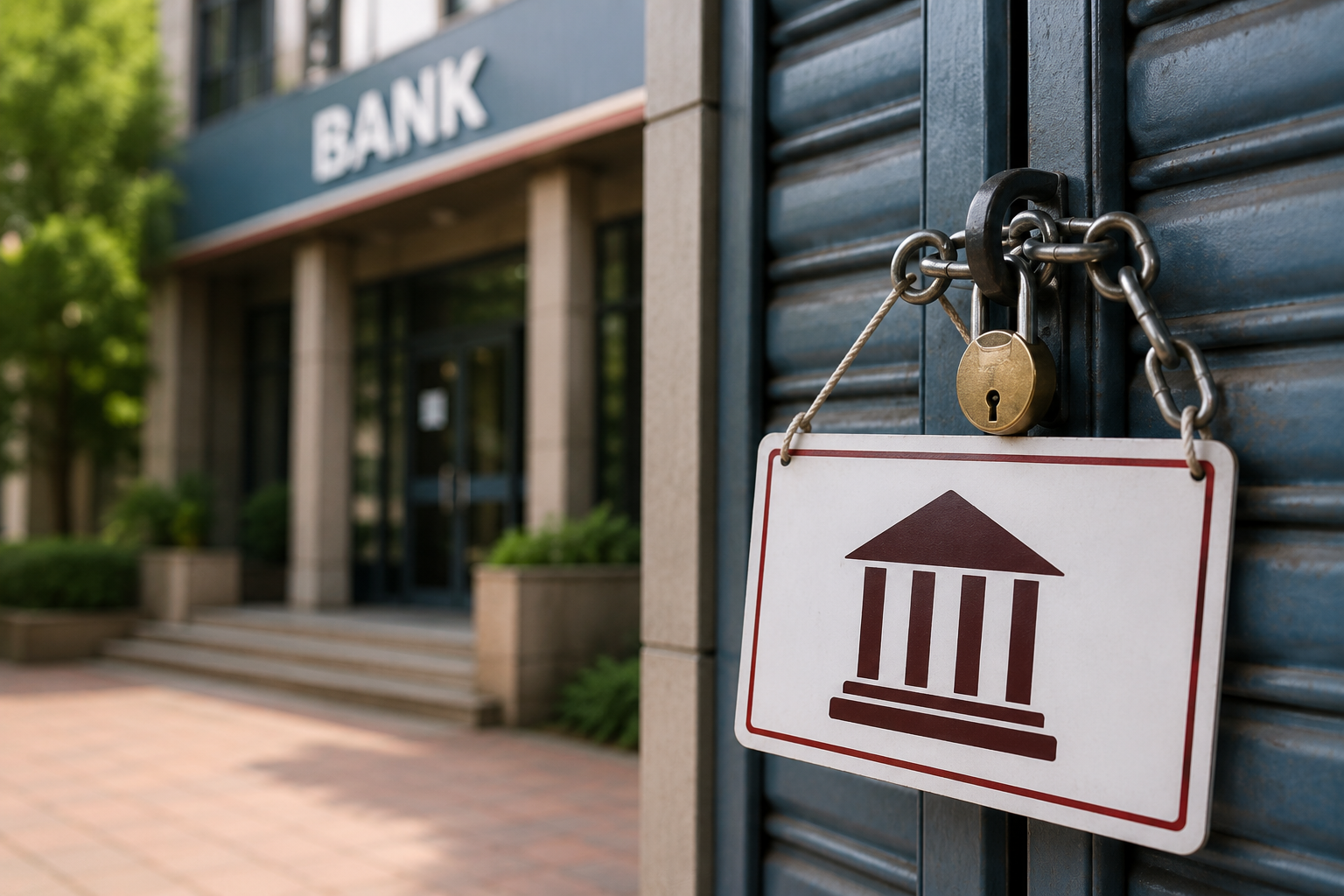
Banks closed across several states on August 26
Bank customers in several parts of India will not be able to access physical branch services today, August 26, 2026, as banks remain closed in observance of Eid-e-Milad-un-Nabi, also known as Mawlid or Baravafat.
The holiday is included in the Reserve Bank of India’s regional bank-holiday calendar and applies to specific RBI centres rather than the entire country. As a result, while branches in several major cities are shut, banks continue to operate in a number of other centres.
Customers who require branch-based services are advised to check the holiday applicable to their location before visiting a branch.
Which states have a bank holiday today?
According to the RBI holiday calendar, bank branches are closed today in several states and Union Territories, including:
-
Maharashtra
-
Karnataka
-
Madhya Pradesh
-
Tamil Nadu
-
Uttarakhand
-
Telangana
-
Manipur
-
Jammu and Kashmir
-
Uttar Pradesh
-
Kerala
-
Delhi
-
Bihar
-
Chhattisgarh
-
Jharkhand
The holiday applies to the respective RBI centres and cities covered under the regional holiday notification.
Major cities where banks are closed
Several important banking centres are observing the holiday on Wednesday. These include Mumbai, Bengaluru, Bhopal, Chennai, Dehradun, Hyderabad, Imphal, Jammu, Kanpur, Kochi, Lucknow, New Delhi, Patna, Raipur, Ranchi, Srinagar, Thiruvananthapuram and Vijayawada.
Customers in these cities should expect physical bank branches to remain unavailable for routine counter services throughout the holiday.
Where are banks open on August 26?
The August 26 holiday does not apply to every RBI centre.
Bank branches are scheduled to remain open in cities including Ahmedabad, Agartala, Aizawl, Bhubaneswar, Chandigarh, Gangtok, Guwahati, Itanagar, Jaipur, Kohima, Kolkata, Panaji, Shillong and Shimla.
This regional structure means customers in different parts of the country may have different banking arrangements on the same day.
Will UPI and online banking work?
Yes. The closure of physical bank branches does not generally affect digital banking channels.
Customers can continue to use:
-
UPI for payments and fund transfers
-
Mobile banking applications
-
Internet banking
-
ATMs
-
Debit and credit cards
-
Online bill-payment facilities
Routine digital transactions can therefore continue even in cities where bank branches are closed.
However, the availability of a particular service can depend on the individual bank and its technology systems.
Which services will not be available at closed branches?
Services requiring physical interaction with bank officials will generally have to wait until the branch reopens.
These may include counter cash deposits and withdrawals, passbook updating, certain cheque-related services, document submission, account-related verification and other branch-specific requests.
Customers with urgent requirements should consider completing eligible transactions through digital channels or plan their branch visit for the next working day.
What is Eid-e-Milad-un-Nabi?
Eid-e-Milad-un-Nabi commemorates the birth anniversary of Prophet Muhammad. It is also referred to as Mawlid or Baravafat in different parts of India.
The observance falls according to the Islamic lunar calendar and is associated with remembrance of the Prophet’s life, teachings and message. Communities observe the occasion through prayers, gatherings and religious programmes.
In India, the holiday is included in regional government and banking holiday schedules in selected locations.
Bank holiday and stock market holiday are different
A bank holiday does not automatically mean that the stock market is closed.
The trading schedules of the NSE, BSE and commodity exchanges are governed by their respective holiday calendars. Investors should therefore check exchange-specific schedules separately before assuming that financial markets are shut.
This distinction is particularly important for traders and investors who need to make payments, maintain trading margins or complete other banking-related requirements on market days.
What should customers do today?
Customers in areas observing the holiday should plan non-urgent branch visits for the next working day. For routine transactions, UPI, mobile banking, internet banking and ATMs provide alternatives.
Those expecting cheque clearance, branch-level documentation or other time-sensitive services should also account for the holiday while planning their transactions.
Bank holidays in the coming days
The RBI follows a combination of national and regional holidays, meaning bank closures can vary significantly between states. Customers should therefore check the RBI holiday calendar or their individual bank's schedule before planning important branch-related work.
For businesses and investors, advance planning is particularly useful when transactions involve large payments, cheque processing, account documentation or other services that cannot be completed digitally.