New 2,30,000-Sq-Ft Facility to Strengthen North and East India’s Global Trade Connectivity
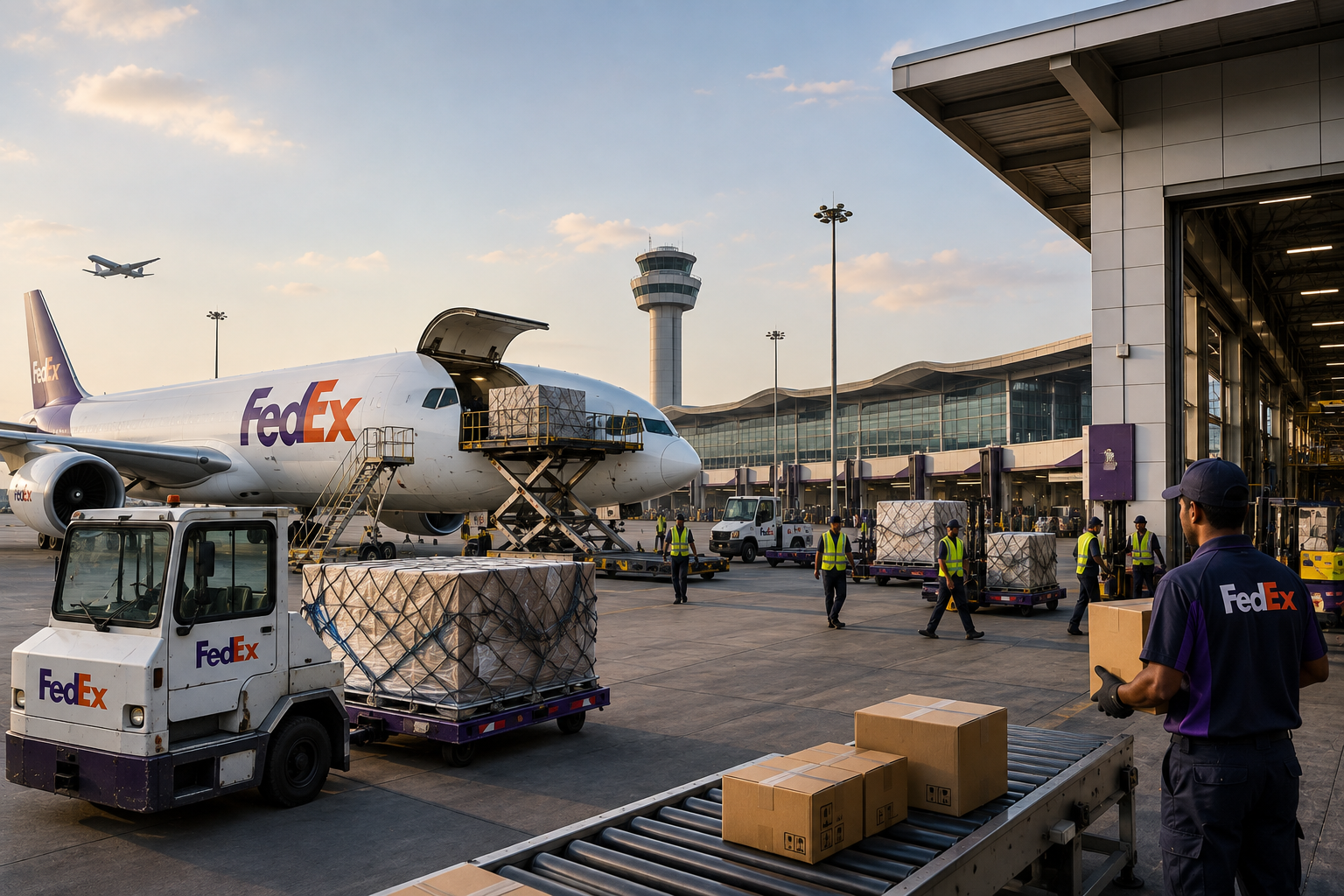
FedEx plans to invest approximately $150 million, or more than ₹1,400 crore, to develop an integrated air cargo hub at Delhi’s Indira Gandhi International Airport (IGIA). The proposed facility, spread across 2,30,000 square feet, is expected to significantly strengthen the movement of domestic and international shipments through the national capital.
The new hub will be developed at GMR Cargo City and is expected to become an important part of FedEx’s logistics network in India. The project comes at a time when demand for faster, reliable and technology-enabled freight movement is increasing alongside the expansion of India’s manufacturing, e-commerce and export ecosystem.
FedEx Announces Long-Term Investment in Delhi
FedEx said the proposed facility represents a long-term investment of approximately $150 million in India’s air cargo infrastructure.
The groundbreaking ceremony for the facility was held in New Delhi on Tuesday in the presence of Civil Aviation Minister K Rammohan Naidu and senior government officials.
Construction is expected to begin shortly, while GMR Cargo City itself is being developed in phases.
The investment underlines FedEx’s intention to expand its physical infrastructure in India and prepare its network for higher cargo volumes over the coming years.
Cargo Processing Capacity to Rise More Than Eight-Fold
One of the most significant aspects of the project is the planned increase in cargo-processing capacity.
FedEx said the new hub is designed to increase processing capacity from approximately 600 packages per hour to 5,000 packages per hour once operational.
This represents an increase of more than eight times over the existing capacity.
The facility will also be designed to allow further expansion as shipment volumes grow, giving FedEx additional flexibility to scale its operations in line with future demand.
Strategic Role for North and East India
The Delhi facility is expected to strengthen FedEx’s connectivity across North and East India, linking businesses in these regions with domestic and international markets.
Delhi's location and extensive road, rail and air connectivity make it an important logistics gateway for northern India. A larger express-cargo operation can help businesses move high-value and time-sensitive shipments more efficiently.
Industries such as pharmaceuticals, electronics, engineering, automotive components, technology products and e-commerce could benefit from improved access to express logistics infrastructure.
GMR Cargo City to Support Integrated Logistics Operations
The new hub will be located within GMR Cargo City, creating an opportunity for FedEx to integrate its cargo-processing activities into a broader airport logistics ecosystem.
An integrated cargo environment can help streamline several stages of freight movement, including handling, sorting, storage and onward transportation.
As India's logistics sector becomes increasingly technology-driven, modern cargo facilities are expected to play a greater role in reducing shipment-processing times and improving supply-chain visibility.
India's Export Ambitions Driving Demand for Air Cargo
The investment comes as India continues to focus on strengthening its manufacturing and export capabilities.
The expansion of sectors such as electronics, pharmaceuticals, engineering goods, automotive components and high-value manufacturing is creating demand for dependable international logistics networks.
Air freight is particularly important for products that have high value relative to their weight, short delivery windows or strict supply-chain requirements.
For multinational companies operating manufacturing and distribution networks in India, additional cargo capacity can also improve access to overseas customers.
E-Commerce Adds to Freight Growth
India's rapidly expanding e-commerce ecosystem is another potential driver of air cargo demand.
Consumers and businesses increasingly expect faster delivery timelines, while sellers are reaching customers across wider geographic markets.
International e-commerce and cross-border trade further increase the requirement for reliable express transportation networks.
FedEx's expanded Delhi facility could therefore support not only traditional corporate shipments but also the broader growth of time-sensitive commercial deliveries.
Government Pushes Air Cargo Infrastructure
The project is also aligned with the government's broader focus on improving India's logistics infrastructure.
Civil Aviation Minister K Rammohan Naidu said India should become the backbone for air cargo movements, highlighting the importance of efficient freight infrastructure in supporting economic growth and trade.
Civil Aviation Secretary Samir Kumar Sinha said the government is working to remove bottlenecks affecting air cargo movement.
Improved airport infrastructure, faster customs processes, better surface connectivity and increased cargo-handling capacity are expected to remain important elements of India's logistics development.
Delhi Airport Strengthens Its Position as a Logistics Gateway
FedEx's investment comes amid broader infrastructure expansion at Delhi airport.
GMR Airports has announced major expansion plans for its airport facilities, while Delhi airport is also working to increase its passenger-handling capacity.
The simultaneous expansion of passenger and cargo infrastructure could further strengthen the airport's position as a major aviation and logistics hub.
For FedEx, Delhi provides access to a large business market while also serving as a strategic gateway to multiple northern and eastern states.
What the Investment Means for Indian Businesses
For Indian exporters and companies dependent on international supply chains, the new facility could provide several potential benefits:
-
Higher cargo-processing capacity for express shipments
-
Faster connectivity between North and East India and global markets
-
Greater capacity to handle time-sensitive and high-value goods
-
Additional infrastructure for India's growing e-commerce and export sectors
-
Potential improvement in supply-chain efficiency as cargo volumes increase
-
Scalable infrastructure capable of supporting future shipment growth
FedEx Expands Its India Infrastructure Footprint
The Delhi investment reflects a broader strategy of building logistics infrastructure closer to major commercial and manufacturing centres.
Rather than relying solely on existing capacity, the proposed hub gives FedEx a larger platform to handle future growth in India's express transportation market.
The planned jump from 600 to 5,000 packages per hour is particularly significant, indicating that the company is preparing for substantially higher cargo volumes over the long term.
Air Cargo Becomes Critical to India's Global Supply Chain
India's emergence as a manufacturing and export destination is increasing the importance of efficient air logistics.
As businesses integrate more closely with global supply chains, reliable cargo infrastructure will become increasingly important for moving components, finished products and urgent shipments across borders.
FedEx's proposed $150-million Delhi air cargo hub therefore represents more than an expansion of one company's operations. It also highlights the growing strategic importance of India's airport and logistics infrastructure as the country seeks to strengthen its position in global trade.