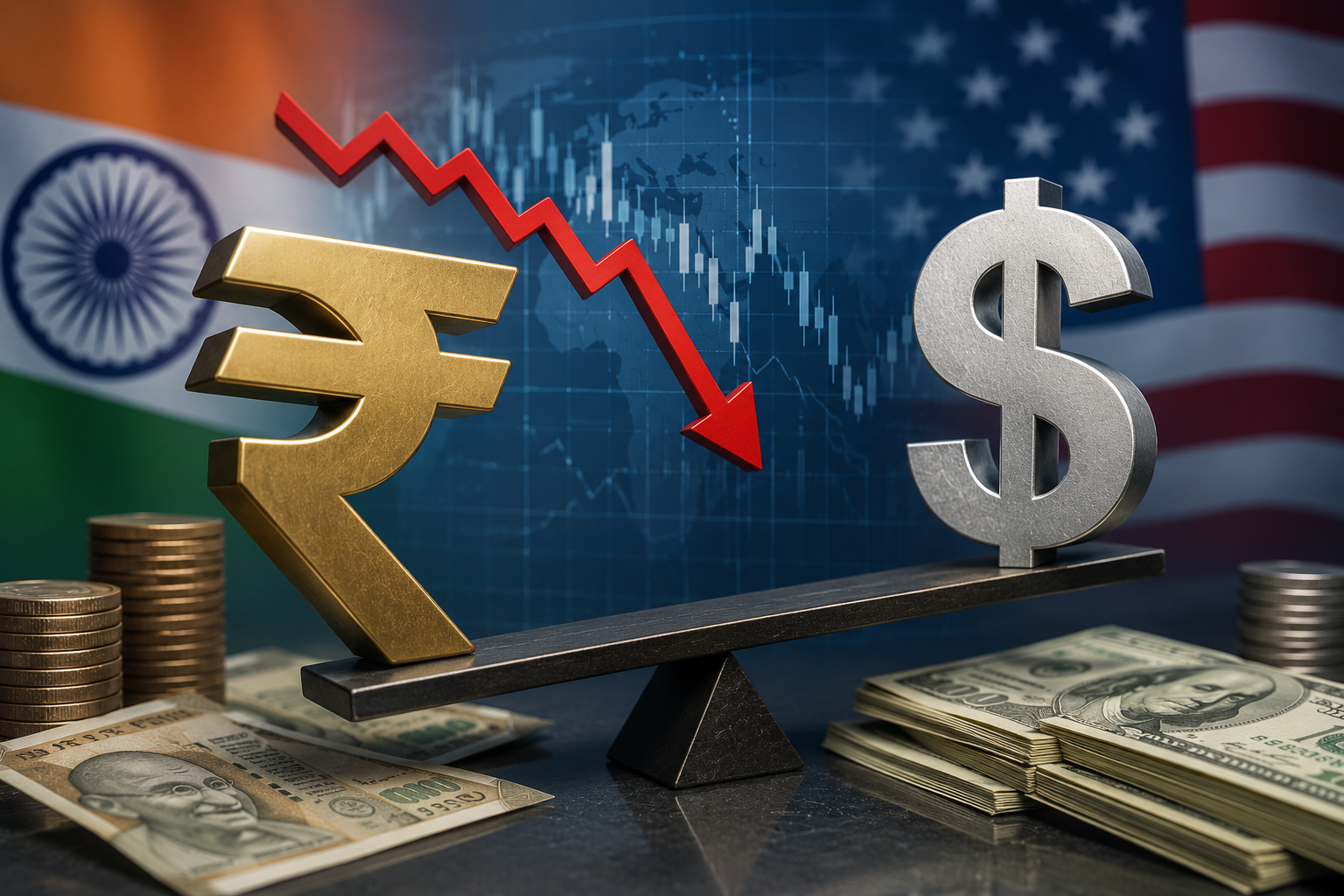
The rupee opened at ₹95.74 against the US dollar, with elevated crude prices and importer dollar demand keeping the currency under pressure. RBI intervention and foreign capital inflows, however, helped limit the decline.
Rupee Opens Marginally Lower Against Dollar
The Indian rupee traded in a narrow range and weakened 4 paise to ₹95.74 against the US dollar in early trade. The currency had settled at ₹95.70 in the previous session after gaining a marginal 1 paisa.
The early weakness was largely attributed to elevated crude oil prices and continued dollar demand from importers. Weakness in Asian equities and renewed geopolitical uncertainty also contributed to cautious sentiment in the foreign exchange market.
Despite these pressures, the rupee remained within a relatively narrow trading range, supported by intervention from the Reserve Bank of India through state-run banks.
RBI Intervention Limits Downside Pressure
Market participants said continued RBI intervention has helped prevent a sharper depreciation in the rupee.
According to Anil Kumar Bhansali, Head of Treasury and Executive Director at Finrex Treasury Advisors, the rupee remains firmly range-bound around the ₹95.50–₹96.00 zone, with crude oil prices and RBI intervention likely to remain the key near-term drivers.
The central bank's presence in the foreign exchange market has provided support to the rupee, particularly as oil companies and other importers continue to generate dollar demand.
The RBI has reportedly been supplying dollars around the ₹95.75 level, helping contain further weakness in the domestic currency.
Crude Oil Prices Remain a Key Risk for Rupee
The movement in crude oil prices remains particularly important for the rupee because India is heavily dependent on imports to meet its energy requirements.
Brent crude, the global benchmark, was trading around $92.45 per barrel in futures trade, up 0.30 per cent. Higher crude prices increase India's import bill and can raise demand for US dollars, creating additional pressure on the rupee.
A sustained rise in crude prices could therefore make it more difficult for the currency to strengthen significantly unless accompanied by stronger foreign capital inflows or other supportive external factors.
Dollar Index Holds Near 99
The US dollar remained relatively firm against major global currencies. The dollar index, which measures the greenback against a basket of six major currencies, was trading around 99.04, marginally higher.
Safe-haven demand supported the dollar amid renewed geopolitical concerns surrounding Iran and the latest US sanctions.
However, expectations surrounding US Treasury bond buybacks continued to keep the dollar's broader outlook under pressure, limiting the extent of its gains.
Foreign Investor Inflows Provide Support
Foreign portfolio flows have provided some relief to the domestic currency.
Foreign institutional investors purchased Indian equities worth ₹1,181.66 crore on a net basis in the previous session, according to exchange data.
Continued foreign investment inflows can support the rupee by increasing the supply of dollars in the domestic market. However, the sustainability of such flows remains important, particularly amid elevated global risk and currency volatility.
Domestic Equity Market Opens Soft
The weakness in the rupee coincided with a cautious opening in Indian equities.
The Sensex fell around 30 points to 77,336.32 in early trade, while the Nifty declined 38.80 points to 24,179.50.
The subdued start reflected cautious investor sentiment as global markets remained sensitive to crude oil movements, geopolitical developments and currency fluctuations.
RBI Forex Swap Facility Attracts Strong Inflows
The country's foreign exchange position has also received support from the RBI's special USD-INR forex swap facility.
The facility covering FCNR(B) deposits, Overseas Foreign Currency Borrowings and External Commercial Borrowings had mobilised foreign exchange inflows of around $73 billion as of August 21.
The strong response reflects significant participation from non-resident Indians and provides an additional source of foreign exchange liquidity for the domestic financial system.
While such inflows strengthen India's external liquidity position, their impact on the spot rupee market also needs to be viewed alongside the RBI's broader liquidity and currency-management operations.
Why ₹95.50–₹96 Zone Is Important
The rupee's movement around the ₹95.50–₹96.00 range is likely to remain important for currency traders in the near term.
A sustained move below ₹95.50 could indicate improving demand for the domestic currency, particularly if crude oil prices moderate and foreign portfolio inflows remain strong.
On the other hand, sustained trading above ₹96 could signal renewed depreciation pressure, particularly if crude oil prices remain elevated, the dollar strengthens globally or geopolitical risks trigger safe-haven demand.
The RBI's intervention is likely to remain an important factor in determining how sharply the currency moves in either direction.
Key Factors to Watch for the Rupee
Several factors are expected to influence the rupee's trajectory:
-
Crude oil prices: Higher oil prices can increase India's import bill and dollar demand.
-
RBI intervention: Central bank activity could continue to limit excessive volatility.
-
Foreign portfolio flows: Stronger equity and debt inflows could support the rupee.
-
Dollar index: A stronger US dollar generally creates pressure on emerging-market currencies.
-
Geopolitical developments: Escalation of tensions can increase safe-haven demand for the dollar.
-
Domestic equity performance: Sustained foreign investment into Indian equities could provide currency support.
-
External liquidity: Continued inflows through RBI-backed forex facilities can strengthen India's foreign exchange position.
Market Outlook
The rupee is likely to remain range-bound with a mild negative bias as elevated crude prices and importer dollar demand continue to weigh on the currency. The ₹95.50–₹96.00 zone could remain the key near-term trading range.
A decline in crude prices, sustained FII inflows and continued RBI support could help the rupee stabilise or recover from current levels. Conversely, a further rise in oil prices, stronger dollar demand or escalation in geopolitical tensions could push the currency towards the ₹96 level.
For equity investors, currency weakness could have mixed implications. Export-oriented sectors such as IT may benefit from a weaker rupee, while companies with significant dollar-denominated import costs could face margin pressure.