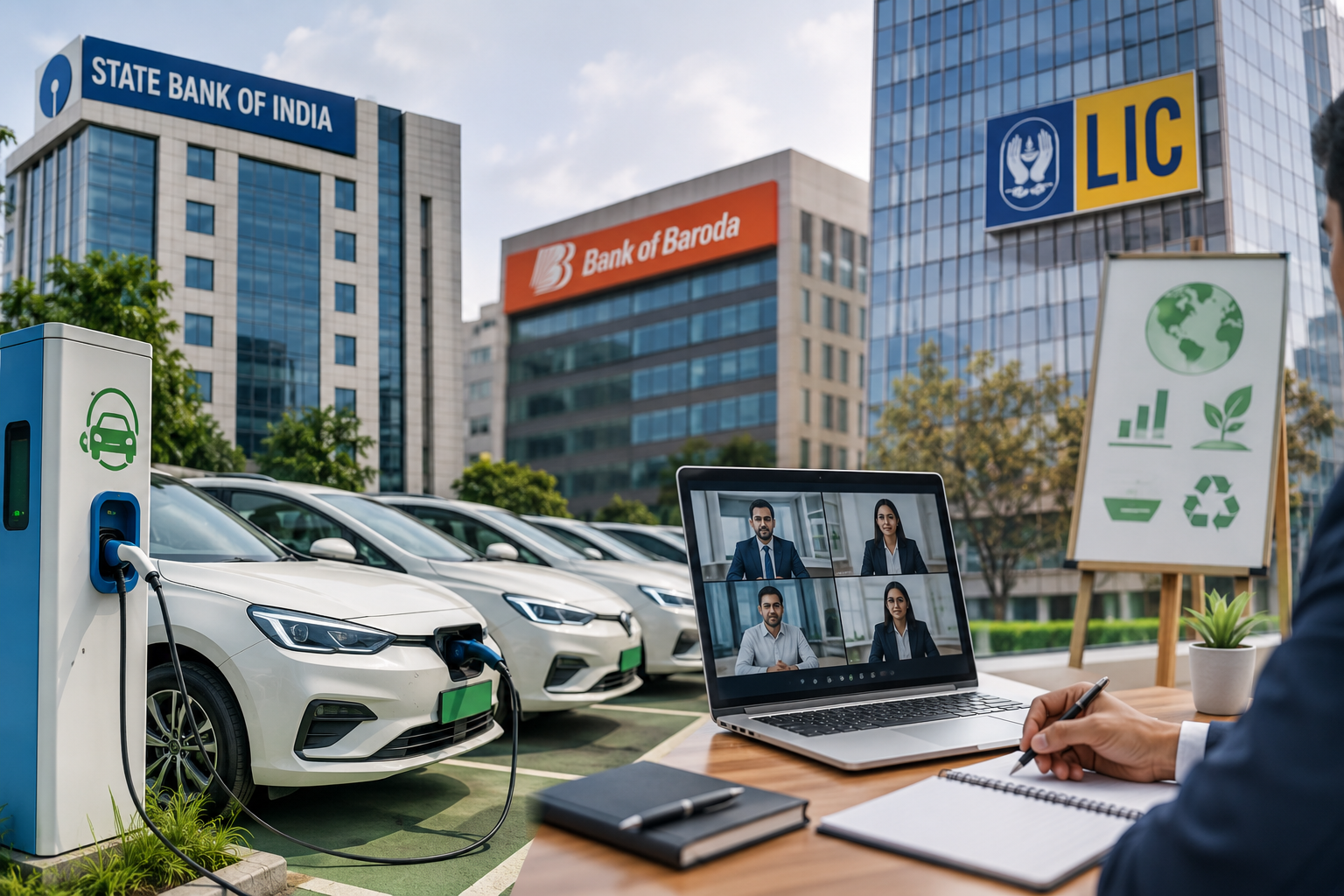
Finance Ministry launches austerity drive with restrictions on travel, virtual meetings and gradual replacement of fuel vehicles with electric cars
The Government of India has initiated a fresh austerity drive targeting public sector banks, insurance companies and financial institutions, directing them to reduce operational expenses and accelerate the transition towards electric mobility. The latest instructions from the Department of Financial Services under the Finance Ministry come at a time when the country is facing growing global economic uncertainty and pressure on fiscal management.
The order will impact some of India’s largest state-owned financial institutions, including State Bank of India, Bank of Baroda and Life Insurance Corporation of India, along with millions of employees and branch offices spread across the country.
The move is being viewed as part of a broader government strategy to improve efficiency, control administrative expenses and promote sustainable practices across public sector institutions.
Virtual Meetings to Become the New Standard
Under the new guidelines, banks and insurance firms have been instructed to conduct official meetings, internal reviews, consultations and administrative discussions through video conferencing platforms wherever possible.
Physical meetings are expected to be limited only to situations where face-to-face interaction is considered unavoidable. Officials believe this shift could significantly lower travel and hospitality expenses for organisations with large nationwide operational networks.
The government is also encouraging digital coordination among departments to improve productivity while reducing recurring operational costs.
Industry analysts believe the move could lead to long-term structural changes in the functioning of public sector institutions, especially after virtual collaboration gained widespread acceptance during the pandemic years.
Strict Monitoring of Foreign Travel Expenses
The Finance Ministry has also tightened rules related to foreign travel by senior executives of government-owned financial institutions.
According to the directive, overseas visits by chairpersons, managing directors and chief executive officers should remain within prescribed limits, and international engagements should preferably be attended virtually.
The government aims to reduce non-essential expenditure and improve financial discipline across state-run institutions. Officials have been advised to carefully evaluate the necessity of international travel before approving trips.
The step reflects the Centre’s increasing focus on prudent spending amid concerns over volatile global markets, geopolitical tensions and slowing economic growth in several regions.
Push for Electric Vehicle Adoption Gains Momentum
A major highlight of the directive is the government’s renewed emphasis on electric vehicle adoption across the public financial sector.
The order encourages institutions to gradually replace petrol and diesel vehicles used at head offices and branch operations with electric vehicles wherever feasible. This transition is expected to reduce fuel expenses over time while also supporting India’s broader clean energy and carbon reduction goals.
The Centre has been aggressively promoting EV adoption through subsidies, policy support and infrastructure development under various national initiatives. Public sector institutions are now expected to play a larger role in driving this transition.
Experts believe that increased procurement of EVs by government-linked organisations could further strengthen India’s growing electric mobility ecosystem and encourage wider adoption across corporate India.
Economic Concerns Behind the Austerity Measures
The government’s decision comes amid rising concerns over global economic instability, persistent inflationary pressures and geopolitical tensions, particularly in West Asia.
The prolonged conflict in the region has increased fears of higher crude oil prices, inflation risks and pressure on India’s balance of payments. The Indian rupee has also remained under stress this year due to strong global dollar demand and foreign capital outflows.
Last week, Prime Minister Narendra Modi reportedly urged officials and departments to adopt austerity measures and exercise caution in expenditure management as the country prepares for possible economic disruptions.
Several state governments have also started implementing cost-saving initiatives, including allowing employees to work from home on select days to reduce operational expenses.
Public Sector Institutions Face Efficiency Pressure
India’s public sector banks and insurance companies have undergone major transformation over the past few years through mergers, digitalisation and operational restructuring. However, rising administrative costs and evolving market competition continue to pressure profitability and efficiency levels.
The latest directive is expected to push institutions toward leaner operations, greater use of technology and environmentally sustainable practices.
Market observers believe the government’s focus on digital coordination, disciplined spending and EV adoption could improve long-term operational efficiency while supporting India’s sustainability targets.
The coming quarters will likely determine how effectively public sector financial institutions implement these measures and balance cost control with customer service and growth objectives.