Trump’s rejection of Iran’s peace response, rising crude oil prices and Modi’s appeal on gold purchases impact investor sentiment
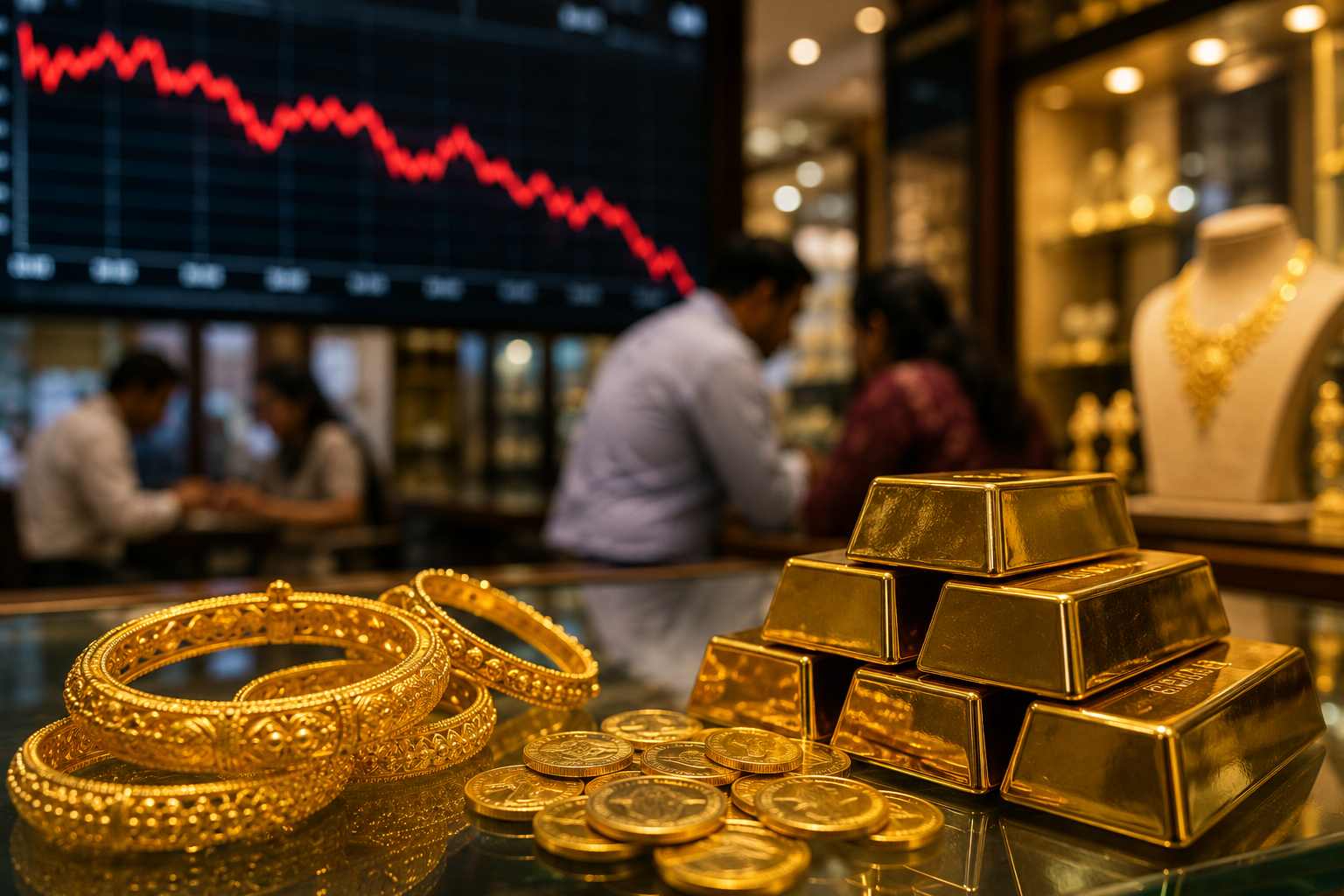
Gold prices witnessed a sharp decline in the national capital on Monday, with bullion rates falling by ₹600 amid rising geopolitical uncertainty in West Asia and weakening domestic buying sentiment.
According to the All India Sarafa Association, gold of 99.9% purity dropped to ₹1,55,300 per 10 grams (inclusive of all taxes), compared to the previous closing level of ₹1,55,900 per 10 grams.
The decline comes during a period of heightened volatility across global commodity and financial markets.
Trump’s Iran Decision Triggers Market Anxiety
Investor sentiment weakened after Donald Trump reportedly rejected Tehran’s response to Washington’s peace proposal, reviving fears of renewed conflict in West Asia.
The development has intensified concerns regarding geopolitical stability involving the United States, Israel, and Iran. Markets are especially focused on the Strait of Hormuz, a strategically important route for global crude oil shipments.
Analysts noted that escalating tensions in the region have pushed crude oil prices higher, increasing uncertainty across commodities, currencies, and equity markets worldwide.
Modi’s Appeal Impacts Domestic Gold Demand
Additional pressure on bullion prices emerged after Narendra Modi urged citizens to postpone non-essential gold purchases for one year to help protect India’s external balances.
India remains one of the largest consumers and importers of gold globally. A sustained increase in gold imports can widen the country’s trade deficit and create pressure on foreign exchange reserves and the rupee.
Experts believe the Prime Minister’s remarks may temporarily affect retail jewellery demand and sentiment among household buyers.
Crude Oil Surge Raises Inflation Concerns
Global crude oil prices have surged amid fears of supply disruptions due to the ongoing West Asia conflict. Rising energy costs are adding to inflation concerns globally, particularly for oil-importing economies like India.
Higher oil prices often influence the movement of safe-haven assets such as gold, while also impacting interest rate expectations and investor risk appetite.
Commodity analysts said markets are currently reacting rapidly to geopolitical developments, creating short-term volatility in precious metals.
Investors Watching Central Banks and Global Policy Moves
Apart from geopolitical tensions, investors are also tracking central bank decisions, inflation data, and global economic indicators that could influence the direction of gold prices in the coming months.
Any signs of prolonged geopolitical instability or slower economic growth may continue to support safe-haven demand for gold despite short-term price corrections.
At the same time, stronger dollar movement, rising bond yields, or easing geopolitical tensions could limit upside momentum in bullion markets.
Wedding Season and Festive Demand Remain Key Factors
Domestic gold demand in India is expected to remain heavily influenced by the upcoming festive and wedding season. Jewellers and traders are closely monitoring consumer sentiment, rural demand, and price movements before large-scale inventory purchases.
Industry experts believe long-term demand for gold in India remains structurally strong despite temporary corrections, supported by cultural preferences, investment diversification, and inflation-hedging demand.
With global uncertainty remaining elevated, analysts expect gold prices to stay volatile in the near term as investors react to geopolitical and macroeconomic developments.