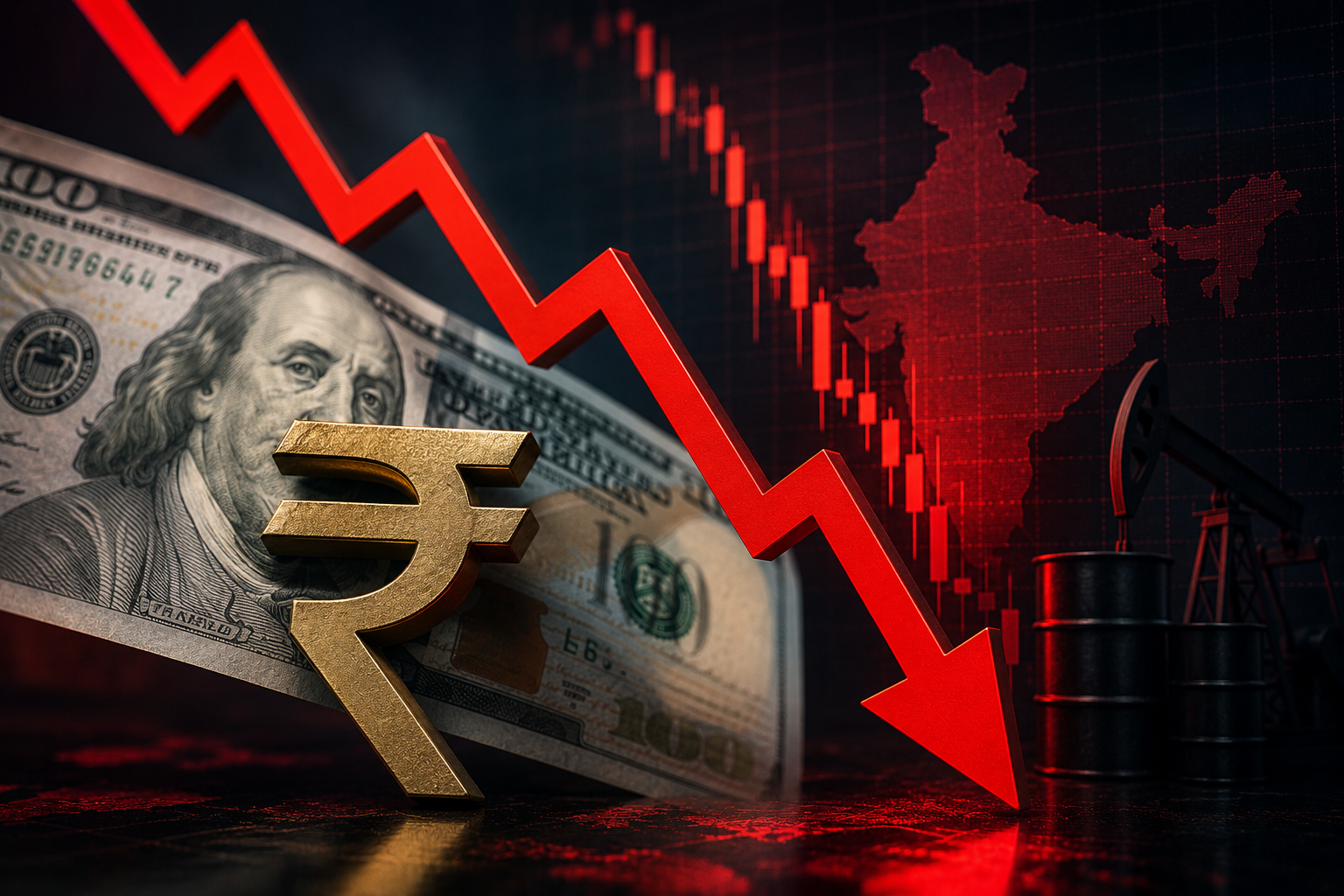
Surging Crude Oil Prices, Escalating West Asia Conflict and Heavy FII Selling Trigger Sharp Currency Decline
The domestic currency opened sharply weaker at 94.97 against the US dollar in the interbank foreign exchange market before recovering marginally to trade near 94.90. The sharp decline came after the rupee had closed at 93.51 against the dollar in the previous session.
Currency dealers and market analysts described the fall as one of the steepest single-day moves seen in recent months, reflecting growing concerns over global economic uncertainty and India’s external vulnerability amid rising oil prices.
Trump Rejects Iran Proposal, Escalating Global Tensions
The sharp decline in the rupee was largely triggered by renewed geopolitical tensions after former US President Donald Trump reportedly rejected Iran’s latest response to a US-backed peace proposal.
According to international reports, Iran had communicated its position through diplomatic mediators and sought negotiations focused on permanently ending the ongoing regional conflict. However, Trump reportedly termed the proposal “totally unacceptable,” escalating fears of prolonged instability in West Asia.
Fresh military developments involving Iran, Israel and regional armed groups further intensified investor nervousness across global financial markets.
As geopolitical uncertainty increased, investors shifted toward safer assets such as the US dollar, leading to pressure on emerging market currencies including the Indian rupee.
Crude Oil Prices Surge Above $105 Per Barrel
Crude oil prices witnessed a sharp rally following the geopolitical escalation, with Brent crude futures rising above $105 per barrel.
US West Texas Intermediate (WTI) crude prices also climbed sharply as traders worried about potential disruptions to global oil supply routes.
For India, which imports nearly 85 per cent of its crude oil requirements, rising energy prices remain a major concern.
Higher crude prices increase India’s import bill, widen the trade deficit and create inflationary pressure across sectors ranging from transportation and manufacturing to consumer goods.
Economists warned that sustained high oil prices could worsen India’s current account deficit and keep pressure on the rupee in the coming months.
Stronger Dollar Adds to Pressure on Rupee
The US dollar strengthened globally amid rising demand for safe-haven assets.
The dollar index, which measures the greenback against a basket of major global currencies, moved higher during the session as investors sought protection from rising geopolitical and economic uncertainty.
A stronger dollar typically weakens emerging market currencies as foreign investors move capital toward relatively safer US assets.
Forex traders said the combination of rising oil prices and a strengthening dollar created a double blow for the Indian currency.
Foreign Investors Continue Pulling Money Out
Persistent foreign institutional investor (FII) selling also added significant pressure on the rupee.
Foreign investors have continued reducing exposure to Indian equities amid concerns over elevated valuations, global economic slowdown and increasing geopolitical risks.
According to exchange data, FIIs sold Indian equities worth over ₹4,100 crore during the previous trading session.
Analysts believe sustained capital outflows from Indian markets could continue impacting both equity indices and the rupee over the near term.
RBI Intervention Helps Stabilise Currency
Market participants indicated that the Reserve Bank of India was active in the currency market to limit excessive volatility in the rupee.
Forex experts said the central bank likely intervened through state-run banks near key levels to prevent disorderly movement in the currency.
However, analysts cautioned that if crude oil prices continue rising sharply, the RBI may face increasing challenges in defending the rupee without significantly impacting forex reserves.
India’s Forex Reserves Decline Further
India’s foreign exchange reserves also declined during the latest reported week, adding to concerns regarding external sector stability.
According to RBI data, the country’s forex reserves dropped by nearly $7.8 billion to around $690.7 billion.
The decline in reserves reflects RBI intervention in the forex market as well as valuation changes due to global currency movement.
Economists believe India still maintains a comfortable reserve position compared to many emerging economies, but prolonged oil price shocks could increase pressure over time.
Stock Markets Also Witness Sharp Sell-Off
The sharp fall in the rupee coincided with a major sell-off in Indian equity markets.
The benchmark BSE Sensex plunged sharply during intraday trade, while the Nifty 50 slipped below crucial psychological levels amid widespread risk aversion.
Banking, aviation, oil-sensitive and import-dependent sectors witnessed heavy selling pressure during the session.
What Lies Ahead for the Rupee?
Market experts believe the near-term outlook for the rupee will depend heavily on geopolitical developments, crude oil price movement and global investor sentiment.
If tensions in West Asia continue escalating and crude oil prices remain elevated, the rupee may continue facing pressure despite RBI intervention.
Analysts also expect investors to closely monitor US inflation data, Federal Reserve commentary, foreign investor flows and domestic macroeconomic indicators for further direction.
While short-term volatility is expected to remain high, economists believe India’s relatively strong economic fundamentals and large forex reserves may help cushion the impact of global shocks over the longer term.